
Reflections from Northwestern University's COP31 Delegation: Day 9
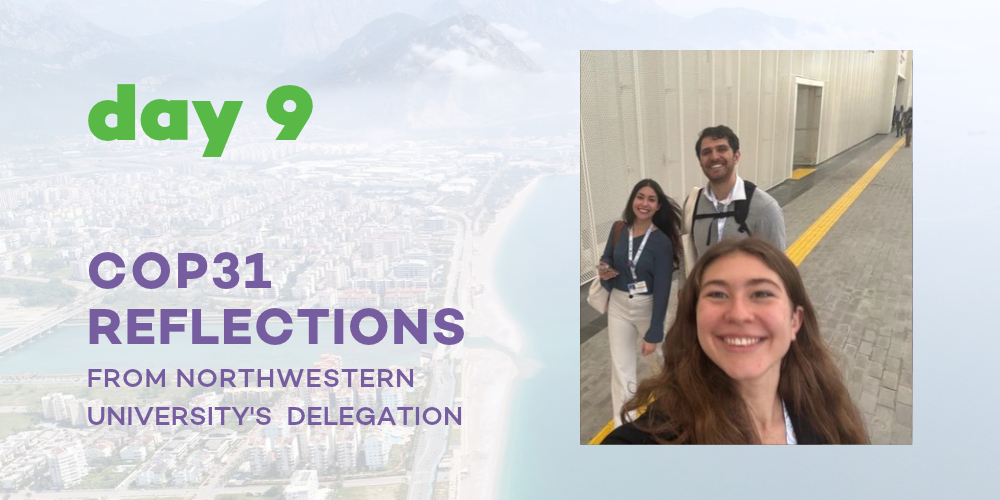
 For a sixth year, a delegation of Northwestern University students and faculty supported by the Roberta Buffett Institute is among more than 92,000 researchers, policymakers, industry leaders, and activists at the world’s largest annual international treaty negotiations and climate summit, the 31st Conference of Parties (COP31) to the United Nations Framework Convention on Climate Change (UNFCCC), held this year in Antalya, Turkey. Each day, a different Northwestern delegate is blogging about their experiences and reflections. Day 9 features Hannah Gill, a fourth-year student studying political science and theatre.
COP Day 9!
The dim lilac glow of the early morning Antalya sky was a brilliant blue by the time my classmates and I arrived for the ninth day of COP31. Today was my first day in the Blue Zone. And what a day it was!
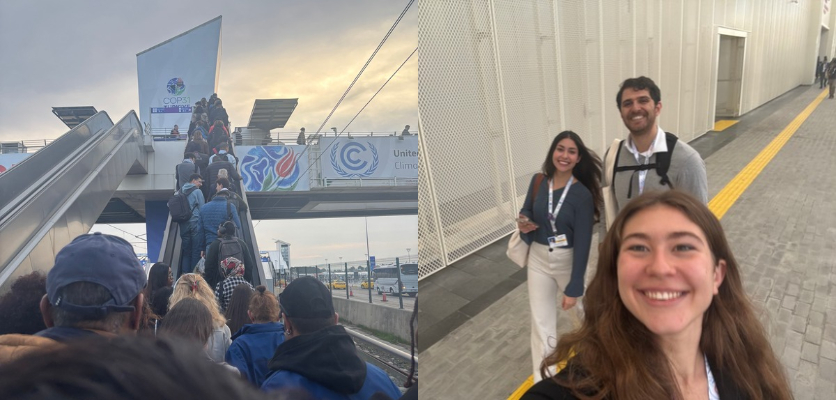
Arriving at COP31: Riding the escalator from the tram to the Blue Zone and heading to our first events of the day
My research focuses on electrification and transitioning away from fossil fuels. I’m particularly interested in the Turkish COP presidency’s “35-by-35 Global Electrification Pledge,” which calls for the percentage of “final energy demand” met by electricity to rise from about 23% today to 35% by 2035. In other words, the pledge calls for the world’s energy systems to rely more on electricity by 2035. In my time at the COP, I’m studying the extent to which Party delegates and civil society members at COP explicitly link electrification targets to clean electricity development (electricity generated from low carbon sources, like solar photovoltaics, for example) and a transition away from fossil fuels.
Electrification is critical for decarbonizing energy systems because it improves efficiency and allows low-carbon energy sources to power things like trains, cars, and buildings… but electrification also has economic, social, and health impacts.
I started out my morning at a panel on Rural Energy Transition and Green Electrification in one of the COP’s several side event rooms, where one presenter spoke at length about how rooftop solar in the Philippines can bring down energy prices as imported diesel prices soar amidst geopolitical events, like the closure of the Strait of Hormuz.
At another panel on Mobilizing Climate Finance for Energy Access, a speaker from Kenya emphasized the importance of electricity for clean cooking. “Clean cooking” refers to the practice of using electrical appliances for cooking instead of burning materials like firewood.
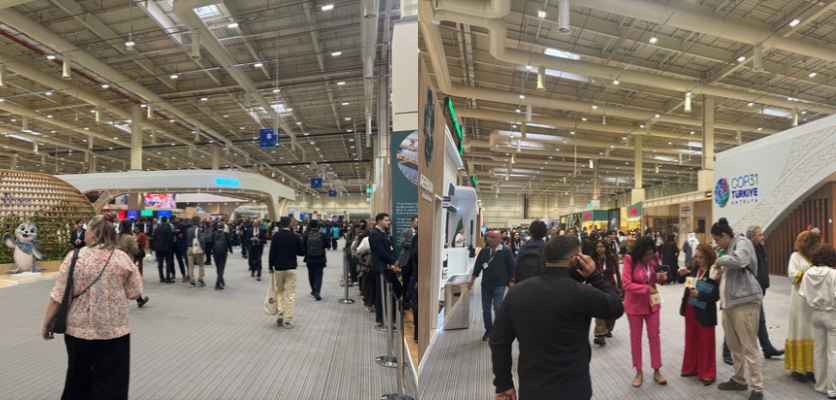
The delegate pavilion area bustling with panels and displays
I spoke more about clean cooking with a climate and health researcher later that day while waiting for a party delegate discussion to begin (more on that later!). She told me more about how clean cooking goes beyond reducing carbon emissions and reducing the use of natural resources. Clean cooking also reduces air pollution, including indoor air pollution. Clean cooking is not only a matter of protecting the climate but also of improving public health.
That leads me to my first negotiation! I spent the latter half of my day watching the “Heads of Delegations cover decision consultations.” This was an opportunity for party delegate representatives to respond to the cover decision first draft published last night by the COP presidency. The draft cover decision is 144 paragraphs long and is far from what we can expect to see in the final text. This “consultation” was an opportunity for Party delegations to voice which elements of the draft text they support, and which they oppose. The actual negotiation was a ticketed-only event, so I waited in line to watch from the “overflow room,” a separate meeting room with observers arranged in a rectangle configuration of tables, diligently watching the negotiation on one of the sixteen screens set up in the center of the space.
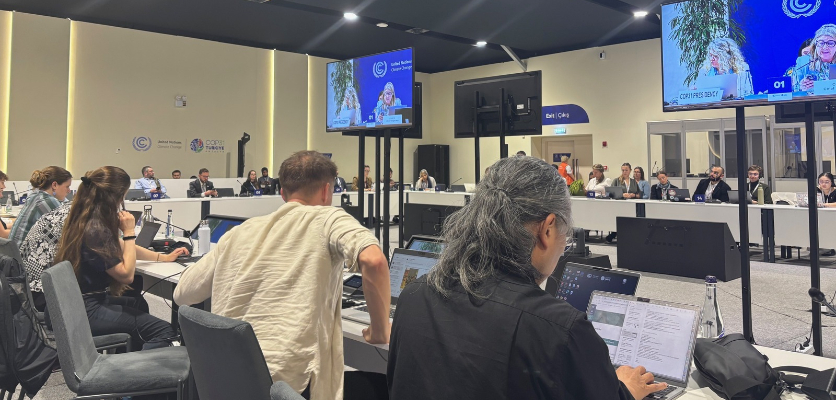
The “overflow room” is silent except for the negotiators’ voices broadcast through the room’s many speakers and the click-clack of laptop keys
In the final sentences of their statement, a negotiator for the Alliance of Small Island States (AOSIS) advocated for any electrification references in the cover decision to be specified as “clean electrification.” This was a very interesting remark for my research, and I will absolutely continue to follow Parties’ positions on electrification, and specified “clean electrification,” the rest of this week.
I finished up my day back in the lobby of our hotel to work on this blog post. Lucky for me, I had some help from this frequent visitor to the hotel lobby.
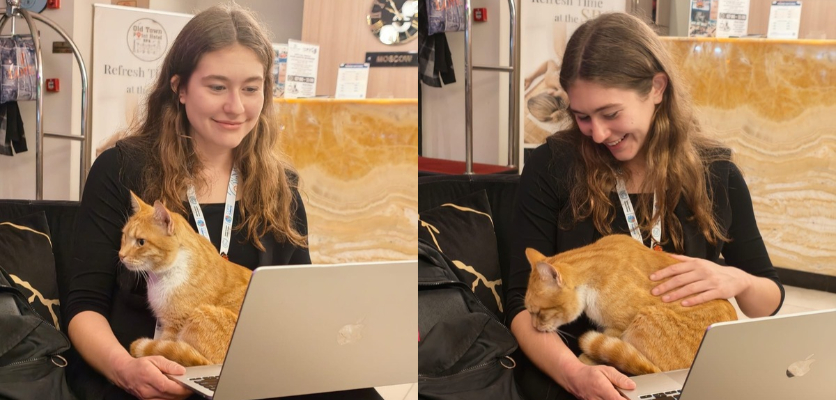
Photos of our hotel lobby friend, one of the many cats we’ve met in Antalya!