The Roberta Buffett Institute partners with renowned faculty and distinguished practitioners to design courses that bring global issues to life.
The Institute's courses are interdisciplinary and innovative. They include simulations, hands-on learning, real-world scenarios, and the chance to learn from leaders who have shaped global affairs. We partner with departments across the University to offer students unparalleled opportunities to engage deeply with the people, challenges, and ideas defining our world.
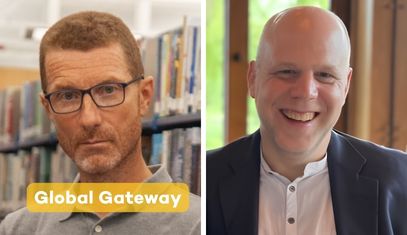
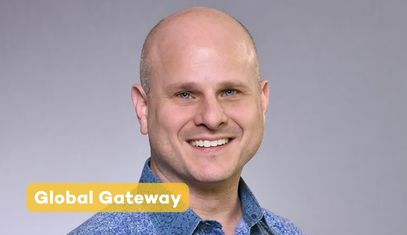
- Our Global Gateway courses offer students the chance to explore international topics across many fields. There are no prerequisites required.
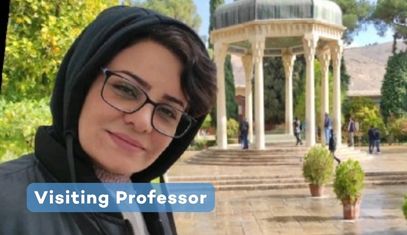
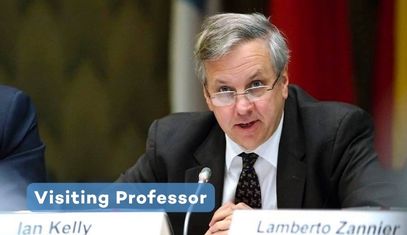
- Our Visiting Professor courses enable undergraduates to study with leading scholars across a range of fields and perspectives.
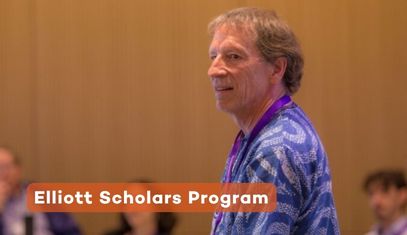
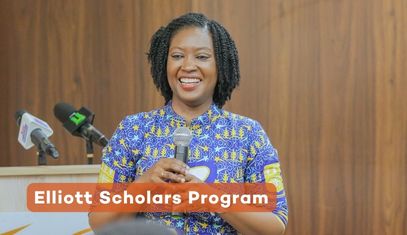
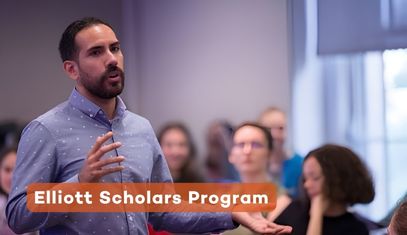
- Through our Elliott Scholars Program, undergraduates engage in a two-quarter course sequence that prepares them to put their learning into practice through a summer internship abroad. Learn about the program >>
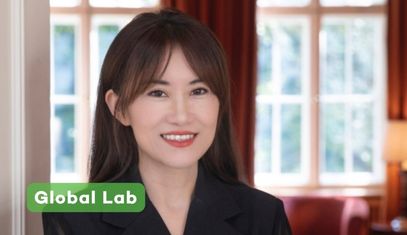
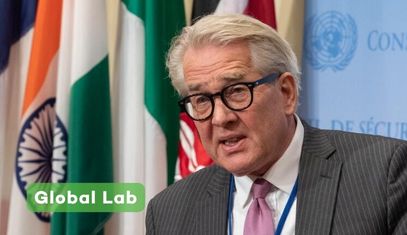
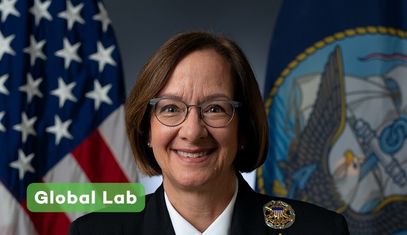
- Our Global Lab courses offer opportunities for hands-on learning through real-world projects or direct work with global leaders.
Below you'll find our current courses for 2026–27 as well as a list of courses we've offered in the past.
Current & Upcoming Courses
Fall 2026

Humanitarian and Development Practice in the Multilateral Context: Institutions, Challenges, and Risk Management
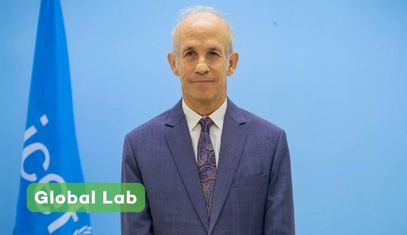
Sheldon Yett, Roberta Buffett Visiting Professor of International Studies
International Studies 390-0-3 | Register via CAESAR
This course introduces the architecture of the United Nations humanitarian and development system and the role of non-governmental organizations (NGOs) and partners in responding to crisis, conflict, and poverty. Students examine how mandates, financing, and coordination shape assistance for children and communities, and how global commitments such as children's rights are translated into field practice. The course explores key operational and ethical challenges, including insecurity, access constraints, safeguarding risks, and health, nutrition, and education emergencies. Students also analyze growing threats to the current humanitarian and development system and learn practical approaches to managing risk in fragile and conflict-affected settings.
Sheldon Yett currently serves as the United Nations Children's Fund (UNICEF) Representative to Sudan, a role he has held since August 2024. A national of the United States, he has worked for UNICEF since 1997 and has extensive experience in managing both development and humanitarian emergency programs in Burundi, Somalia, Kosovo, and UNICEF's emergency division in New York. Yett has served in multiple assignments as UNICEF Representative, including to Armenia (2005–2008), Macedonia (2008–2013), Liberia (2013–2016), the Pacific Islands Multi-Country Office (2016–2021), and Bangladesh (2021–2024). Before joining the UN, he worked as a journalist.
More information >>

Artificial Intelligence in World Politics
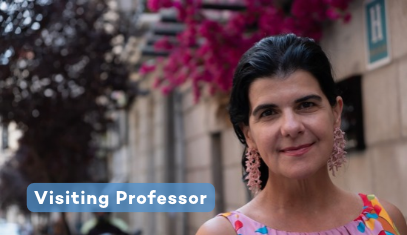
Denise Garcia, Roberta Buffett Visiting Professor of International Studies
International Studies 390-0-2 | Register via CAESAR
The effects of AI permeate all aspects of life and impact world politics. This course introduces the AI policies adopted by states as well as explores the implications of AI uses and their impacts in different areas of international relations driven by profound transformations: great power rivalry, challenges posed to global cooperation, provision of humanitarian assistance, achieving the United Nations’ Sustainable Development Goals, and using AI in the military and warfare. Students will examine the application of AI across multiple societal levels and uncover ethical, moral, and international legal implications by grappling with critical questions and answers that must become increasingly central to achieving peace and security in the contemporary world order.
Denise Garcia is a Professor at Northeastern University and a founding faculty member of its Experiential Robotics Institute. Garcia was appointed to the Global Commission on Responsible Artificial Intelligence in the Military and served her term until 2026. Before joining Northeastern, she worked for 3 years at the World Peace Foundation, is formerly a member of the International Panel for the Regulation of Autonomous Weapons (2017–2022), served on the Research Board of the Toda Peace Institute (2020–2023), and worked with the Institute of Electrical & Electronics Engineers Global Initiative on Ethics of Autonomous & Intelligent Systems (Autonomous Weapons Group). She is currently a member of the Institute for Economics & Peace in Sydney and an advisor to the Global Challenges Foundation in Stockholm. She was a funded Nobel Peace Institute Fellow in Oslo in 2017. Garcia is the author of the first book on the use of AI in the military, The AI Military Race: Common Good Governance in the Age of Artificial Intelligence.
More information >>

Global Environmental Governance
Iza Ding, Associate Professor of Political Science and former Buffett Faculty Fellow
Political Science 390-0-21 | The application deadline was April 1, 2026.
How do international climate negotiations work? Who participates, and what motivates the parties involved? What are their points of agreement and disagreement? Under what conditions can global climate governance be effective?
This course provides students with foundational knowledge of global climate governance and offers an immersive experience at COP31—the 31st Conference of Parties to the United Nations Framework Convention on Climate Change (UNFCCC), taking place this year in Antalya, Türkiye (November 9–20, 2026). Students will gain firsthand insights into the negotiation processes and dynamics shaping global climate policy. Students will also complete an original research project, either individually or collaboratively.
Undergraduate and graduate students must apply during spring quarter to take this fall quarter course. Learn more about the application process and reflections from past participants >>

Political Religion in the Contemporary World
Zahra Khoshk Jan, Buffett Visiting Assistant Professor
Comparative Religion 379-0-28 | Register via CAESAR
This course examines the characteristics, origins, and diverse representations of political religion from a sociological perspective. It also explores how political religion manifests not only in formal political structures but also in everyday life. Through a comparative approach, the course analyzes political religion in major religious traditions—including Judaism, Christianity, Islam, Buddhism, and Confucianism—while equipping students with methodological tools to critically interpret these phenomena.
Zahra Khoshk Jan is a political sociologist and researcher specializing in the sociology of religion. Zahra's research primarily focuses on the political sociology of religion, an interdisciplinary field that examines the mutual influences between religion and politics, including political religion and emerging forms of implicit religion, especially in the modern era. She has published multiple papers in Persian and English on the interaction of politics and religion.
More information >>
Winter 2027

International Studies Course with Tor Wennesland, former UN Special Coordinator for the Middle East Peace Process
Tor Wennesland, Buffett Distinguished Visiting Practitioner in Residence
Course number to be announced | Register via CAESAR
Tor Wennesland served as the UN's Special Coordinator for the Middle East Peace Process and the UN Secretary-General's Personal Representative to the Palestine Liberation Organization (PLO) and the Palestinian Authority from 2020–2025. He is a career diplomat who joined the Norwegian Ministry of Foreign Affairs in 1983. Until his appointment as UN Special Coordinator, Wennesland was Norway’s Special Envoy to the Middle East Peace Process. In 1994, he served as an adviser on the Middle East Desk in the Norwegian Ministry of Foreign Affairs during the process that led to the Oslo II Agreement.
Details about Wennesland’s course will be announced in fall quarter 2026.

Thinking Globally: An Introduction to International Studies
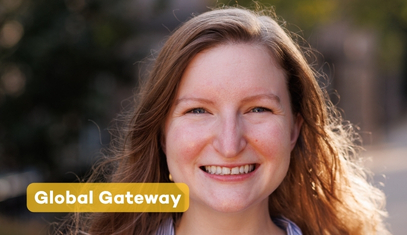
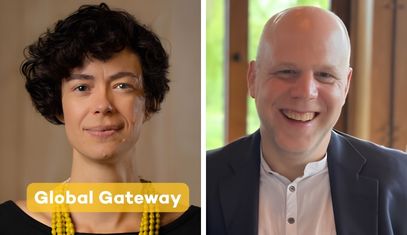
Roberto Mazza, Buffett-Keyman Visiting Scholar; Mark Hauser, Professor of Anthropology and Buffett Faculty Advisory Councilmember
International Studies 201-0-1 | Register via CAESAR
Offered jointly by Northwestern’s Roberta Buffett International Studies Program and Roberta Buffett Institute for Global Affairs, this course will be offered for the second time in 2027. The course is designed as a gateway into international studies and the Roberta Buffett Institute’s community of faculty, students, and staff dedicated to generating new knowledge about pressing global challenges and promising solutions for addressing them.
Thinking Globally will introduce students to international studies as a field that bridges disciplines—including history, law, human sciences and cultural analysis—to understand global forces shaping human lives and societies. Through the course, students will explore issues that transcend national and disciplinary boundaries.
The course is structured to help students “see” globally, analyzing how historical legacies, cultural frameworks, legal systems and global institutions shape our collective destinies beyond national borders. Weekly seminars will introduce foundational concepts through interactive discussions, while smaller workshop sessions will guide students in applying those ideas to real-world challenges.
More information >>

Doing Good: Insights from Economics, Philosophy & Psychology
Dean Karlan, Frederic Esser Nemmers Distinguished Professor of Economics and Finance and former Buffett Faculty Fellow
Economics 159-0-20 | Register via CAESAR
This course will offer discussions of why we want to "do good," why the problems we want to tackle exist in the first place, how to try to do good, and how to know if you did good. Lessons will apply to public policy as well as personal life.
Dean Karlan is the founder and former president of Innovations for Poverty Action, a nonprofit organization dedicated to discovering and promoting solutions to global poverty problems. Karlan was the Chief Economist at the United States Agency for International Development (USAID) from 2022 until resigning in 2025. Prior to 2022, he was on the Executive Committee of the Board of Directors of the MIT Jameel Poverty Action Lab. His research focuses on microeconomic issues of poverty. His work spans many geographies and topics, including sustainable income generation for those in abject poverty, credit and savings markets for low-income households, agriculture for smallholder farmers, small and medium entrepreneurship, weight loss and smoking cessation, and charitable giving.

Elliott Scholars Program: Foundation Topics in Global Affairs
Christopher Udry, Robert E. and Emily King Professor of Economics and former Buffett Faculty Fellow
International Studies 383-1-1 | Annual application deadline: November 1
The Roberta Buffett Institute’s Elliott Scholars Program entails a two-course sequence over winter and spring quarters followed by participation in an international internship through the Global Engagement Studies Institute (GESI) in the summer quarter. During GESI, students join the efforts of nonprofit organizations abroad to advance community-driven change. This hands-on, collaborative experience provides Elliott Scholars with the opportunity to apply what they have learned throughout the program in a development setting abroad. Each year, the program adopts a new theme to serve as the focus for the cohort’s research and coursework.
Christopher Udry is a development economist whose research focuses on rural economic activity in Sub-Saharan Africa. His current research examines technological change, risk and financial markets, gender and households, property rights, psychological well-being and economic decision-making and a variety of other aspects of rural economic organization. He is a Fellow of the Econometric Society and of the American Academy of Arts and Sciences, a Board Member of Bureau for Research and Economic Analysis of Development, and a research associate of the National Bureau of Economic Research.
Learn more about the Roberta Buffett Institute's Elliott Scholars Program >>
Spring 2027

Elliott Scholars Program: Foundation Topics II in Global Affairs
Nana Amma Asante-Poku, Buffett Distinguished Visiting Practitioner in Residence
International Studies 383-2-1 | Annual application deadline: November 1
The Roberta Buffett Institute’s Elliott Scholars Program entails a two-course sequence over winter and spring quarters followed by participation in an international internship through the Global Engagement Studies Institute (GESI) in the summer quarter.
Nana Amma Asante-Poku is a Research Fellow at the Institute of Statistical, Social and Economic Research (ISSER) at the University of Ghana. She is a development economist with research interests in international trade, agricultural value chains, critical policy analysis, gender, new institutional economics, education, and development in sub-Saharan Africa. Details about her spring-quarter Elliott Scholars course will be announced in winter quarter.
Learn more about the Roberta Buffett Institute’s Elliott Scholars Program >>

International Studies Course with Lisa Franchetti, US Navy Admiral (ret.) and 33rd Chief of US Naval Operations
Lisa Franchetti, Buffett Distinguished Visiting Practitioner in Residence
Course number to be announced | Register via CAESAR
Admiral (ret.) Lisa Franchetti is an expert military tactician and strategist. One of only two four-star female admirals in the US Navy, she was the first woman to serve as commander of US Naval Forces Korea, strengthening collective security efforts in the region from 2013 to 2015. Her many assignments ashore and at sea have included commanding the USS Ross—a guided missile destroyer—as well as Destroyer Squadron 21 and Carrier Strike Group 9, and leading Pacific Partnership 2010, a humanitarian mission to Southeast Asia.
Admiral Franchetti is a 1985 graduate of Northwestern University, where she was commissioned through the Naval Reserve Officer Training Corps (NROTC) Program. She has commanded at every level and deployed in every Fleet, with nearly 20 years of operational and at-sea experience. Her major leadership assignments include Chief of Naval Operations; Director for Strategy, Plans, & Policy; Commander of the US 6th Fleet and the Naval Striking & Support Forces for NATO; and more.
Details about Admiral Franchetti’s course will be announced in fall quarter 2026.

Global Academic Freedom: Student Advocacy Seminar
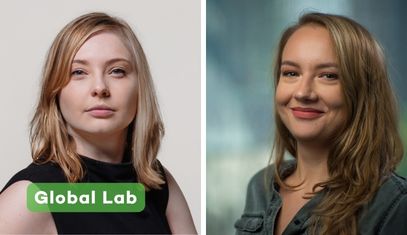
Samantha Nissen, Buffett’s Senior Director of Global Programs & Initiatives; Andreea Micu, Buffett’s Assistant Director of Global Collaboration
International Studies 390-0-1 | Register via CAESAR
Taught by Roberta Buffett Institute staff, this undergraduate seminar is offered in collaboration with the Scholars at Risk Network, a nonprofit working globally to protect scholars who are threatened, displaced, or imprisoned for their academic work. Students will work in groups to devise an advocacy campaign for two scholars currently imprisoned abroad, conducting human rights monitoring and research. They will also explore the meaning and stakes of academic freedom worldwide. Students will develop skills in partnership building, community outreach, issue-based research, persuasive content creation, and engaging elected officials.
Students will also have the opportunity to participate in a trek to Washington, DC, where they will practice advocacy on Capitol Hill, meet students from other seminars, and connect with organizations and policymakers working on issues related to academic freedom.
Previous Courses
Fall 2025

Thinking Globally: An Introduction to International Studies
Lydia Barnett, Associate Professor of History and co-lead of Buffett’s Shifting Shorelines Global Working Group; Mark Hauser, Professor of Anthropology, Director of the Weinberg Center for Global Studies, and Buffett Faculty Advisory Councilmember
International Studies 201-0-1
Offered jointly by Northwestern’s International Studies Program and the Roberta Buffett Institute for Global Affairs, this course was offered for the first time in fall 2025. The course is designed as a gateway into international studies and the Roberta Buffett Institute’s community of faculty, students, and staff dedicated to generating new knowledge about pressing global challenges and promising solutions for addressing them.
With a focus on climate as a central lens, the first iteration of our Thinking Globally course introduced students to international studies as a field that bridges disciplines—including history, law, human sciences and cultural analysis—to understand global forces shaping human lives and societies. Through the course, students explored issues that transcend national and disciplinary boundaries, such as climate justice and the role of international cooperation in addressing environmental change.
This gateway course is among the Roberta Buffett Institute’s bookends for its undergraduate offerings, which also include the Buffett Post-Baccalaureate Fellowship Program for recent Northwestern graduates seeking global careers. The course is structured to help students “see” globally, analyzing how historical legacies, cultural frameworks, legal systems, and global institutions shape our collective destinies beyond national borders. Weekly seminars introduced foundational concepts through interactive discussions, while smaller workshop sessions guided students in applying those ideas to real-world climate challenges.
More information >>

Fall of the USSR and Rise of Russia
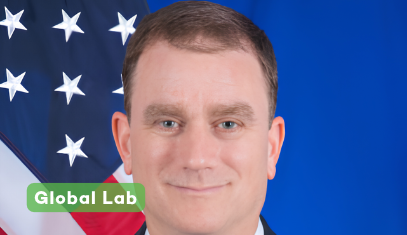
Ambassador (ret.) Ian Kelly, Roberta Buffett Visiting Professor of International Studies
International Studies 390-0-1
This course explored the roots and the drivers of Russian President Vladimir Putin's policies. It looked at the factors leading to the USSR's disintegration and resulting ethnic conflicts, the security issues requiring responses from the US, and the decision-making processes in responding to these challenges. The course also examined the fraught security environment of the post-Cold War world. Students discussed the West's efforts to anchor newly independent states in the EU and NATO and Putin's counterefforts to assert what he sees as Russia's right to a sphere of influence, using coercion to deny countries like Ukraine and Georgia their sovereign right to leave Moscow's orbit.
Ambassador (ret.) Ian Kelly is the Ambassador in Residence at Northwestern’s Roberta Buffett International Studies Program. A retired senior Foreign Service officer, Kelly served as US Ambassador to Georgia from 2015 to 2018 and as US Ambassador to the Organization for Security and Cooperation in Europe (OSCE) from 2010 to 2013. He previously held senior roles at the US Department of State, including Department Spokesman under Secretary Hillary Clinton and Director of the Office of Russian Affairs. Before his diplomatic service, he earned a PhD in Slavic Languages and Literatures from Columbia University.
More information >>

Special Topics in Political Science (390-0-21): Research in Global Climate Change: Science, Rights
Iza Ding, Associate Professor of Political Science and former Buffett Faculty Fellow
Political Science 390-0-21
How do international climate negotiations work? Who participates, and what motivates the parties involved? What are their points of agreement and disagreement? Under what conditions can global climate governance be effective?
This course provided students with foundational knowledge of global climate governance and offers an immersive experience at COP30—the 30th Conference of Parties to the United Nations Framework Convention on Climate Change (UNFCCC), which took place in Belém, Brazil (November 10–21, 2026). Students gained firsthand insights into the negotiation processes and dynamics shaping global climate policy. Students also completed an original research project, either individually or collaboratively.
Undergraduate and graduate students must apply during spring quarter to take this fall quarter course. Learn more about the application process and reflections from past participants >>
Winter 2026

Politics, Media, and Society in Post-Soviet Russia
Maria Lipman, Roberta Buffett Visiting Professor of International Studies
International Studies 390-0-22
The collapse of the Soviet Union in 1991 and the emergence of the Russian Federation marked the end of the Cold War and sparked hopes for a new, post-communist Russia that would become a democratic state with a market economy, a peaceful foreign policy, and an ally of the West. The domestic and global developments of the 1990s soon belied those expectations. The rise of Vladimir Putin was marked by Russia's return to its habitual pattern of a strong, centralized state and acquiescent public as well as its resurgence on the global stage. The large-scale invasion of Ukraine brought a decisive end to the vision of Russia as a cooperative let alone friendly partner of the West. This course traced the key political and societal transformations of post-Soviet Russia over the past three and a half decades, with particular attention to state-society relations and the evolution of the Russian media. Through this lens, the course sought to understand how the hopes of the early 1990s gave way to authoritarian consolidation and open confrontation with the West.
Maria Lipman is a political analyst and commentator whose work focuses on state‑society relations, media, and the politics of history in Russia. Lipman authors articles in Foreign Affairs and has served as editor or deputy editor of various Russian‑ and English‑language publications over the past three decades. From 2003 to 2014, she was an associate at the Carnegie Moscow Center, where she edited the journal Pro et Contra. She is a frequent commentator in international broadcast media and has written extensively on Russian affairs for both Russian and US outlets, including The Washington Post (2001–2011) and The New Yorker online (2012–2017).

Elliott Scholars Program: Foundations in Global Sustainability
Diego Arispe-Bazán, Assistant Professor of Anthropology and Buffett Faculty Fellow
International Studies 383-1-1
The Roberta Buffett Institute’s Elliott Scholars Program entails a two-course sequence over winter and spring quarters followed by participation in an international internship through the Global Engagement Studies Institute (GESI) in the summer quarter. During GESI, students join the efforts of nonprofit organizations abroad to advance community-driven change. This hands-on, collaborative experience provides Elliott Scholars with the opportunity to apply what they have learned throughout the program in a development setting abroad. Each year, the program adopts a new theme to serve as the focus for the cohort’s research and coursework. The 2025–26 theme was international development.
This course presented a critical, interdisciplinary overview of the history, structure, and operation of development organizations. Particular attention was paid to the ethical and sociological orientation of development organizations of varying sizes and missions to inform students’ experiences working remotely for small nonprofits around the world. Simulations, role playing, readings, lectures, and in-person discussion sessions created an experiential learning experience focused on real-world decision-making processes.
Diego Arispe-Bazán is a linguistic and cultural anthropologist. His research centers on the reproduction of coloniality and potential decolonial projects in South America, specifically in the Andes. His ethnographic and semiotic research follows a fine-grained approach to understanding the composition of categories of race and class in Latin America as intertwined colonial processes.
Learn more about the Roberta Buffett Institute’s Elliott Scholars Program >>
Spring 2026

Elliott Scholars Program: How to Bring People into Policy
Vijayendra (Biju) Rao, Buffett Distinguished Practitioner-Scholar in Residence
International Studies 383-2-1
The Roberta Buffett Institute’s Elliott Scholars Program entails a two-course sequence over winter and spring quarters followed by participation in an international internship through the Global Engagement Studies Institute (GESI) in the summer quarter. Vijayendra (Biju) Rao is a Lead Economist in the Development Research Group of the World Bank and scholar of development whose work bridges research and practice. Rao studies how social, cultural, and political contexts shape the lives of people living in poverty. Trained as an economist but deeply influenced by anthropology, sociology, and political science, he is known for integrating qualitative and quantitative methods to make economics more reflexive, contextual, and grounded in lived experience.
His spring-quarter Elliott Scholars course, How to Bring People into Policy, explored the philosophical foundations, social science research, and historical experience behind efforts to reduce the distance between ordinary people and the policies that affect their lives. Elliott Scholars examined a range of people-centered approaches—including participatory democracy, deliberative forums, community development, and collective action—and analyzed how these modalities have been implemented around the world. Through in-depth case studies of both successes and failures, Elliott Scholars assessed the conditions under which these approaches work and when they fall short. Drawing on evidence from economics, political science, and sociology, the course asked: How can we design policies and institutions that truly center people’s voices and power? And what does it take to build a more participatory and democratic world?
Learn more about the Roberta Buffett Institute’s Elliott Scholars Program >>

Global Academic Freedom: Student Advocacy Seminar
Samantha Nissen, Senior Director of Global Programs & Initiatives; Andreea Micu, Assistant Director of Global Collaboration
International Studies 390-0-1
Taught by Roberta Buffett Institute staff, this undergraduate seminar is offered in collaboration with the Scholars at Risk Network, a nonprofit working globally to protect scholars who are threatened, displaced, or imprisoned for their academic work. Students will work in groups to devise an advocacy campaign for two scholars currently imprisoned abroad, conducting human rights monitoring and research. They will also explore the meaning and stakes of academic freedom worldwide. Students will develop skills in partnership building, community outreach, issue-based research, persuasive content creation, and engaging elected officials.
More information >>