2026 News
October
October 14, 2026 – from Higher Ed Jobs
The Roberta Buffett Institute is hiring a full-time, fixed-term postdoctoral appointment for the 2027-28 Academic Year. The Lal Initiative in Global Entrepreneurship to further world-class research and pedagogy on international business. We aim to reach a diverse international audience of private sector and government professionals, policymakers and academics and to make the Roberta Buffett Institute an intellectual leader in the study of entrepreneurship.
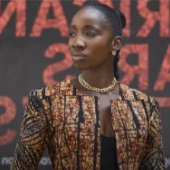
October 9, 2026 – from Ghana Web
Ghanaian-American professor, Sally Afia Nuamah, has been named one of 118 Young Global Leaders for 2026 by the World Economic Forum, earning international recognition for her work in academia and public policy. Nuamah, an Associate Professor of Human Development and Social Policy at Northwestern University and Buffett Faculty Fellow, will participate in a 3-year leadership programme designed to promote collaboration among emerging global leaders.
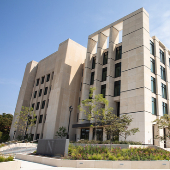
October 8, 2026 – from Chronicle Careers
The Roberta Buffett Institute and the Lal Initiative in Global Entrepreneurship invite applications for a postdoctoral fellow. We are seeking to appoint a post-doctoral scholar interested in expanding their research and practice networks. We welcome applications from current Ph.D. candidates and recent graduates whose work engages entrepreneurship, innovation, or venture creation in a global, comparative, or cross-national context.
October 5, 2026 – from Evanston Roundtable
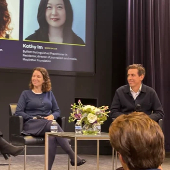
More than 100 Northwestern University students, faculty and community members attended a Monday afternoon panel where they touched on a collaborative journalism project published in September detailing the Trump administration’s recent third-country deportations. The talk, moderated by Kathy Im, director of the MacArthur Foundation’s Journalism and Media program, featured Laurent Richard, founder and executive director of Forbidden Stories, and Raney Aronson-Rath, editor-in-chief and executive producer of PBS’ FRONTLINE, which participated in the project.
October 5, 2026 – from The Daily Northwestern
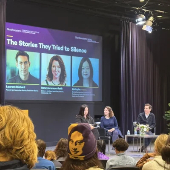
Journalists Laurent Richard and Raney Aronson-Rath explored the role of media in holding leaders accountable at an event hosted by the Medill School of Journalism and the Roberta Buffett Institute for Global Affairs on Monday. Richard, the founder and executive director of Forbidden Stories, a nonprofit newsroom dedicated to continuing the work of reporters who have been silenced or killed, and Aronson-Rath, the editor-in-chief and executive producer of PBS’s investigative journalism documentary series “Frontline,” discussed how newsrooms and media organizations sustain investigations, respond to threats against reporters and build public trust.
October 5, 2026 – from The Daily Northwestern
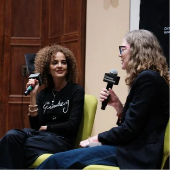
French-Moroccan novelist Leïla Slimani explored her 2026 novel, “I’ll Take the Fire,” in an event presented by Chicago Humanities and the Roberta Buffett Institute for Global Affairs. Through the semi-autobiographical work, Slimani tells the tale of a young Arab woman’s pursuit of political and sexual freedom in culturally conservative Morocco and during her time abroad.
October 2, 2026 – from 175 Years of Northwestern
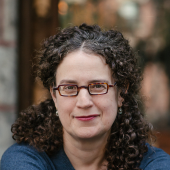
As part of a series of mini-essays commemorating Northwestern's 175th anniversary, Deborah Cohen, the director of the Roberta Buffett Institute, published a piece on the waning role of multilateral institutions in global affairs. She shared the value of bringing together the expertise of faculty, the skills of distinguished visiting practitioners, and the energy of students to confront the existential problems facing the world today.
October 2, 2026 – from Illinois Science & Technology Coalition
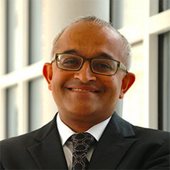
VS Subrahmanian, head of the Northwestern Security & AI Lab (NSAIL) jointly housed in the Roberta Buffett Institute and McCormick School of Engineering was recognized by the Illinois Science & Technology Coalition as a researcher whose work is discovery, solving real-world problems, and opening new paths for innovation.
October 1, 2026 – from Kellogg Insight
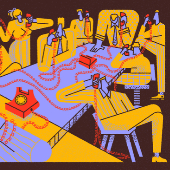
Danielle Gilbert, Assistant Professor of Political Science and Buffett Faculty Fellow, and Cynthia Wang, Clinical Professor of Management and Organizations developed a framework for negotiation that centers on the skill of perspective-taking—that is, viewing the world from another’s vantage point. They situate their research, which can be applied to all types of negotiation, within a focus on hostage diplomacy.
September

September 30, 2026 – from KQED
VS Subrahmanian, head of the Northwestern Security & AI Lab (NSAIL) jointly housed in the Roberta Buffett Institute and McCormick School of Engineering appeared on the Life, Automated podcast with Jess Love to discuss how AI is making cyberattacks cheaper, faster, and more sophisticated. They dive into why telecoms, app makers, financial institutions, utilities, and governments may need to take much greater responsibility for the security of the products and networks they operate.
September 29, 2026
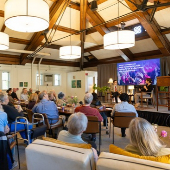
Watch the recording of our Buffett Conversation with James Griffiths on China’s evolving political and information environment and the challenges of reporting from the region. Griffiths drew on his experiences reporting across Asia to discuss free speech and digital censorship in China.

September 25, 2026 – from This Morning with Gordon Deal
VS Subrahmanian, head of the Northwestern Security & AI Lab (NSAIL) jointly housed in the Roberta Buffett Institute and McCormick School of Engineering joined America's First News to discuss why AI companies are sounding the alarm on the need for regulation of their models.

September 22, 2026
The Roberta Buffett Institute for Global Affairs is welcoming its largest-ever cohort of distinguished visiting practitioners and scholars, an expansion made possible by alumna Roberta Buffett Elliott's $11.8 million gift to Northwestern University last fall. Learn about the 14 global leaders who will join us on campus this year, where they will meet with faculty, give public lectures, and engage with the Northwestern community during their residencies.
September 15, 2026 – from Art Works Projects
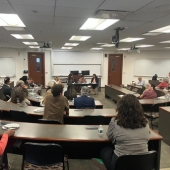
Art Works Projects and Loyola University Chicago School of Law’s Rule of Law Institute, in collaboration with the Roberta Buffett Institute, gathered Afghan women’s rights leaders, immigration attorneys, advocates, public officials, and community members to discuss Roya Sadat's film: The Sharp Edge of Peace: Global Struggle and Local Action for Women’s Rights in Afghanistan. The afternoon placed art and testimony at the center of a larger conversation about memory, accountability, protection, and what solidarity requires now.

September 15, 2026 – from Environmental Health Research
A new study by the Roberta Buffett Institute's Defusing Disasters Working Group published a new study on assessing the health risks of extreme heat in urban environments. The authors utilized different machine learning methods to identify which vulnerability factors were most-associated with heat-related excess mortality and highlight the potential of machine learning to enhance heat vulnerability assessment tools.
September 14, 2026 – from Foreign Affairs
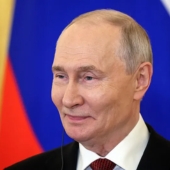
Maria Lipman, the 2026 Roberta Buffett Visiting Professor of International Studies, co-authored a new article in Foreign Affairs with Michael Kimmage, the Director of the Kennan Institute, on Russian President Vladimir Putin's approach to waging war in Ukraine. By examining his writings and governing decisions, they analyze the rationale behind the invasion, his management of domestic opposition to the war, and Russian foreign policy more broadly.

September 10, 2026 – from Crain's Chicago Business
Matthew Roling, Clinical Assistant Professor of Management & Organizations at Northwestern, wrote an op-ed arguing why Chicago should continue investing in sustainability and infrastructure, despite a recent article in the New York Times publicizing the claim that Chicago is the world's most climate-resilient major city. He also highlighted the Heat Vulnerability Index, a climate measurement tool developed by the Roberta Buffett Institute's Defusing Disasters Global Working Group.
September 10, 2026 – from Gender & History
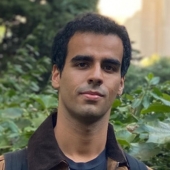
Angad Singh, a PhD candidate in the Department of English and former Buffett Research fellow, published new research on the history of interfaith female desire surrounding the 1947 Partition of India. He demonstrates that abduction operated as a category families mobilized to control female sexuality both prior to, and during, the Partition. In privileging women's agency and desire in my historical account, he challenges the feminist positing of sexual violence as the hegemonic category for the consideration of gender during the Partition.
September 10, 2026
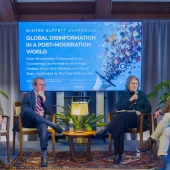
The Roberta Buffett Institute hosted a two-day symposium in January, 2026, addressing urgent priorities for what experts warn is a “post-moderation era” where social media giants scale back content moderation and governments shutter counter-disinformation programs as propaganda is growing ever-more sophisticated and dangerous.

September 8, 2026 – from Northwestern Magazine
As one of the Roberta Buffett Institute's inaugural post-baccalaureate fellows, Anne-Sophie Lacombe García pursued an experiencing bridging her interests in international studies and theatre by working with Broadway Across Borders, a cultural diplomacy organization founded by Ryan T. Nelson, an Associate Professor of Music Theatre at Northwestern. They worked to produce a musical in Sarajevo, Bosnia-Herzegovina that would strengthen connections between institutions, artists and future cultural leaders in the country.
September 2, 2026 – from Journal of Peace Research
Do protest bans make police repression more acceptable? Buffett Research Fellow Ulaş Erdoğdu co-authored new research that draws on experimental evidence on the effects of legal repression from Turkey to answer this question. This article contributes to the literature on the interplay between protest repression and public opinion by showing that legal repression operates not only through deterrence but also by generating public support for subsequent police repression.
August

August 28, 2026 – from Fox 17 Nashville
More than 100 artificial intelligence and cybersecurity companies are warning the federal government that increasingly powerful AI systems could dramatically expand the scale and sophistication of cyberattacks in the coming months. VS Subrahmanian, head of the Northwestern Security & AI Lab (NSAIL) jointly housed in the Roberta Buffett Institute and McCormick School of Engineering, explained that attacks targeting critical infrastructure could have serious real-world consequences, including disruptions to hospitals, electrical systems and water treatment facilities.
August 28, 2026
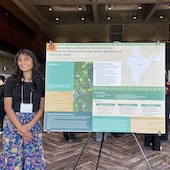
Recent graduate Anusha Kumar received an International Senior Thesis Research Grant from the Roberta Buffett Institute to complete her thesis “From Scarcity to Solidarity: Mutual Aid as a Pathway to Food Justice and Urban Resilience in Chennai, India," which placed first in the social justice division at the Chicago Area Undergraduate Research Symposium.

August 27, 2026 – from The Weather Channel
When the temperature heats up, so do emergency rooms, according to a massive study of Chicago hospital and urgent care records, which found increased accidental gunshot wounds, kidney complaints, skin problems, varicose veins and even mental health issues related to marijuana use. The study was authored by members of the Roberta Buffett Institute's Defusing Disasters Working Group. They found when it gets hot, more than a dozen broad categories of injuries and illness become more frequent, including some that most people don't associate with heat, according to the study in Wednesday's Science Advances.
August 27, 2026 – from US News & World Report
Recent research published by the Roberta Buffett Institute's Defusing Disasters Working Group found evidence tying as many as 33 diagnoses to extreme heat events. The medical problems include rashes, kidney failure, multiple sclerosis, mental disorders, insect bites, traffic accidents, injuries from violence and gunshot wounds, researchers found. Climate change is expected to lead to more heat waves, researchers said in background notes. To evaluate how heat waves might affect human health, researchers examined more than 1,800 diagnoses across nearly 1 million ER and urgent care visits in Chicago.
August 26, 2026 – from The Guardian
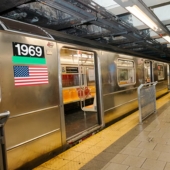
Giorgia Chinazzo and Alessandro Rotta Loria, both professors of Civil and Environmental Engineering and members of the Roberta Buffett Institute's Underground Climate Change Global Working Group, discussed the rising temperatures of underground urban spaces, including the New York subway. Extreme temperatures are a sign of climate change and a demonstration of the ways urban infrastructure has not adapted.

August 26, 2026 – from AP News
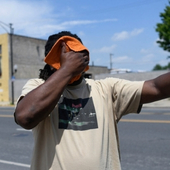
Researchers from the Roberta Buffett Institute's Defusing Disasters Working Group found in a recent study that when temperatures increase, more than a dozen broad categories of injuries and illness become more frequent, including some that most people don’t associate with heat. While the study looked only at Chicago, outside experts said it highlights underestimated health problems and rising costs that infect much of the warming world.
August 26, 2026 – from Inside Climate News
Periods of extreme heat in Chicago in recent years were linked to more emergency department visits for a range of health harms, according to a study by the Roberta Buffett Institute's Defusing Disasters Working Group. As the city suffers through rising temperatures due to climate change, the results illustrate the importance of preparing emergency facilities for wide-ranging health fallout.
August 23, 2026 – from Northwestern Now
A new study by the Roberta Buffett Institute's Defusing Disasters Working Group published in the the journal Science Advances found that when temperatures spike, emergency physicians expect to see more cases of dehydration and heat stroke. It also suggests that extreme heat also is linked to a much wider range of health problems seen in emergency departments and urgent care clinics. The findings could help emergency departments and health care systems better prepare for heat waves, which are becoming more prevalent with climate change.
August 21, 2026
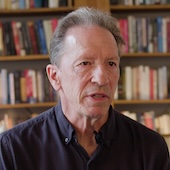
Buffett Faculty Fellow Christopher Udry is a development economist whose research focuses on rural economic activity in Sub-Saharan Africa. He has dedicated his life to understanding causes of and solutions to global poverty. Learn about the insights he's gained and his current projects.

August 20, 2026 – from The New York Times
New research from the Roberta Buffett Institute's Diffusing Disasters Working Group used satellite maps from the U.S. Forest Service National Land Cover Database to track how tree canopies had changed in some of Chicago’s 77 neighborhoods between 2011 and 2021. the researchers matched changes in tree canopy over the years with mortality rates in those neighborhoods. They found that each year-to-year percent increase in canopy was associated with around a 10 percent reduction in mortality. Decreases in deaths from chronic diseases — including respiratory and cardiovascular conditions, as well as from mental illness — partly drove that drop.
August 19, 2026 – from Northwestern Network for Collaborative Intelligence
Modern AI models enable researchers to tackle problems across emergency response, environmental science, public health, and scientific discovery. Researchers, students, and practitioners attended two recent events exploring these themes, hosted by the Northwestern Network for Collaborative Intelligence (NNCI). Through the Summer Speaker Series, NNCI welcomed the public to hear from leading voices in AI, data science, and technology as they shared insights, experiences, and emerging trends shaping the future. V.S. Subrahmanian, Buffett Faculty Fellow and director of the Northwestern Security and AI Lab, is a founding co-director of NNCI.
August 19, 2026 – from University of Ghana
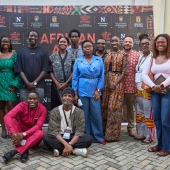
The African Arts Futures Symposium, held at the University of Ghana in Accra, concluded on July 27, 2026. The two days of discussions by artists, scholars, and entrepreneurs focused on how traditional and digital arts can energize African sovereignty in the Age of AI. The event was co-organized in part by Sally Nuamah, Associate Professor of Human Development and Social Policy at Northwestern and former Buffett Faculty Fellow.
August 18, 2026 – from El Faradio
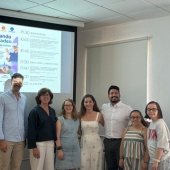
César Enrique Hoyos Álvarez and Claudia Quevedo-Webb, both Assistant Professors of Instruction in the Department of Spanish & Portuguese, recently hosted a symposium in Santander, Spain, in collaboration with the Fundación Síndrome de Down de Cantabria, to supporting neurodivergent individuals. Their work, which involved virtual reality and intercultural connections with Northwestern students, was supported by a Global Collaboration Grant from the Roberta Buffett Institute.
August 17, 2026 – from Chicago Tribune
New research from the Roberta Buffett Institute's Diffusing Disasters Working Group found that yearly increases in tree canopy cover in Chicago neighborhoods were associated with lower death rates and a reduced risk of dying from heart, lung, mental health and some musculoskeletal conditions. The authors looked at satellite measurements across all Chicago census tracts between 2011 and 2021 and compared them with over 220,000 death records from the Illinois and Chicago Departments of Public Health. They found that, despite a higher-than-average tree canopy cover on the South and West sides, faster rates of canopy loss were likely leading to higher mortality rates.
August 14, 2026
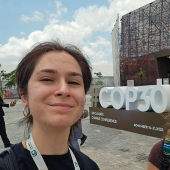
For this installment of our Buffett Q&A series profiling members of the Roberta Buffett Institute community, we spoke with Javiera Cabezas Parra, a third-year PhD student in Northwestern's Department of Chemical and Biological Engineering at the time she attended COP30, the United Nations climate conference, in Belém, Brazil, as part of Northwestern University’s delegation supported by the Roberta Buffett Institute.
August 13, 2026 – from Brookings Institution
The Brookings Institution published a commentary panel on extreme poverty, co-authored by Dean Karlan, the Frederic Esser Nemmers Distinguished Professor of Economics and Finance at Northwestern University and Buffett Faculty Fellow. The panel found that a new model for poverty reduction, based on targeted cash transfers to poor households, would require about 0.3% of global GDP, or just 14% of the wealth gained by global billionaires in 2025 alone, to reduce extreme poverty to less than 1% of the global population.
August 13, 2026
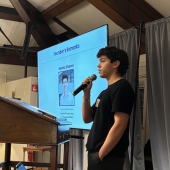
For this installment of our Buffett Q&A series profiling members of the Roberta Buffett Institute community, we spoke with Renato de Souza Elisanio, a recent graduate of Northwestern University. Renato spent his undergraduate career building support systems on campus for international students, founding the Atlas Peer Mentorship Program and the Undergraduate International Student Advancement Council (UISAC) in partnership with the Roberta Buffett Institute and the Office of International Student & Scholar Services.
August 11, 2026 – from Northwestern University Press
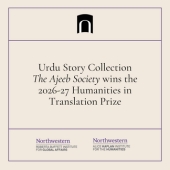
The Roberta Buffett Institute for Global Affairs, the Alice Kaplan Institute for the Humanities, and Northwestern University Press (NUP) are pleased to announce that Daniel Majchrowicz, former Buffett Faculty Fellow, and David Boyk are the winners of the 2026-27 Humanities in Translation (HiT) Prize for The Ajeeb Society, a collection of Urdu short stories by acclaimed writer Qazi Abdul Ghaffar. Majchrowicz and Boyk will receive a $5,000 cash prize as well as publication by Northwestern University Press. The stories, originally published in the 1930s, speak to this year’s HiT Prize theme, hospitality, in many forms and antonyms, from meditations on proper social conduct to the treatment of strangers and of those in need.
August 6, 2026
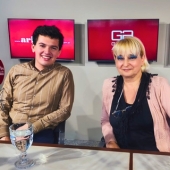
Our Elliott Scholar Jose Aguilar organized a charity concert for HOPe, a nonprofit organization in Salta, Argentina, that supports local youth battling cancer and their families. Aguilar became an intern at HOPe through our Elliott Scholars Program, a two-course sequence on international development followed by an international internship opportunity through the Global Engagement Studies Institute (GESI) offered by Northwestern's Global Learning Office. Read our story on how and why Jose brought his idea for a benefit concert to life.
August 6, 2026 – from Science Direct
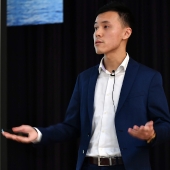
Max Ng, who was supported by a Buffett Conference Travel Grant and a Buffett International Research Award while completing his PhD in Transportation Systems Analysis & Planning, published new research on how shared autonomous vehicles (SAVs) can transform public transit. His research shows that deploying smaller, more frequent autonomous (mini)buses can not only boost frequency at peaks, but also unlock flexible semi-on-demand services that provide door-to-door convenience at off-peak hours.
August 6, 2026 – from Northwestern Security and AI Lab
Postdoctoral researcher Marco Postiglione and Buffett Faculty Fellow V.S. Subrahmanian, Walter P. Murphy Professor in the Northwestern University Computer Science Department, both of the Northwestern Security & AI Lab (NSAIL), published a new paper on whether software that detects audio deepfakes can be trusted. Postiglione will present the paper on August 9 at the ACM SIGKDD & Annual KDD Conference, a premier conference on data mining happening in Jeju, South Korea.
August 5, 2026
For this installment of our Buffett Q&A series profiling faculty and students in the Roberta Buffett Institute community, we spoke with Brent Huffman, Professor and Director of Documentary Journalism at the Medill School.
August 5, 2026 – from American Geophysical Union
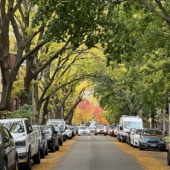
New research from the Roberta Buffett Institute's Defusing Disasters Working Group examined the association between mature tree cover and the health impacts of extreme heat. After accounting for year-to-year changes in urban canopy, death rates, and summer temperatures over an 11-year period, their models demonstrated higher yearly mortality in Chicago neighborhoods with greater canopy loss.

August 5, 2026 – from Northwestern Now
A new study by the Roberta Buffett Institute's Defusing Disasters Working Group examined the association between year-to-year changes in urban canopy, death rates, and summer temperatures over an 11-year period across Chicago neighborhoods. Daniel Horton, the senior author of the study and head of Northwestern's Climate Change Research Group, aimed to explore correlations between canopy cover by mature trees, vulnerability to extreme heat, and mortality and found evidence that cooler, more covered neighborhoods do experience relatively lower mortality.
July
July 31, 2026 – from EL10 TV
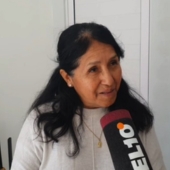
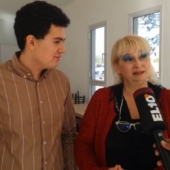
Guadalupe Colque, the founder of the HOPe Foundation, a Salta, Argentina-based nonprofit dedicated to providing support to children battling cancer and their families, speaks about their upcoming charity concert. Jose Aguilar, an intern at HOPe through the Roberta Buffett Institute's Elliott Scholars program, planned the concert as an opportunity to raise money for the organization. The event will come at a time when they are providing free lodging to several families traveling to Salta for cancer treatment.
July 31, 2026 – from EL10 TV
Jose Aguilar, an intern at the HOPe Foundation through the Roberta Buffett Institute's Elliott Scholars program, organized and performed in a charity concert on August 8 benefiting the organization. HOPe is a Salta, Argentina-based nonprofit dedicated to providing support to children battling cancer and their families. The event was co-organized with Inga Iordanishvili, the founder of Camerata Stradivari, a nonprofit orchestra in Salta.
July 31, 2026 – from Informate Salta
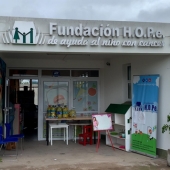
Jose Aguilar, an intern at the HOPe Foundation through the Roberta Buffett Institute's Elliott Scholars program, organized and performed in a charity concert on August 8 benefiting the organization. HOPe is a Salta, Argentina-based nonprofit dedicated to providing support to children battling cancer and their families. The fundraiser came at a time when HOPe was navigating a delicate financial situation as they housed 14 patients in their housing facility.
July 29, 2026 – from Just Security
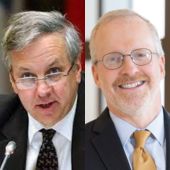
As Georgia faces an increasingly uncertain democratic future, what role should the United States and Europe play? In a new analysis for Just Security, Ambassador (ret.) Ian Kelly, former Roberta Buffett Visiting Professor of International Studies, and co-author David Kramer, former US Assistant Secretary of State for Democracy, Human Rights, & Labor, examine Georgia's political trajectory, the government's crackdown on civil society and opposition parties, and the broader implications for transatlantic security and regional stability. They argue that the coming weeks could prove pivotal for the country's future.
July 29, 2026
For this installment of our Buffett Q&A series profiling faculty and scholars in the Roberta Buffett Institute community, we spoke with Vijayendra “Biju” Rao. After working for 27 years as a Lead Economist in the Development Research Group of the World Bank, he now serves as a Distinguished Practitioner-Scholar in Residence for the Roberta Buffett Institute’s Elliott Scholars Program. In his work, Rao focuses on how social, cultural, and political contexts shape the lives of people living in poverty as well as ways to further engage people in policy.
July 28, 2026 – from The Chicago Council on Global Affairs
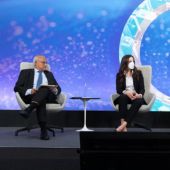
V.S. Subrahmanian, Buffett Faculty Fellow and director of the Northwestern Security & AI Lab, joined a panel discussion hosted by the Chicago Council on Global Affairs along with Lindsay Gorman, a former White House Office of Science and Technology Policy official and Alvin Wang Graylin from the Asia Society Policy Institute. They discussed the global AI race, focusing on the China-US rivalry. The panel focused in part on the diverging approaches to pursuing "good enough" AI versus highly advanced, specialized models.
July 25, 2026 – from The MIT Press
Lauren M. Baker, Diana K. Elhard, and Margaret O'Connell co-authored a new research paper with the support of a Buffett International Research Award. The paper investigates why, despite the increasing attendance, diversity, and transparency efforts of recent United Nations annual climate change conferences, many groups seeking representation continue to feel marginalized and excluded from the decision-making spaces that directly impact their lives.

July 20, 2026 – from Columbia University Press
Northwestern University Political Science PhD candidates Matej Jungwirth and Neonila Glukhodid — 2024–25 Buffett Research Fellows whose work was additionally supported by Buffett Research Travel Awards — have co-authored new research on the case of Ukrainians displaced after the Russian invasion in February 2022. They explore how EU member states hosting Ukrainian forced migrants have been exceptionally receptive, both relative to other crises of forced displacement and overall.
July 17, 2026 – from The British Academy
Congratulations to the Roberta Buffett Institute for Global Affairs' director Deborah Cohen, Richard W. Leopold Professor of History at the Northwestern University - Weinberg College of Arts and Sciences, on her election to The British Academy, a recognition of her outstanding contributions to her field. Others among this year's cohort of newly elected Fellows include Professor Kimberlé Crenshaw of Columbia Law School and University of California, Los Angeles - School of Law; Hassoum Ceesay, Director General of the Gambia's National Centre for Arts and Culture; and more.
July 16, 2026 – from NAFSA: Association of International Educators
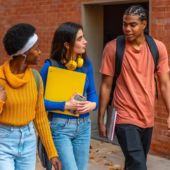
In an interview with NAFSA, Samantha Nissen, the Roberta Buffett Institute's Senior Director of Global Programs and Strategic Initiatives, highlighted programming that emphasizes collaboration. Student-centric initiatives, such as the Global Affairs Leadership Program and The Peace We Make, Buffett's fall 2025 youth-led symposium, create opportunities for students to build meaningful relationships around questions and issues that matter deeply to them.
July 15, 2026 – from Andrew Carnegie Foundation
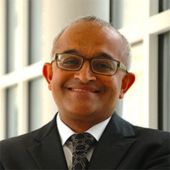
Congratulations to Buffett Faculty Fellow V.S. Subrahmanian, Walter P. Murphy Professor in the Northwestern University Computer Science Department, whose Northwestern Security & AI Lab (NSAIL) received a $1.2M grant from the Andrew Carnegie Foundation to build an AI-powered platform to map safe corridors for civilians fleeing violence by armed groups in Africa's Sahel. NSAIL is jointly housed in the Roberta Buffett Institute for Global Affairs and McCormick School of Engineering.
July 15, 2026 – from The New York Times
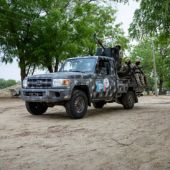
Generative artificial intelligence tools are increasingly aiding terrorist groups, such as Boko Haram, on the battlefield, despite efforts by their makers to safeguard them from misuse. A report about A.I. and the future of terrorism by the Center for Strategic and International Studies said terrorist groups were “mixing and matching” from different A.I. systems, seeking to avoid technical guardrails established by the A.I. companies. The report was co-authored by V.S. Subrahmanian, director of the Roberta Buffett Institute's Northwestern Security & AI Lab (NSAIL).
July 15, 2026
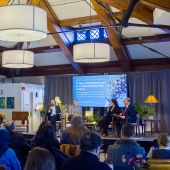
Our two-day winter 2026 symposium, Global Disinformation in a Post-Moderation World, focused on disinformation in the media. Watch the short video recap of the symposium.
July 13, 2026 – from Block Club Chicago
The Chicago Park District and Mayor Brandon Johnson announced a $1 million effort to add or upgrade air conditioning systems in park fieldhouses across the city. Improvements are planned at 42 different parks, which were chosen using the Chicago Heat Vulnerability Index, a tool developed by the Roberta Buffett Institute's Defusing Disasters Working Group. The index incorporates historical temperature trends, heat-related illnesses, and community characteristics.

July 9, 2026 – from Office of the Mayor of Chicago
The City of Chicago's Office of the Mayor announced a $1 million effort to upgrade air conditioning systems in public fieldhouses and expand cooling opportunities during extreme heat events. Improvements are planned at 42 different parks, which were chosen using the Chicago Heat Vulnerability Index, a tool developed by the Roberta Buffett Institute's Defusing Disasters Working Group. The index incorporates historical temperature trends, heat-related illnesses, and community characteristics.
July 9, 2026 – from Hoodline
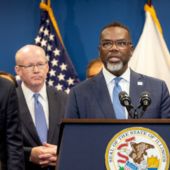
Chicago is announcing a plan to upgrade air conditioning at 42 Chicago Park District sites that the city says are most vulnerable to extreme heat. The Heat Vulnerability Index, a tool developed by the Roberta Buffett Institute's Defusing Disasters Working Group, pulled together hospital outcome data, community input and mobile temperature monitoring to map where extreme heat hits hardest. Researchers and volunteers found that vulnerability clusters on the South and West sides, a pattern the city says it plans to use as a guide for steering cooling investments.
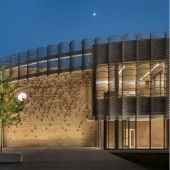
July 9, 2026 – from CBS News
Mayor Brandon Johnson joined officials from the Chicago Park District on Thursday to announce plans for air-conditioning upgrades at 42 Chicago parks. The pilot program prioritizes air-conditioning improvements based upon the results of the Chicago Heat Vulnerability Index, a mapping tool that identified sites in communities that are especially vulnerable to dangers from heat. The Heat Vulnerability Index was developed by the Northwestern University's Buffett Institute for Global Affairs through the Defusing Disasters Working Group.
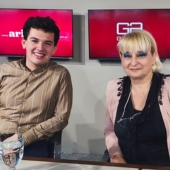
July 8, 2026 – from Aries Online
Jose Aguilar, an intern at the HOPe Foundation through the Roberta Buffett Institute's Elliott Scholars program, organized and performed in a charity concert on August 8 benefiting the organization. HOPe is a Salta, Argentina-based nonprofit dedicated to providing support to children battling cancer and their families. Aguilar, who majors in Clarinet Performance and Political Science at Northwestern, was inspired to plan the event after he performed for a group of children at a birthday party organized by HOPe.
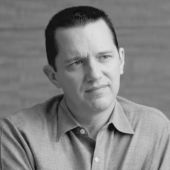
July 8, 2026 – from London School of Economics Government Blog
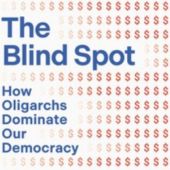
In his new book, The Blind Spot, Jeffrey Winters articulates and elaborates on a very distinctive argument about the origins as well as the operations of oligarchy in the context of American democracy. He treats readers to highly revealing – and readable – accounts of what he calls the ‘wealth defense industry’. In the end, he calls on readers to make use of their democratic freedoms and institutions to push through surgically selective and potentially effective institutional reforms.
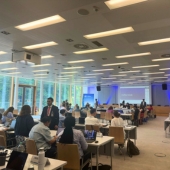
July 7, 2026
Bambang Trihadmojo, a PhD student in the Department of Sociology at Northwestern University, attended SCF40, the 40th meeting of the Standing Committee on Finance of the United Nations Framework Convention on Climate Change (UNFCCC) subsidiary bodies, in June 2026. Prior to attending SCF40 and SB64 (the 64th sessions of the UNFCCC) in Bonn, Germany, Trihadmojo traveled to the world’s largest annual international treaty negotiations and climate summit, the 30th Conference of Parties (COP30) to the UNFCCC in Belém, Brazil as a member of Northwestern University's delegation supported by the Roberta Buffett Institute. Trihadmojo's decision to attend SCF40 and SB64 stemmed from his desire to further deepen his engagement with international climate governance.
July 6, 2026 – from The Majority Report w/ Sam Seder
Jeffrey Winters, Professor of Political Science and Director of the Roberta Buffett Institute's Equality Development and Globalization Studies was interviewed by Sam Seder of The Majority Report w/ Sam Seder to discuss his new book "The Blind Spot: How Oligarchs Dominate Our Democracy." They discussed the role of extremely wealthy individuals in hoarding political power and maintaining inequality in democracies such as the United States.
June
June 26, 2026 – from Political Psychology
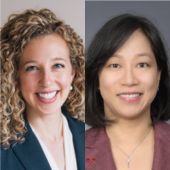
Danielle Gilbert, Roberta Buffett Institute Faculty Fellow and Assistant Professor of Political Science, along with Cynthia S. Wang, Clinical Professor of Management & Organizations, co-authored new research on hostage diplomacy, a growing international security problem. They explore multiple-perspective taking and the ways negotiators can take strategic, cultural, emotional, and moral perspectives on negotiations.

June 24, 2026 – from The London School of Economics and Political Science
Michelle Lee, a Northwestern PhD candidate in sociology who traveled to the COP29 with the Roberta Buffett Institute's support, focuses on AI impacts labor in the Global South, specifically for refugees. Digital work, which includes freelancing, AI data work, and remote employment, has become an attractive option for vulnerable populations. In her research, Lee was surprised by how rarely she heard workers express fear when it came to AI. Most described AI as a tool they had embraced, rather than a threat to employment.
June 23, 2026
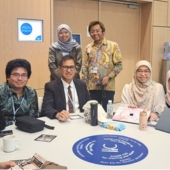
After attending the 30th Conference of Parties (COP30) to the United Nations Framework Convention on Climate Change (UNFCCC) in Brazil as a member of Northwestern University's delegation supported by the Roberta Buffett Institute, Bambang Trihadmojo decided to attend SB64, the 64th sessions of the UNFCCC subsidiary bodies, to further deepen his engagement with international climate governance.
June 17, 2026 – from Northwestern School of Education and Social Policy
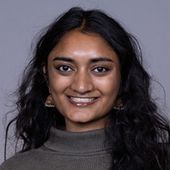
Anusha Kumar, a recent graduate of the School of Education and Social Policy who studied social policy, received a U.S. Student Fulbright Award to teach English in Linz, Austria. While at Northwestern, Kumar received an International Senior Thesis Research Grant from the Roberta Buffett Institute, which allowed her to travel to Chennai, India to examine how community-led mutual aid networks help people access food and build resilience in the city.

June 12, 2026
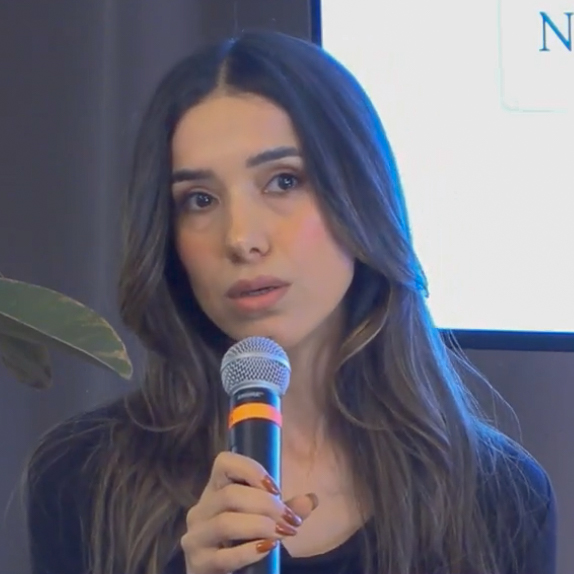
Young people are leading global efforts to end conflict, defend human rights, and advocate for sustainable peace. A student-led Buffett Symposium this past fall brought together activists, politicians, NGO leaders, and negotiators from across the world to explore how youth are transforming the future of peace and justice. Watch the short recap video.
June 12, 2026
The daylong program featured a special conversation with Nadia Murad, 2018 Nobel Peace Prize Laureate and founder of Nadia's Initiative, moderated by Wendy Pearlman, Jane Long Professor of Arts & Sciences and Professor of Political Science at Northwestern University. Watch our short recap of the conversation.
Queer Voices: Innovations for Inclusive Singing & Vocal Training
June 11, 2026
An international research-practice partnership supported by a Buffett Global Collaboration Grant is rethinking vocal training and musical theatre pedagogy to support transgender, nonbinary, and gender-expansive performers. Read our Buffett Brief on their work.
June 10, 2026 – from The Intergovernmental Panel on Climate Change
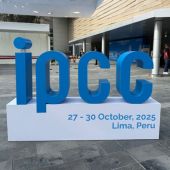
Javiera Cabezas Parra, a Northwestern graduate researcher in chemical engineering who attended COP30 as part of the Roberta Buffett Institute's delegation, has been named a lead author of an upcoming Intergovernmental Panel of Climate Change (IPCC) Methodology Report on carbon dioxide removal technologies. The report will provide updated guidance on carbon capture, utilization, and storage for national greenhouse gas inventories, covering topics ranging from direct air capture and soil carbon sinks to coastal wetland carbon removal and cross-border CO2 transport. Its structure is designed to align with the existing 2006 IPCC Guidelines, making it easier for national inventory compilers to put the new methodology into practice. Over 150 experts are expected to contribute to the writing process, which will be completed by 2027.

June 10, 2026
For this installment of our Buffett Q&A series profiling faculty and scholars in the Roberta Buffett Institute community, we spoke with Daniel Majchrowicz, Associate Professor of South Asian Literature and Culture in Northwestern’s Department of Asian Languages and Cultures. His research explores South Asian literature and culture, with a particular focus on Hindi and Urdu, and his current book project explores Hindi’s global reach.
June 1, 2026 – from The Art Newspaper
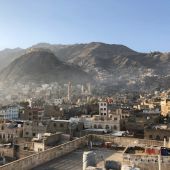
After years of rampant wartime looting—coupled with mounting climate threats and scarce international funding—Yemenis are pushing to revive their heritage and cultural legacy. In a documentary project, Buffett Faculty Fellow Professor Brent E. Huffman highlights the crucial role of Yemeni women in heritage preservation, noting that they have emerged as the primary carriers of cultural knowledge to the next generation. “Not just in Yemen, but in many places, women are often the ones keeping these things alive,” Huffman reflected. For Yemenis working in heritage, it is a race against time—not only to protect deteriorating sites, but to train the next generation of restorers before that knowledge is lost.
June 1, 2026
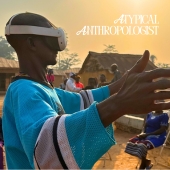
In this 15-minute short documentary produced by the Roberta Buffett Institute, Buffett Dissertation Fellow Craig Stevens shares his research leveraging technologies like virtual reality and photogrammetry to allow African communities to meaningfully contribute to the interpretation and curation of their globally dispersed artifacts and cultural objects.
May
May 28, 2026 – from Ghetto Radio
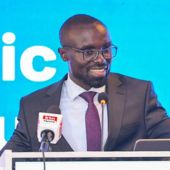
Eric Mugaa, the Cabinet Secretary for Water, Sanitation, and Irrigation for the Kenyan government, expressed the need for Kenya to move beyond counting water points during the Getting WISE 2026 conference in Nairobi. "We need to have a mindset change, adopt new metrics, and get better with time," said Mugaa. Kenya sent a delegation to Northwestern to further discuss the adoption of new metrics for human experiences of water, both in Kenya and across Africa. Mugaa worked with Northwestern University Professor Sera Young, co-lead of the Roberta Buffett Institute's former Making Water Insecurity Visible Global Working Group.
May 27, 2026 – from Democracy Now!
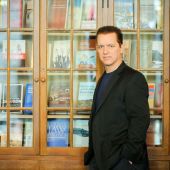
In this episode of Democracy Now!, Northwestern University Professor Jeffrey Winters discusses his new book, "The Blind Spot: How Oligarchs Dominate Our Democracies," with host Amy Goodman. Winters, who directs of the Roberta Buffett Institute’s Equality Development and Globalization Studies program highlights a puzzling paradox: the US is more democratic than ever, yet has become more unequal. Winters argues that this failure to address wealth inequality is by design, as wealth and political power operate simultaneously within the democratic system. He points to greater corporate transparency as a path forward for holding the wealthy accountable.

May 27, 2026 – from KTN News Kenya
The Getting WISE Conference, was held in 2026 in Nairobi, Kenya, to address issues of water security and infrastructure in Africa. The conference was organized in large part by Sera Young, a member of the Roberta Buffett Institute's Disproportionate Impacts of Environmental Challenges Working Group. Professor Young's development of the Water InSecurity Experiences (WISE) Scales, the first globally equivalent way of measuring water access and use, have been used by hundreds of organizations in more than 90 countries, including Kenya.
May 26, 2026 – from Northwestern Security and AI Lab
Buffett Faculty Fellow V.S. Subrahmanian and Buffett Undergraduate Research Fellow Isabel Gortner co-authored the first quantitative study of deepfake activity during the 2024 US presidential election. Analyzing a dataset of 231 deepfakes across social media—including images, videos, and audio clips—the research team revealed that deepfake activity spikes preceding key election events (KEEs) and engagement with deepfakes surged during pre-KEE time windows. Access the dataset.
May 26, 2026 – from TV47 Kenya
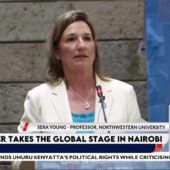
The Getting WISE Conference, was held in 2026 in Nairobi, Kenya, to address access to clean and affordable water in Africa. The conference was named for Sera Young's Water InSecurity Experiences (WISE) Scales, the first globally equivalent way of measuring water access and use. WISE Scales have been used by hundreds of organizations in more than 90 countries, including Kenya. Professor Young is a member of the Roberta Buffett Institute's Disproportionate Impacts of Environmental Challenges Working Group.
May 26, 2026 – from WNYC
Jeffrey Winters, professor of political science at Northwestern University and the director of the Equality Development and Globalization Studies (EDGS) Program at the Roberta Buffett Institute for Global Affairs joined The Brian Lehrer Show to talk about his book "The Blind Spot: How Oligarchs Dominate Our Democracies." Winters discussed the history of oligarchy, how to fight it, and why it maintains power in a democracy.

May 25, 2026 – from Proceedings of the Twentieth International AAAI Conference on Web and Social Media
Buffett Faculty Fellow V.S. Subrahmanian and Buffett Undergraduate Research Fellow Isabel Gortner co-authored the first quantitative study of deepfake activity during the 2024 US presidential election. Analyzing a dataset of 231 deepfakes across social media—including images, videos, and audio clips—the research team revealed that deepfake activity spikes preceding key election events (KEEs) and engagement with deepfakes surged during pre-KEE time windows. This study provides valuable advice for policymakers in combating the use of fake content during election season.
May 22, 2026
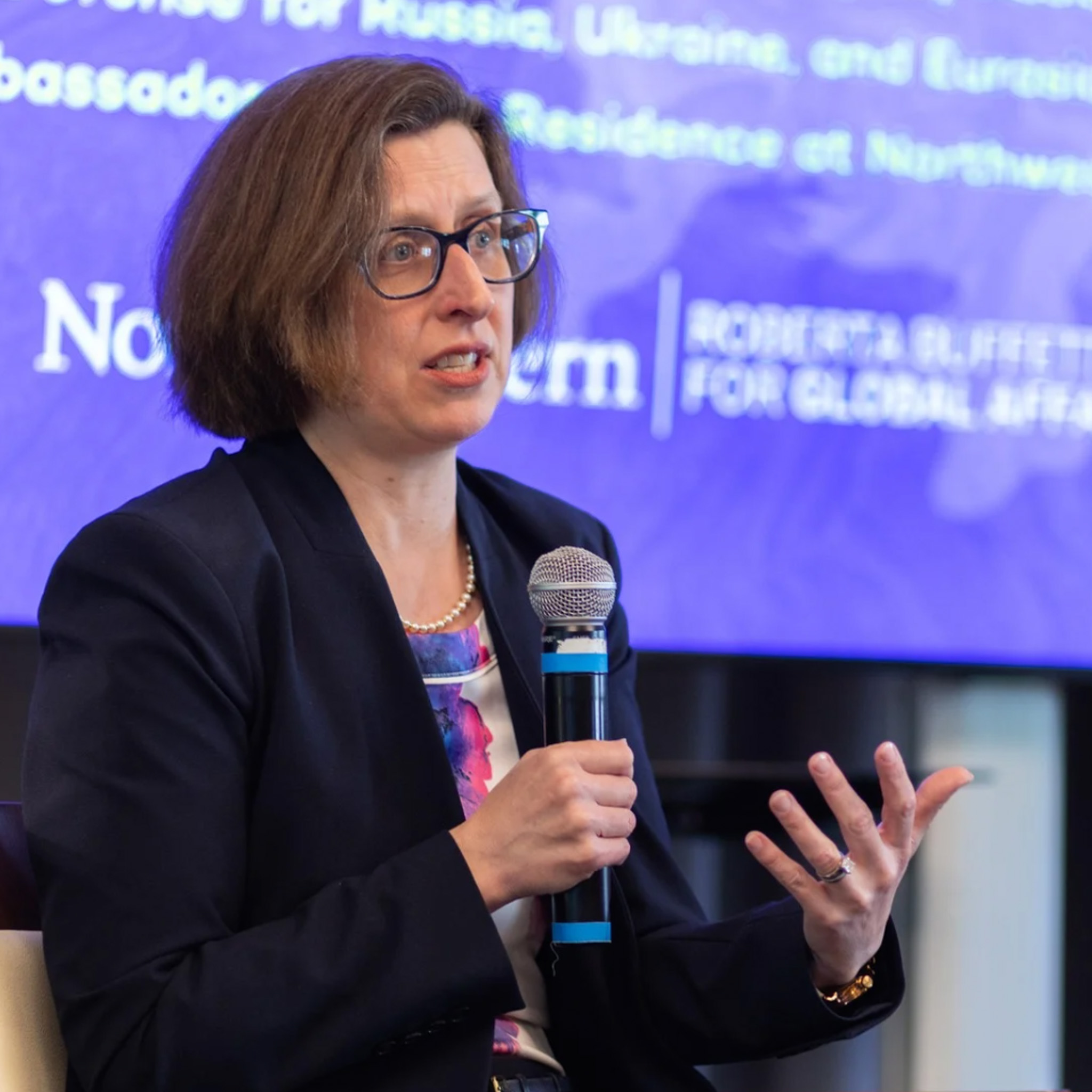
Watch a Buffett Conversation with Former Deputy Assistant Secretary of Defense Laura Cooper, who offered insider perspective on the policy decisions that defined Russia’s 2022 invasion of Ukraine.
May 22, 2026 – from Northwestern Security and AI Lab
The Northwestern Security & AI Lab (NSAIL) published Perturbed Public Voices, a new dataset designed to identify audio deepfakes. Current deepfake detectors are trained on lab-generated data that fail to capture the complexity of malicious deepfakes—leaving society vulnerable to sophisticated voice cloning attacks targeting public figures. This dataset bridges the gap between academic benchmarks and real-world deepfake threats. The project was developed by V.S. Subrahmanian, Director of NSAIL and Buffett Faculty Fellow, postdoctoral researcher Marco Postiglione, Computer Science PhD candidate Chongyang Gao, and Isabel Gortner, former Buffett Undergraduate Research Fellow.
May 21, 2026 – from Northwestern Security and AI Lab
V.S. Subrahmanian, Buffett Faculty Fellow and director of the Roberta Buffett Institute's Northwestern Security & AI Lab (NSAIL) , along with Chongyang Gao, PhD student in Computer Science, and Marco Postiglione, Postdoctoral Research Scholar at NSAIL, published new research on SafePro, a new model to ensure safety in AI protein design. They presented their findings at Understanding AI Threats to the Chem-Bio-Nuclear World, a workshop convened by NSAIL, which is a collaboration between the Roberta Buffett Institute and the McCormick School of Engineering.
May 19, 2026 – from Northwestern Medicine News Center
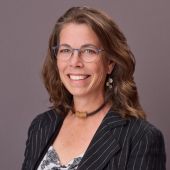
Since the start of Russia's full-scale invasion of Ukraine in 2022, thousands of Ukrainian children have been separated from their families and communities. Prof. Sara Huston has been leading the Roberta Buffett Institute's GlobalFam DNA Working Group to pilot the use of DNA databases as a path to family reunification. She and her team have travelled to Warsaw, Poland, and Ukraine to build connections on the ground with the families of the missing.
May 13, 2026
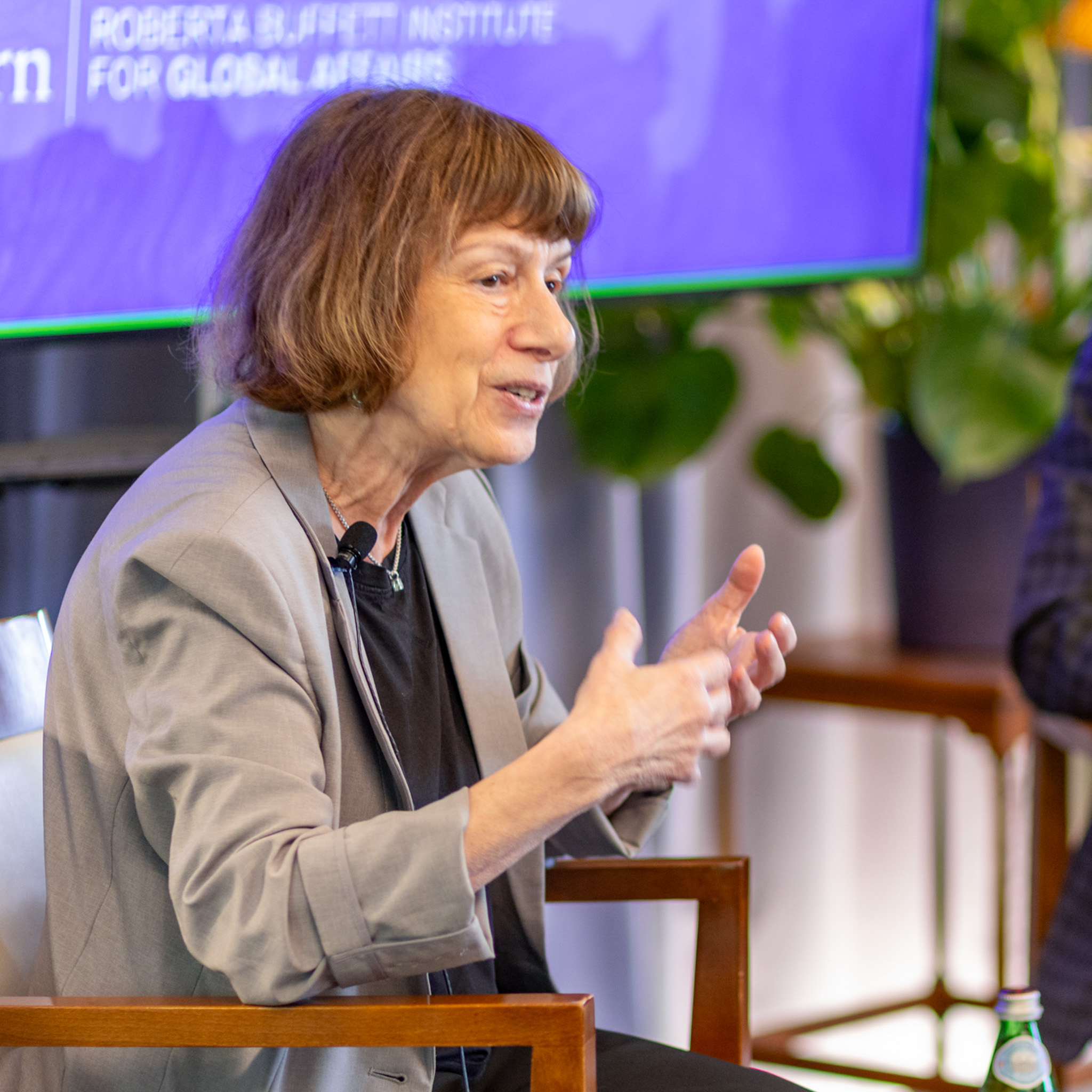
Watch Maria Lipman examine why Russia’s public supports the Russia-Ukraine war yet shows reluctance in military participation in this Buffett lunchtime lecture.
May 13, 2026
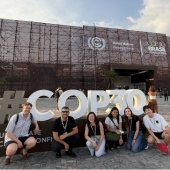
For a fifth year, a delegation of more than a dozen Northwestern students and faculty attended the 30th Conference of Parties (COP30) to the United Nations Framework Convention on Climate Change (UNFCCC) this year held in in Belém, Brazil. Hear their takeaways from the conference and reflections on the research they conducted there.

May 11, 2026 – from Engineering News
Northwestern University's 10th Annual Water Symposium—themed “Water Security in Israel, the Middle East and Africa: Regional Solutions for the Climate and Water Crisis”—highlighted the importance of global partnership to advance water security. Moderated by Sera Young, Professor of Anthropology and co-lead of Roberta Buffett Institute's former Making Water Insecurity Visible Global Working Group, researchers and practitioners discussed the persistent global challenges in achieving water security and emphasized collaboration across communities as a central driver of impact. The symposium laid the groundwork for future collaboration across Israel, Africa, and the United States, with the shared goal of expanding water access and improving lives.
May 11, 2026
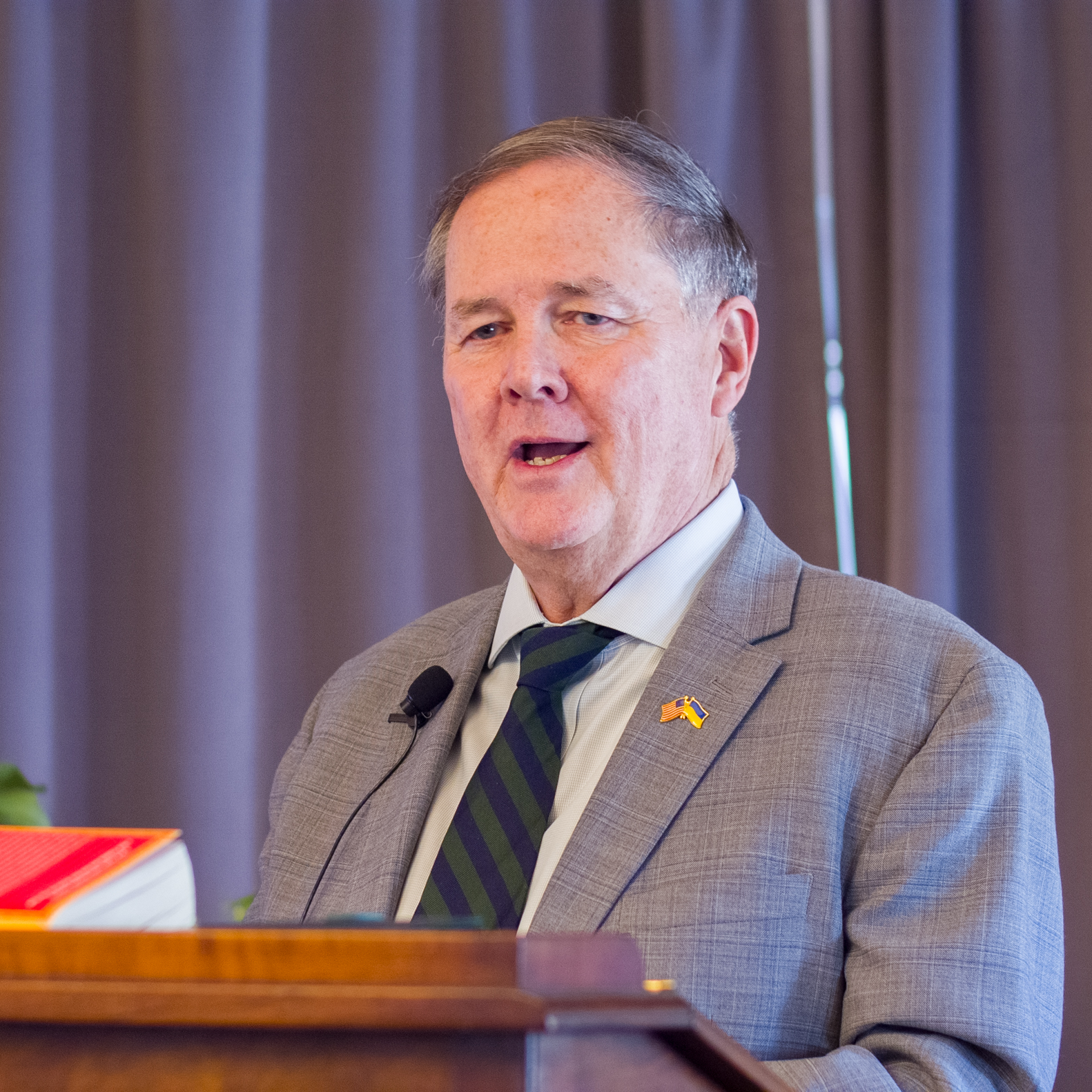
Watch a Buffett Lecture about the assault on journalism at home and abroad with Buffett Distinguished Visiting Practitioner Thomas O. Melia.

May 4, 2026 – from Ars Technica
In a world of increasingly sophisticated cybersecurity methods, the canary trap remains a simple yet time-tested way to identify leakers and double agents. It has been used by companies such as Tesla and Apple, and recently helped Elections Alberta uncover the culprits behind an electoral data leak in Canada. In 2021, Buffett Faculty Fellow V.S. Subrahmanian developed an AI tool called WE-FORGE. Drawing on the same principle as the canary trap, the tool automatically generates false documents to protect intellectual property, including drug designs and military technology.

May 1, 2026 – from Substack
In a Substack essay reflecting on her experience leading a Roberta Buffett Institute student delegation to COP30 in Belém, Brazil, Professor Iza Ding, during a visit to the China Pavilion, interrogated the concept of "soft power," which has been resurging in public conversation about China and the US. Using the global Labubu toy craze as an example, Ding argued that China's soft power cannot be disentangled from its economic and technological rise, and that global culture has always been shaped more by market forces and presence than by overt statecraft.
May 1, 2026 – from National Bureau of Economic Research
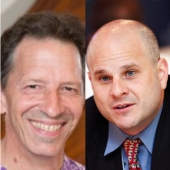
New research, co-authored by Dean Karlan and Christopher Udry, both Buffett Faculty Fellows and co-directors of Northwestern's Global Poverty Research Lab, attempts to determine whether there are specific income thresholds that define poverty traps. Poverty traps are the inability of households below a certain income level to prosper, yet they argue that the pursuit of clear evidence of an asset-threshold poverty trap for a broad population is likely an aspirational, unachievable goal.
April

April 29, 2026 – from The Daily Northwestern
The Daily Northwestern listed the Roberta Buffett Institute as a standout source of undergraduate research funding, the second-highest single-grant source available to undergraduates across the university.
April 29, 2026 – from Northwestern Institute for Policy Research
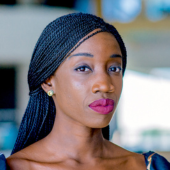
Sally Nuamah, Associate Professor of Human Development and Social Policy, Buffett Faculty Fellow, and social policy expert at the Institute for Policy Research, received two major international awards. She is setting out on a three-year journey as one of 118 Young Global Leaders selected by the World Economic Forum. The Rockefeller Foundation also awarded her a 2026 Bellagio Center residency.

April 28, 2026 – from Oxford University Press
Jennifer Lackey has published a new book examining the ways communities and cultures victimized by injustice see their stories erased and distorted. She explores concrete steps toward ensuring reparations include recognition of the experiences peoples face. Lackey is the Wayne and Elizabeth Jones Professor of Philosophy at Northwestern and co-lead of the Roberta Buffett Institute's Epistemic Reparations Global Working Group.
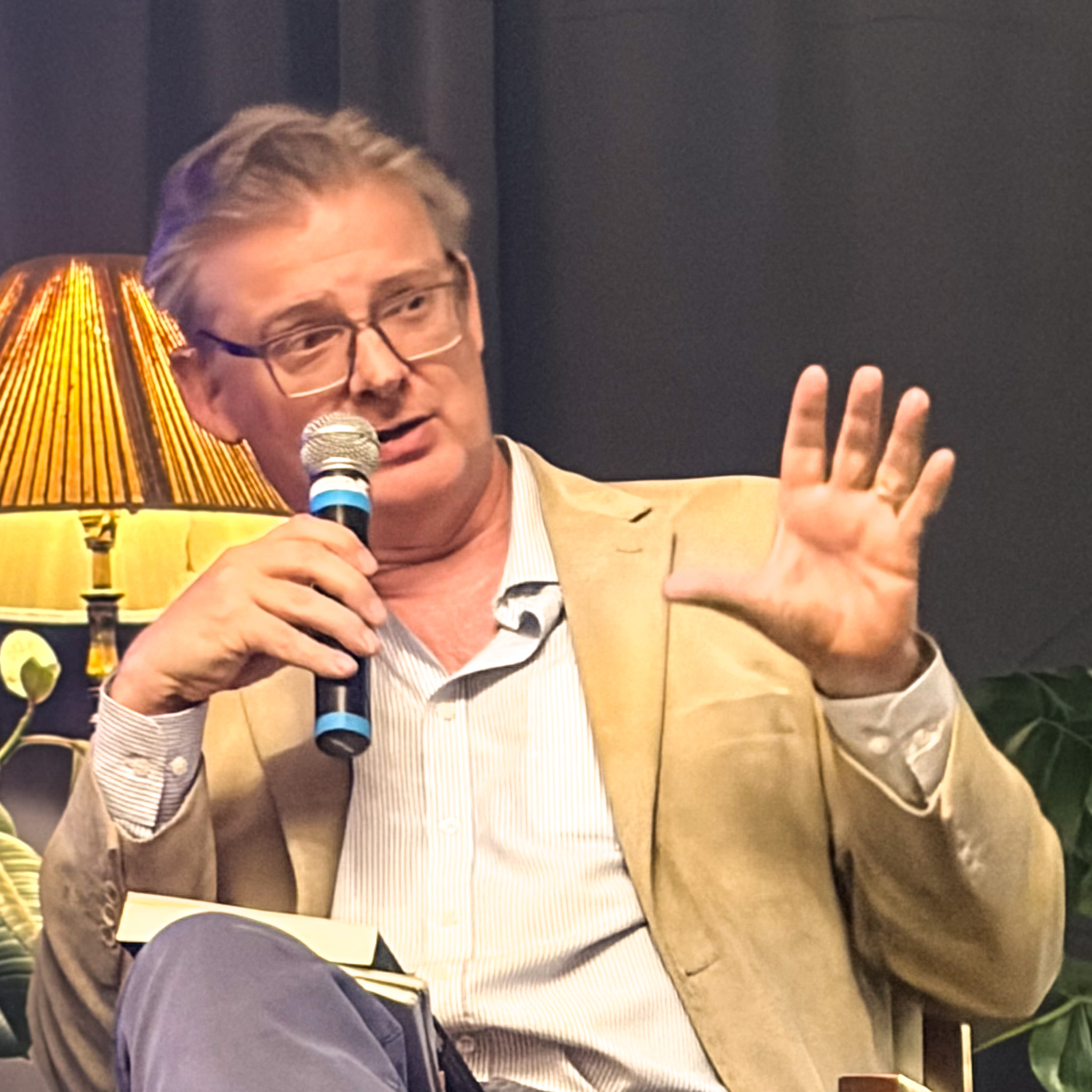
April 27, 2026
Watch a Buffett Conversation about the increasing Mexican cartel violence against local press, discussed by a panel of expert professors and journalists.
SMART: A Social Movement Analysis & Reasoning Tool with Case Studies on #MeToo and #BlackLivesMatter
April 17, 2026
Social movements supporting the UN's Sustainable Development Goals (SDGs) play a vital role in improving human lives. If journalists were aware of the relationship between social movements and external events, they could provide more precise, time-sensitive reporting about movement issues and SDGs. Our SMART system achieves this goal by collecting data from multiple sources, extracting emotions on various themes, and then using a transformer-based forecasting engine (DEEP) to predict quantity and intensity of emotions in future posts. We show that SMART enables early detection of discourse shifts around key political events, providing journalists with actionable insights to inform editorial planning.

April 16, 2026 – from Northwestern Now
Sera Young, Professor of Anthropology and Global Health Studies and co-leader of the Buffett Institute's Making Water Insecurity Visible Global Working Group, has been awarded a 2026 Guggenheim Fellowship in Geography and Environmental Studies, as featured in Northwestern Now. Young led the development of the Household and Individual Water Insecurity Scales (HWISE and IWISE), the first cross-culturally equivalent tools for measuring water access and use. "By measuring how water 'shows up' — or not — in everyday life, the Water Insecurity Experiences Scales help reveal the hidden costs of water insecurity," she explained. The fellowship will support her ongoing efforts to improve global water security across diverse cultural and regional contexts.
April 16, 2026 – from World Economic Forum
Sally Nuamah, Associate Professor of Human Development and Social Policy and Buffett Faculty Fellow was invited to join the Young Global Leaders Class of 2026. The cohort of 118 leaders under the age of 40, from 55 countries, spanning public service, innovation, research, civil society, entrepreneurship and culture. Through a three-year leadership journey, members engage in executive learning, peer exchange, and cross-sector collaboration, while contributing perspectives and solutions to the World Economic Forum’s broader work.
April 15, 2026 – from The Daily Northwestern
Indiana University Professor Eunice Sang Eun Lee discussed her current book project, “Digesting the Empire: Embodying Life beyond Militarized Circulations across the Pacific Ocean,” as a part of the Roberta Buffett Institute's graduate programming series. Using both scientific and literary perspectives on radiation damage, the book compares scientific reports and Asian diasporic literature side by side to explore the effects of the atomic bombings in Hiroshima and Nagasaki. In her book, Lee experiments with the concepts of “nuclear” and “digestion” to flesh out the less-visible connections between everyday life, the aftermath of atomic bombings, and imperialism.

April 14, 2026 – from Northwestern Now
A new study by Northwestern University scientists revealed that animal communication signals—from flashing lights to chirping calls—follow a common tempo of roughly two beats per second. This finding could help scientists better interpret animal signaling and social behavior, including humans' rhythmic perception of music and speech. Professor Daniel Abrams, who was awarded the Roberta Buffett Institute's Global Collaboration Grant to support this research, explained that the right tempo range may be key to communicating efficiently. The team hopes the findings inspire broader research into how brains respond to different communication rhythms across species.

April 14, 2026 – from The Daily Northwestern
The Roberta Buffett Institute successfully hosted its two-day spring symposium, Brave New Futures, from April 9–10. The event brought together international scholars, artists, and activists from a wide range of disciplines to explore how we might build a better future amidst the many crises of our time. Deborah Cohen, Director of the Roberta Buffett Institute, noted that the symposium’s focus emerged from conversations with students who expressed deep uncertainty about what lies ahead. The symposium featured panels that examined how human relationships, information ecosystems, and the future of labor are being reshaped under shifting sociopolitical conditions.

April 13, 2026 – from The Daily Northwestern
Syrian-American poet and rapper Omar Offendum and Palestinian multi-instrumentalist Zafer Tawil opened the Buffett Institute for Global Affairs' spring symposium, "Brave New Futures," with a contemporary take on hakawati, the traditional Arabic art of storytelling. Weaving together original poems, stories, and raps, the performance invited the audience to reflect on the kind of world we aspire to build together.
April 11, 2026 – from The Christian Science Monitor
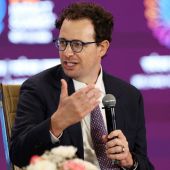
AI has become a powerful tool that poses new risks in cybersecurity. AI company Anthropic's newest model, Claude Mythos Preview, found severe vulnerabilities in common operating systems that humans missed and devised ways to exploit those gaps. The implication of this advancement, however, is not wholly negative. V.S. Subrahmanian—a Buffett Faculty Fellow and Walter P. Murphy Professor of Computer Science at Northwestern shared his thoughts on the matter: "I view this as an opportunity to get ahead of the bad guys. We have this capability now to identify the vulnerabilities that might exist in a system," he remarked.

April 10, 2026
Our spring 2026 Buffett Symposium, Brave New Futures, convened a visionary set of international thinkers to explore how human relationships, information ecosystems, labor, and the planet itself are being reshaped in this moment of uncertainty and possibility.
April 2, 2026 – from The Washington Post
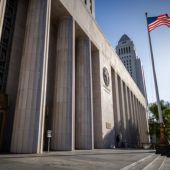
A recent Northwestern study co-authored by V.S. Subrahmanian — Walter P. Murphy Professor of Computer Science and a Buffett Faculty Fellow — found that more than 60% of federal judges have used AI tools at least once in their judicial work, while only around 22% do so daily or weekly. This use of AI has been helpful for judges and court administrators, though the judiciary has not been immune to AI-generated errors. This phenomenon underscores the need for further evaluation of AI's effectiveness and reliability in courtroom settings.
March

March 30, 2026 – from Northwestern Now
Buffett Faculty Fellow and Walter P. Murphy Professor of Computer Science V.S. Subrahmanian, who directs the Northwestern Security & AI Lab, co-authored a study examining federal judges' use of AI. Drawing on a random sample of judges, the study found that over 60% reported using at least one AI tool in their judicial work. Judges turn to AI primarily for legal research and document review, and favor legal-specific platforms over general-purpose ones. The research team is calling for formal training and clear policies to ensure responsible AI adoption across the judiciary.
March 30, 2026 – from LawSites
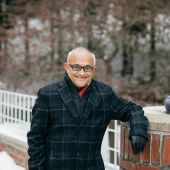
A novel study by Northwestern, in collaboration with the New York City Bar Association, revealed that more than 60% of federal judges have used generative artificial intelligence tools in their judicial work. Among the researchers involved in this study was V.S. Subrahmanian, Walter P. Murphy Professor of Computer Science at Northwestern University and a Buffett Faculty Fellow. Even though the use of AI is prevalent among judges, fewer than one in four use it on a daily or weekly basis, with most preferring legal-specific tools over general-purpose AI.
March 26, 2026 – from Circle of Blue
Research emerging from the Roberta Buffett Institute’s Making Water Insecurity Visible Global Working Group—co-led by Professor Sera Young—continues to advance how water insecurity is measured and understood worldwide. Central to this work are the Water Insecurity Experiences (WISE) Scales, a set of widely used survey tools developed under Young’s leadership to capture how people experience challenges with water access, reliability, and use in daily life. Unlike traditional infrastructure-based metrics, the WISE Scales quantify the social, emotional, and practical impacts of water insecurity across diverse contexts, enabling more comparable and human-centered data collection. Now implemented by organizations and researchers in dozens of countries, these tools have helped illuminate links between water insecurity and broader issues such as health, food access, and economic stability, providing critical evidence to inform policy, advocacy, and global development efforts.
March 23, 2026 – from Center for Strategic and International Studies
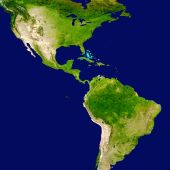
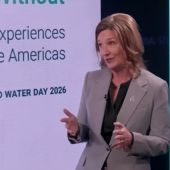
In recognition of World Water Day, Northwestern professor Sera Young—who co-led the Roberta Buffett Institute's Making Water Insecurity Visible Global Working Group—joined Zane Swanson of the Center for Strategic and International Studies for a conversation on new data examining water insecurity across the Americas. In this video discussion, the two highlight findings from the Water Insecurity Experiences (WISE) Scales, drawing on survey data from more than 27,000 individuals across 17 countries to better understand who experiences water insecurity and how it manifests in daily life. Their discussion underscores that water insecurity is widespread across diverse national contexts and emphasizes the importance of measuring lived experiences—rather than infrastructure alone—to inform more effective policy responses and interventions.
March 23, 2026 – from Northwestern Now
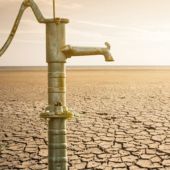
A Northwestern Now press release covered insights gained from the 2026 WISE Americas report, a new study of 17 countries in the Americas, including the U.S., which found that no country or income group is immune to water insecurity, and that the prevalence of water insecurity varies widely within and across the Americas. The study was led by Northwestern professor Sera Young, who co-led the Roberta Buffett Institute’s Making Water Insecurity Visible Global Working Group. It highlights the far-reaching social and political risks associated with water insecurity across the Western Hemisphere, finding that limited or unreliable access to safe water is closely linked to increased risks of migration, civil unrest, and hunger, with millions affected across the region. Drawing on new cross-national data, the researchers emphasize that water insecurity extends beyond scarcity to include issues of access, quality, and affordability, underscoring its role as a critical driver of broader instability and public health challenges.
March 19, 2026 – from Science Direct
New research co-authored by Sara Huston, co-lead of the Roberta Buffett Institute’s Global FamDNA Working Group, and working group member Diana Madden explores the future of DNA testing for family reunification in humanitarian and human rights contexts. In their recent article, the authors examine how advances in genetic technologies can support efforts to reconnect families separated by conflict, migration, and political violence, while also outlining key ethical, logistical, and governance challenges. Drawing on collaborations across academic, clinical, and nonprofit sectors—including DNA Bridge and the International Commission on Missing Persons—the study proposes a “toolkit” approach to guide responsible and effective use of DNA in reunification efforts, emphasizing the importance of consent, data protection, and international coordination in these high-stakes applications.

March 19, 2026 – from Arxiv
A new article published in Arxiv based on research from Roberta Buffett Institute Faculty Fellow V.S. Subrahmanian, conducted in collaboration with Buffett Undergraduate Research Fellow Isabel A. Gortner and postdoctoral scholar Marco Postiglione at Northwestern’s Security & AI Lab (NSAIL), offers new insights into how deepfakes can be more effectively identified. In their recent paper, the researchers compare the performance of humans, AI detection tools, and combined human–AI approaches across multiple datasets, including a newly developed deepfake video set. They find that humans consistently outperform AI detectors, particularly in lower-quality videos where algorithmic accuracy declines sharply, and that human and AI errors tend to be complementary.

March 17, 2026 – from Foreign Policy
Buffett Faculty Fellow V. S. Subrahmanian argues in a recent Foreign Policy op-ed that AI-generated deepfakes are already reshaping public perceptions of the ongoing Iran conflict, as highly realistic but fabricated videos—many circulating on platforms like TikTok—depict false battlefield successes and civilian impacts that garner millions of views and blur the line between fact and fiction. Drawing on emerging evidence that such content is often part of coordinated influence campaigns, he warns that deepfakes can reinforce political narratives and undermine trust even when viewers suspect they are fake, making them a powerful tool of modern information warfare; as a result, he calls for coordinated action between governments and tech companies to detect, label, and limit the spread of synthetic media, while acknowledging that such efforts may struggle to keep pace with the scale and speed of AI-driven disinformation.
March 14, 2026 – from AAAI Conference on Artificial Intelligence
The Roberta Buffett Institute's AI and Social Movements working group published new research on the Social Media Analysis & Reasoning Tool (SMART). SMART is an AI tool that evaluates large quantities of social media data to enable journalists and strategic decision-makers to forecast the growth of social movements. This case study, focusing on a dataset of content on the #MeToo movement, was presented at the 40th Annual AAAI Conference on Artificial Intelligence.
March 12, 2026 – from The Daily Northwestern
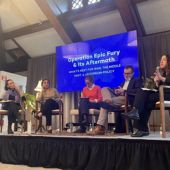
Northwestern faculty explored the context around Operation Epic Fury during a panel hosted by the Roberta Buffett Institute. Moderated by political science professor Wendy Pearlman, the discussion brought together scholars from across disciplines to situate the operation within longer histories of U.S. intervention and regional conflict. SESP professor Shirin Vossoughi emphasized that while many Iranians oppose the Islamic Republic, foreign military action can undermine internal opposition movements and complicate efforts for democratic change. Global health studies professor Elham Hoominfar highlighted the environmental and humanitarian toll of the conflict, including damage to critical infrastructure and constraints on grassroots movements advocating for women’s rights, labor rights, and environmental protections. Crown Family Center postdoctoral fellow Shira Pinhas discussed Israel’s role in the broader regional dynamics, while history professor Michael Allen urged audiences to consider how U.S. foreign policy narratives shape and justify military intervention in the Middle East.
March 8, 2026 – from The New York Times
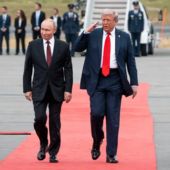
Maria Lipman, Roberta Buffett Visiting Professor of International Studies at Northwestern, was quoted in a recent New York Times analysis examining parallels between the Trump administration’s military campaign against Iran and Russia’s invasion of Ukraine. Lipman noted that the similarities begin with the sense of improbability surrounding the conflict’s outbreak, recalling how many Russians initially dismissed the possibility that President Putin would launch a full-scale invasion of Ukraine despite mounting troop buildups. She explained that once the war began, many Russians gradually accepted the Kremlin’s narrative that Western aggression left Russia with no alternative but to launch what it termed a “special military operation.” Reflecting on the current conflict, Lipman warned that by initiating war with Iran, the United States had “stepped into the unknown,” suggesting that the consequences could bring greater instability for both the region and Americans at home.
March 6, 2026 – from Northwestern School of Education and Social Policy
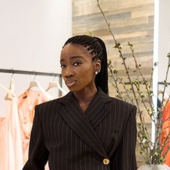
Sally Nuamah, Associate Professor of Human Development and Social Policy and Buffett Faculty Fellow, was selected as a 2026 Bellagio Center resident by the Rockefeller Foundation. She will attend the prestigious 26-day residency on the shores of Lake Como, Italy to develop a research project on examining African cultural production, sovereignty, and partisanship.

March 5, 2026 – from Fox 32 Chicago
FOX 32’s Chicago Live recently featured Professors Sera Young and Julius Lucks, co-leads of the Roberta Buffett Institute's Making Water Insecurity Visible Global Working Group, to discuss their team’s efforts to make the quality of drinking water easier to monitor at home. The researchers are piloting innovative biosensor-based tests designed to detect contaminants, such as lead, using a simple process similar to at-home COVID-19 tests. Developed through interdisciplinary collaboration at Northwestern, the handheld technology allows households to place a small drop of tap water into a test tube and receive an easy-to-read result, helping communities identify potential water quality risks quickly. The project builds on a broader effort by the working group to generate new data on water insecurity and make the global water crisis more visible to policymakers and the public.
March 5, 2026
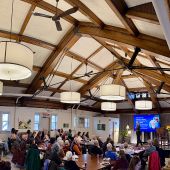
Watch our recent Buffett Book Talk with Marc Lynch on America’s Middle East: The Ruination of a Region, which examines how and why Washington became entangled in the Middle East, situating US policy within the broader trajectory of its post-Cold War foreign policy in the region. Professor Lynch charts the United States' controversial approach to the post-Cold War Middle East, where he claims aspirations for US leadership and a calm region have only produced war, instability, and humanitarian catastrophe.
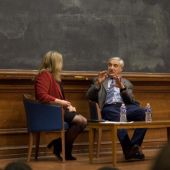
March 4, 2026 – from The Daily Northwestern
Nobel laureate and Northwestern professor Joel Mokyr discussed technological change, economic growth, and the future of human progress during a Q&A hosted by the Roberta Buffett Institute alongside the Departments of Economics and History. Moderated by history professor Amy Stanley, the event invited students to engage with Mokyr’s ideas about the forces that have driven long-term improvements in human living standards. Mokyr emphasized the transformative impact of technological innovation—from the Industrial Revolution to emerging tools like artificial intelligence—while acknowledging that such changes can produce both winners and losers. He encouraged students to remain intellectually flexible and avoid overspecialization, arguing that curiosity, adaptability, and openness to new ideas are essential in a rapidly changing world.
February

February 26, 2026
Watch a short new video overviewing the mission and vision of the Roberta Buffett Institute's Global 2Gen Education Working Group and its Jamaica 2Gen initiative.
February 26, 2026
Listen to a sound collage recapping a workshop on queer voice, vocal training, and singing for inclusion that convened more than 65 scholars, students, artists, and industry professionals. The workshop was led by Kelli Morgan McHugh, Associate Professor of Instruction in Music Theatre at Northwestern University’s School of Communication, in partnership with the University of Sydney and was supported by a Global Collaboration Grant from the Roberta Buffett Institute for Global Affairs.
February 26, 2026 – from Northwestern Institute for Policy Research
A recent feature from Northwestern’s Institute for Policy Research highlights the work of the Buffett Institute’s Global FamDNA Working Group, an interdisciplinary team developing a humanitarian DNA repository designed to help reunite families separated by war and other crises. Co-led by political scientist Tabitha Bonilla and geneticist Sara Huston, the project seeks to collect DNA from relatives of missing individuals so matches can be made when children or adults are later located. The initiative gained urgency following reports that thousands of Ukrainian children were taken to Russia after the 2022 invasion, making identification and reunification more difficult. By building a secure, globally coordinated DNA system and addressing ethical, legal, and logistical challenges, the researchers aim to create infrastructure that could help reunite families not only in Ukraine but in future humanitarian crises.
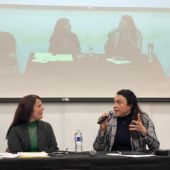
February 25, 2026 – from The Daily Northwestern
Scholars examined the political context and potential consequences of the United States’ January 3 military intervention in Venezuela during a panel discussion hosted by Northwestern’s Latin American and Caribbean Studies Program and co-sponsored by the Roberta Buffett Institute. The event featured a conversation between University of Illinois Chicago Mellon Visiting Scholar Verónica Zubillaga and Northwestern history professor Lina Britto, who analyzed the operation that captured Venezuelan president Nicolás Maduro and struck several locations in Caracas. Zubillaga questioned the Trump administration’s justification for the invasion—particularly claims about Venezuelan involvement in drug trafficking and crime—arguing that such narratives rely on broad generalizations and limited evidence. Britto placed the intervention within longer historical patterns of U.S. foreign policy in the region, encouraging audiences to consider the broader geopolitical implications and the challenges that military action may pose for democratic stability in the Americas.
February 25, 2026
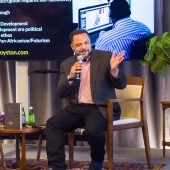
Watch our recent Buffett Book Talk with Reginold Royston on Pan-African Futurism: Ghana and the Paradox of Technology for Development, an ethnographic account of an emerging ethos among technologists working on development projects on the ground in Africa today. Drawing on observation and interviews with software engineers in Ghana and media producers across Ghana's digital diaspora, Royston argues that these actors challenge long-standing NGO-led development paradigms, using technology as a means of reclaiming autonomy and reimagining African political futures in a global digital age.
February 25, 2026
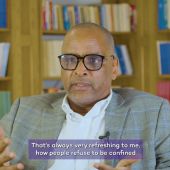
For this installment of our Buffett Q&A series profiling faculty and students in the Roberta Buffett Institute community, we spoke with Zekeria Ahmed Salem, Associate Professor of Political Science at Northwestern’s Weinberg College of Arts & Sciences, outgoing director of the Institute for the Study of Islamic Thought in Africa (ISITA), and 2024–25 Buffett Faculty Fellow.
February 23, 2026 – from The Daily Northwestern
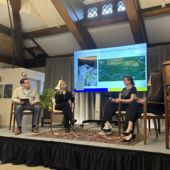
A student panel hosted by Northwestern University’s Ukrainian Club explored the personal impacts of Russia’s 2022 invasion of Ukraine at an event supported by the Roberta Buffett Institute. Moderated by political science professor Jordan Gans-Morse, the panel brought together Ukrainian students to share firsthand reflections on life before, during and after the war, including memories of air raid sirens, displacement, family separation, and the emotional toll of conflict.
February 21, 2026 – from Vilni Media
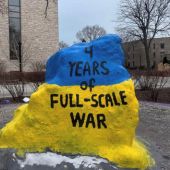
An article in Vilni Media highlighted a panel discussion held at the Roberta Buffett Institute marking the anniversary of Russia’s full-scale invasion of Ukraine. Hosted by Northwestern’s Ukrainian Club in collaboration with the Kyiv-Mohyla Academy Foundation, the event brought together Ukrainian undergraduate students to share personal reflections on the daily realities of Ukrainians living in conditions of war, occupation, and forced displacement. Instead of geopolitical assessments and analytics, the participants focused on personal stories. They talked about life under sirens, being forced to leave home, adapting to new countries, being separated from family, and finding their own identity.
February 19, 2026 – from Taylor & Francis
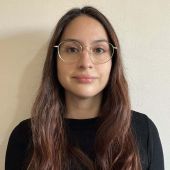
Northwestern PhD candidate Catalina Farías recently published an article developed from research she presented at a conference with support from a Roberta Buffett Institute Conference Travel Award. Her article, “Filtered Latinidad: ethnoracial abstraction and everyday resistance in TikTok beauty filters,” published in the journal Information, Communication & Society, examines how TikTok beauty filters shape representations of Latinidad online and how users engage with and contest these visual norms. The study explores how platform design and aesthetic conventions can abstract or flatten ethnoracial identities while also creating opportunities for everyday forms of resistance and self-representation by users navigating these digital environments
February 17, 2026 – from Apolitical
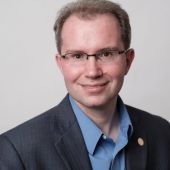
Following his participation in the Buffett Institute’s Winter Symposium on Global Disinformation in a Post-Moderation World, David Bray, a technology and national security expert and Distinguished Fellow at the Stimson Center, published an op-ed in Apolitical reflecting on how societies can navigate an increasingly complex information landscape. Bray argues that polarization and confusion often stem not only from disagreements over facts but also from the different narratives people use to interpret those facts. Because human decision-making is shaped by both evidence and the stories individuals and communities tell about the world, he suggests that leaders and institutions must find ways to bridge these approaches to understanding reality.
February 13, 2026 – from CBS News
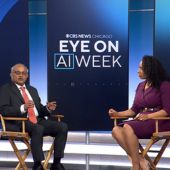
Buffett Faculty Fellow V.S. Subrahmanian, professor of computer science at Northwestern and director of the Security and AI Lab, recently spoke with CBS News Chicago about the growing risks posed by AI-generated deepfakes and scams. In the interview, Subrahmanian explained how advances in generative AI have made it easier to create convincing fake audio, video, and images that can be used to spread misinformation or defraud victims. He noted that scammers increasingly rely on voice cloning, using short audio clips from social media to replicate someone’s voice and stage convincing phone calls to family members claiming an emergency in order to solicit money.
February 13, 2026
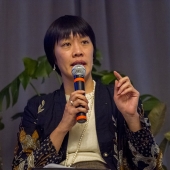
What does the recent US military operation in Venezuela mean for the future of US-Latin American relations? How does the capture of Venezuelan president Nicolás Maduro and his wife, Cilia Flores, impact the political stability of Venezuela and the future of international law? The Roberta Buffett Institute convened faculty experts to share insights. Read the recap.
February 12, 2026 – from The Daily Northwestern
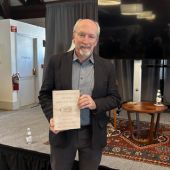
Pulitzer Prize–winning historian Benjamin Nathans visited Northwestern to discuss his book To the Success of Our Hopeless Cause: The Many Lives of the Soviet Dissident Movement at an event hosted by the Roberta Buffett Institute. In conversation with Roberta Buffett Visiting Professor of International Studies Maria Lipman, Nathans discussed the origins and development of the Soviet dissident movement and the research behind his book. He explained that his interest in the topic grew from a broader question about how people living under authoritarian systems think about their options for public engagement and responding to social problems.

February 11, 2026 – from Triquarterly
A recent feature in the Northwestern literary magazine, Triquarterly, highlighted the 2025 Colombian Writers Symposium, which brought emerging Colombian and Colombian-diasporic authors into conversation with Northwestern students and faculty. The event, supported by the Roberta Buffett Institute, explored how a new generation of writers is reshaping contemporary Colombian literature through multilingual experimentation, queer storytelling, and reflections on migration, memory, and political life. Organized in collaboration with campus partners across the humanities, the symposium featured conversations with writers including Gloria Susana Esquivel, Julián Delgado Lopera, and Melissa Lozada-Oliva, whose work reflects shifting literary landscapes across Colombia and its diaspora. The symposium ultimately highlighted literature not only as artistic practice but as a form of global dialogue, opening space for new solidarities, critical perspectives, and collaborative futures across the Americas.
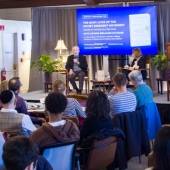
February 11, 2026
Watch our Buffett Conversation with Roberta Buffett Visiting Professor of International Studies, Maria Lipman (Northwestern University) and Alan Charles Kors Professor of History Benjamin Nathans (University of Pennsylvania) on Professor Nathans' new Pulitzer Prize-winning book, To the Success of Our Hopeless Cause: The Many Lives of the Soviet Dissident Movement.

February 10, 2026 – from NewsWise
A recent study supported by the Roberta Buffett Institute’s Antimicrobial Resistance Global Working Group sheds new light on how antibiotic-resistant bacteria may be transmitted from mothers to newborns during birth. Published in Open Forum Infectious Diseases, the research—the first of its kind conducted in the United States—found unexpectedly high rates of antibiotic-resistant gut bacteria among healthy birthing parents and their infants, highlighting an emerging public health concern even in high-income settings. Led by researchers at Ann & Robert H. Lurie Children’s Hospital of Chicago and Northwestern University Feinberg School of Medicine, the study analyzed hundreds of maternal and infant samples collected shortly after birth.
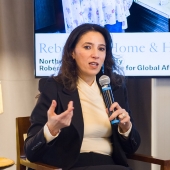
February 9, 2026
Watch our Buffett Conversation with Lina Sergie Attar, founder and CEO of the Karam Foundation, on what sustainable recovery for Syrians can look like and how international collaboration is playing a critical role. In conversation with Wendy Pearlman, Jane Long Professor of Arts & Sciences and Professor of Political Science at Northwestern University, Sergie Attar shared insights into her work to move humanitarian aid for Syrians beyond emergency relief toward long-term resilience.
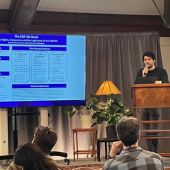
February 4, 2026 – from The Daily Northwestern
A Daily Northwestern article highlighted a student research presentation session at the Roberta Buffett Institute featuring Northwestern participants in COP30, the United Nations climate conference held in Belém, Brazil. The event grew out of a political science research seminar led by Professor Iza Ding, which brought students to COP30 observe negotiations and conduct field-based research on climate diplomacy, nationalism, and global governance. Presenters reflected on tensions within multilateral climate processes, discussing stalled finance negotiations, the strategic use of scientific framing, fossil fuel lobbyist influence, and debates over Indigenous representation at the conference. While some students described COP30 as overly performative, discussions also emphasized the continued importance of international forums like the UNFCCC as spaces for coordination and accountability on climate action.
January
January 29, 2026 – from Poynter
In a recent Poynter op-ed inspired by conversations at the Roberta Buffett Institute’s winter symposium, Global Disinformation in a Post-Moderation World, speaker Angie Drobnic Holan reflects on the evolving role of fact-checking in an increasingly fragmented information environment. Holan argues that despite growing skepticism, fact-checking remains a vital tool for slowing the spread of misinformation and providing audiences with accurate context, particularly as platforms and institutions step back from traditional moderation practices.
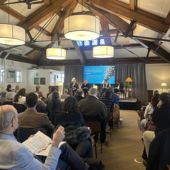
January 26, 2026 – from The Daily Northwestern
A recent Daily Northwestern article highlighted the Roberta Buffett Institute’s winter symposium, Global Disinformation in a Post-Moderation World, which convened experts from academia, policy, and industry to examine the evolving challenges of online disinformation. The two-day event, co-hosted with Northwestern’s Center for Communication and Public Policy, explored how declining platform moderation, shifting government roles, and rapid technological change are reshaping the global information environment. Panelists discussed topics ranging from media literacy and algorithmic influence to state-sponsored disinformation and emerging threats such as AI-generated content, emphasizing the need for new strategies to sustain trust and accountability in democratic societies.

January 25, 2026 – from Ceylon Today
A recent feature article highlighted the work of Brent E. Huffman, Buffett Faculty Fellow and professor at Northwestern’s Medill School of Journalism. The article spotlights Huffman’s latest documentary, Yemen Mosaic, a feature-length film that follows Yemeni women working to preserve their country’s cultural heritage amid the converging threats of war, looting, and climate change. Building on his earlier documentary Saving Mes Aynak, Huffman’s new project centers on archaeologists and heritage advocates in cities including Shibam, Dhamar, Taiz, Marib, and Sanaa. The film portrays preservation not simply as archaeological work, but as an act of resilience and resistance—one rooted in safeguarding identity, memory, and community during prolonged conflict.
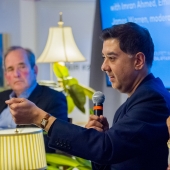
January 23, 2026
Organized with the Center for Communication & Public Policy, our winter 2026 Buffett Symposium on Global Disinformation in a Post-Moderation World convened global experts and practitioners from industry, public policy, academia, and civil society to discuss urgent priorities in addressing issues of disinformation today.
January 22, 2026 – from The Daily Northwestern
A recent Daily Northwestern article highlighted a student lunch ahead of the Roberta Buffett Institute's winter symposium, Global Disinformation in a Post-Moderation World, which brought students into conversation with international experts on fact-checking and disinformation. The informal event featured speakers from organizations including Factchequeado, the International Fact-Checking Network, StopFake, and the Taiwan FactCheck Center, who shared regional perspectives on the challenges of combating misinformation in an evolving digital landscape. Discussions explored topics such as the pressures of the attention economy, the influence of platform algorithms, and the role of informal power structures in shaping disinformation campaigns.
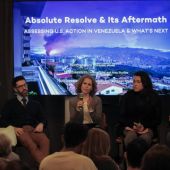
January 18, 2026 – from The Daily Northwestern
A recent Daily Northwestern article highlighted a panel hosted by the Roberta Buffett Institute for Global Affairs examining the implications of U.S. military action in Venezuela and what it could mean for regional stability and U.S. foreign policy. During the discussion, Northwestern University faculty drew on historical and political analysis to question the motivations behind the strike and the long-term consequences of removing President Nicolás Maduro through military intervention. Panelists emphasized that, unlike past U.S. actions framed around humanitarian intervention, this operation relied heavily on national security and drug trafficking narratives, raising concerns about precedent and international norms. Speakers also cautioned that while the operation may appear successful in the short term, it could lead to political instability, contested legitimacy, and unintended consequences for U.S.–Latin America relations. As the panel underscored, military solutions rarely resolve deeply rooted political crises and often create new challenges in their wake.
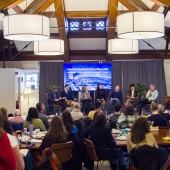
January 16, 2026
Watch our Buffett Conversation with seven Northwestern University faculty who drew on perspectives from political science, international law, history, and more to examine the origins, legitimacy, and consequences of recent US actions in Venezuela; the future of US–Latin America relations; and the crisis these actions constitute for international law.
January 13, 2026 – from Scholars at Risk Network
Samantha Nissen, Director of Strategic Initiatives and Undergraduate Programs at the Roberta Buffett Institute for Global Affairs and an adjunct faculty member in Northwestern University’s International Studies Program, was awarded a Mellon/SAR Academic Freedom Fellowship supporting scholars who research and advance academic freedom in higher education. The fellowship provides a research stipend and a collaborative professional community through an eight-month program of project development and virtual workshops. Through the fellowship, Nissen will examine journalism education and student media as spaces where academic freedom is actively exercised and contested in the United States. Her project, Teaching and Telling the Truth: Journalism Education and Student Press as Sites of Academic (Un)Freedom, uses a multi-sited case study approach to explore how students, media advisors, and educators navigate editorial restrictions, surveillance, and retaliation, with particular attention to the experiences of non-citizen participants in today’s political climate.
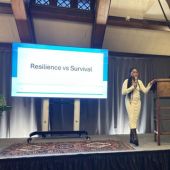
January 7, 2026 – from The Daily Northwestern
A recent Daily Northwestern article highlights Georgia Rose, a Buffett Institute Visiting Scholar, psychologist, and professor at the University of the West Indies. In a Buffett Institute–hosted talk titled “Trauma Responses as a Means of Survival in Jamaica,” Rose examined how Jamaican workers have coped with returning to work after the devastating impact of Hurricane Melissa. Drawing on research and interviews conducted in Jamaica, Rose examined how climate disasters shape mental health, livelihoods, and long-term recovery. She emphasized that understanding trauma as an adaptive response is essential to designing recovery efforts that support both economic stability and human dignity.
January 5, 2026 – from Silicon Republic