
Reflections from Northwestern University's COP31 Delegation: Day 6
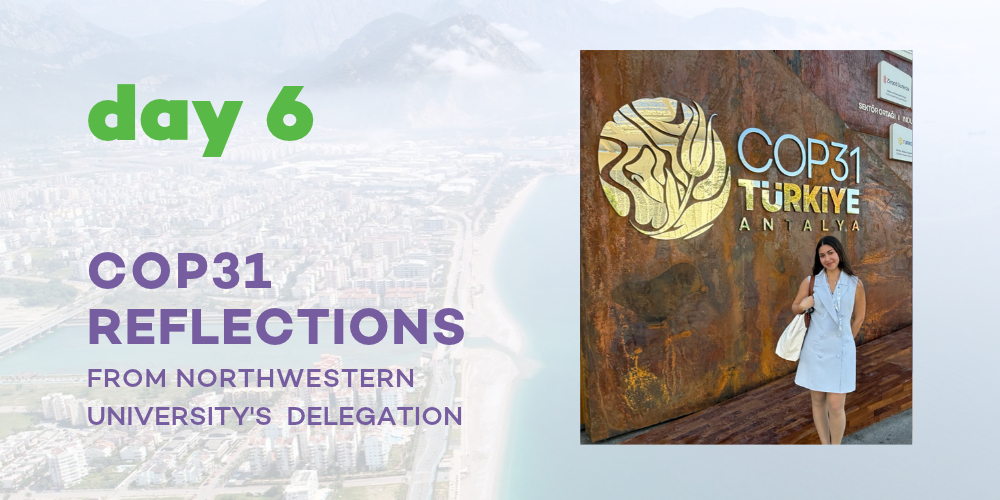
 For a sixth year, a delegation of Northwestern University students and faculty supported by the Roberta Buffett Institute is among more than 92,000 researchers, policymakers, industry leaders, and activists at the world’s largest annual international treaty negotiations and climate summit, the 31st Conference of Parties (COP31) to the United Nations Framework Convention on Climate Change (UNFCCC), held this year in Antalya, Turkey. Each day, a different Northwestern delegate is blogging about their experiences and reflections. Day 6 features Samantha Alvarez, a fourth-year student pursuing a combined Bachelor's/Master's in Plant Biology and Conservation.
Greetings from Week 2 of COP: Day 6
Today was full of firsts: my first full day in Antalya, my first day at COP31, and my first day with access to the Blue Zone.
Despite the jet lag, the excitement of finally being here was more than enough to get me out of bed and ready for a full day ahead.
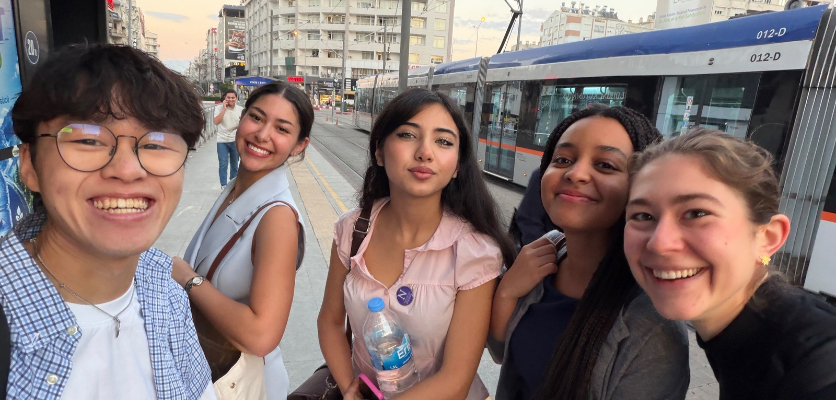
After breakfast, our Northwestern delegation headed together to collect our Blue Zone badges before going our separate ways. I quickly found myself navigating the conference independently, which made for quite a deep-end introduction to COP. My first stop was the Research and Independent Non-Governmental Organizations (RINGO) meeting, where attendees shared updates from the previous week alongside practical advice on navigating the venue and making the most of what promised to be very long days.
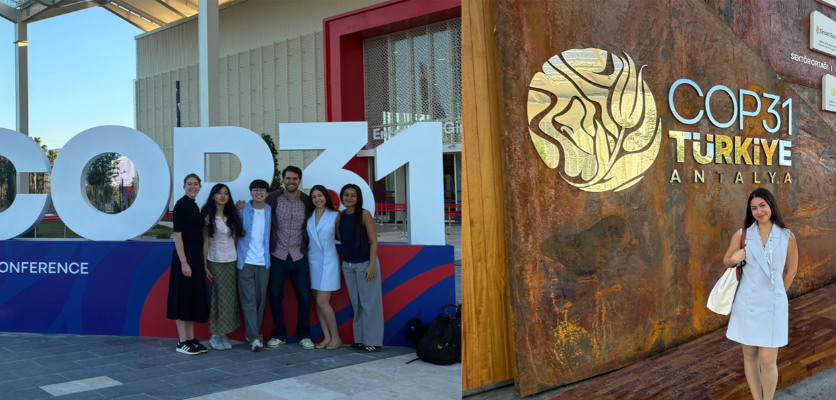
Group photo at the Blue Zone entrance
One conversation before the meeting started stayed with me throughout the day. A researcher mentioned a book he had recently read about the non-human actors at COP, including something as seemingly mundane as chairs, and, more importantly, who gets to sit in them. Finding an actual seat throughout the day proved challenging, but the question carries a much greater significance for my own research. My master's thesis examines Indigenous representation in international climate negotiations and the barriers Indigenous peoples face in participating in the spaces where global climate decisions are made.
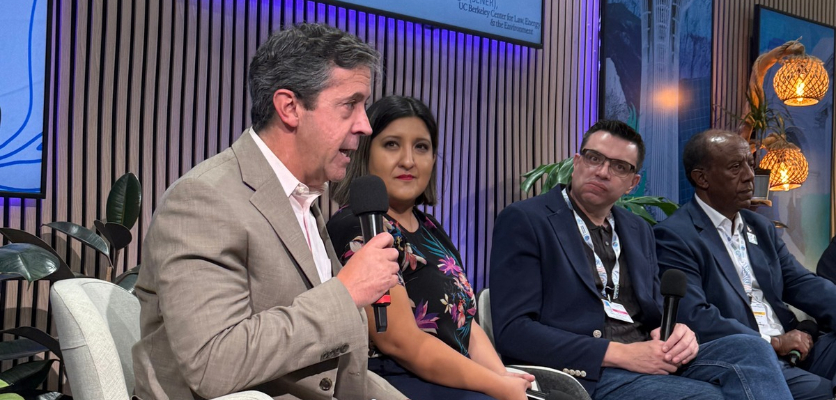
Panelists at the Climate Registry Pavilion discuss opportunities for collaboration between Mexico and California to advance shared climate goals
I spent the morning exploring the country and delegation pavilions before attending my first panel: Meeting Mexico and California’s Climate Goals Through Collaboration. It was encouraging to hear representatives discuss international cooperation between subnational governments, particularly at a time when federal climate policy in the United States has taken a very different direction. The conversation was a reminder that climate collaboration does not necessarily stop at national borders.
I spent much of the afternoon at the Canada Pavilion, attending two back-to-back panels. The first, Investing in Nature: From Nature Risk to Climate Resilience and Economic Competitiveness, brought together representatives from the Nature Conservancy Canada, the International Union for Conservation of Nature (IUCN), Agnico Eagle Mines Limited, and Aviva. A message that resonated with me was the importance of not becoming so caught up in definitions and complicated frameworks that we lose sight of the action itself. The panelists emphasized that investing in nature requires collaboration across sectors, bringing together actors ranging from Indigenous peoples and environmental organizations to mining and insurance companies. I also attended the event Red River Métis Climate Leadership: Nature-Led Solutions for Climate Action, which offered another perspective on nature-based approaches to climate action.
As the day went on, the question of access became increasingly difficult to ignore. I was struck by the disconnect between those hoping to participate in COP31 but unable to secure Blue Zone accreditation and those who appeared to have access to additional badges. This was particularly meaningful in light of conversations about the barriers Indigenous peoples face in accessing the conference and participating in its negotiations.
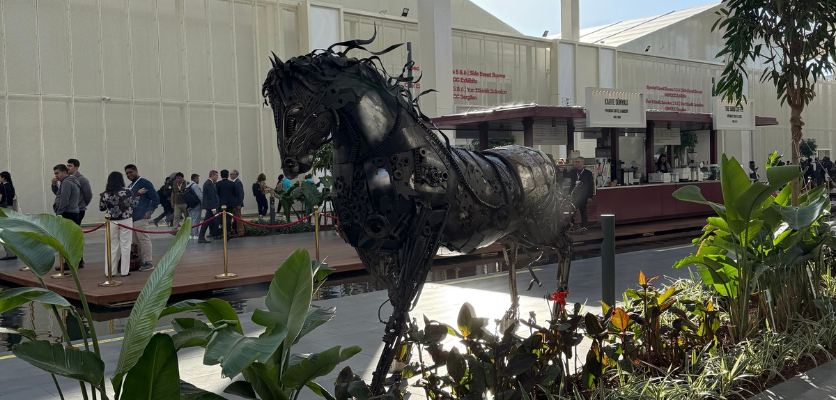
A sculpture of a horse within the Blue Zone
What struck me was the perspective from which I was observing these barriers. Even for students from a well-resourced private research institution in the Global North, gaining access to COP was not necessarily straightforward. If access presents challenges for those of us with institutional support and resources behind us, what might those barriers look like for Indigenous communities, local organizations, and delegates from the Global South? Being physically present is the first step toward meaningful participation, yet the resources and connections needed to get through the door can determine whose voices are represented in the first place.
I found myself returning to that earlier conversation about chairs. At COP, the question extends beyond who gets a physical seat in a conference room. It is also about whose knowledge is recognized, who gets to participate in decision-making, and who has the opportunity to shape its outcomes.
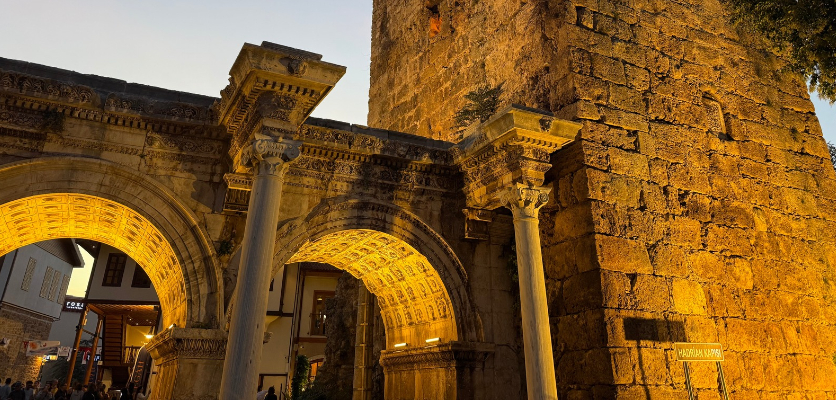
A visit to Hadrian’s Gate the evening before my first day at COP31
By the end of the day, I was exhausted but excited for everything still to come. I made my way back to the hotel on an extremely crowded tram, looking forward to another day of conversations, new perspectives, and opportunities to learn.