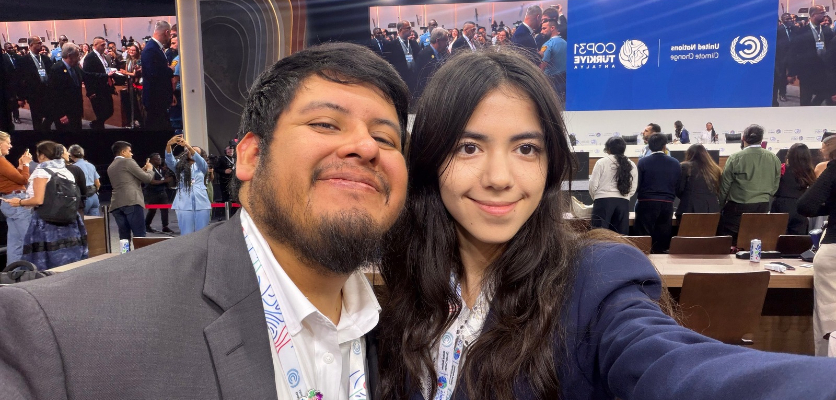
Reflections from Northwestern University's COP31 Delegation: Day 5
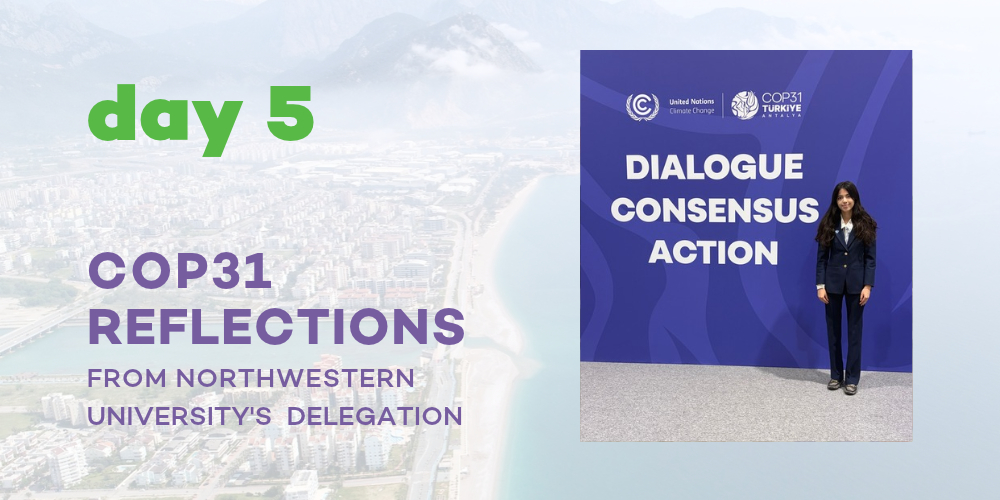
 For a sixth year, a delegation of Northwestern University students and faculty supported by the Roberta Buffett Institute is among more than 92,000 researchers, policymakers, industry leaders, and activists at the world’s largest annual international treaty negotiations and climate summit, the 31st Conference of Parties (COP31) to the United Nations Framework Convention on Climate Change (UNFCCC), held this year in Antalya, Turkey. Each day, a different Northwestern delegate is blogging about their experiences and reflections. Day 5 features Liana Liu Ioannides, a third-year undergraduate majoring in journalism, mathematics, and political science.
By now, we've gotten used to the commute to the COP venue
A fifteen minute walk to the tram station, then a struggle to fit as many delegates as possible into the tiny tram, which becomes more and more packed as the tram makes stops nearing COP. Some locals get off earlier. There are only a few seats. A young woman sits at the windowsill, takes out a notebook and starts writing. Standing or sitting, delegates are having a mini nap, talking to each other, staring into the blurred view, or looking at news on their phones. We get to the COP venue.
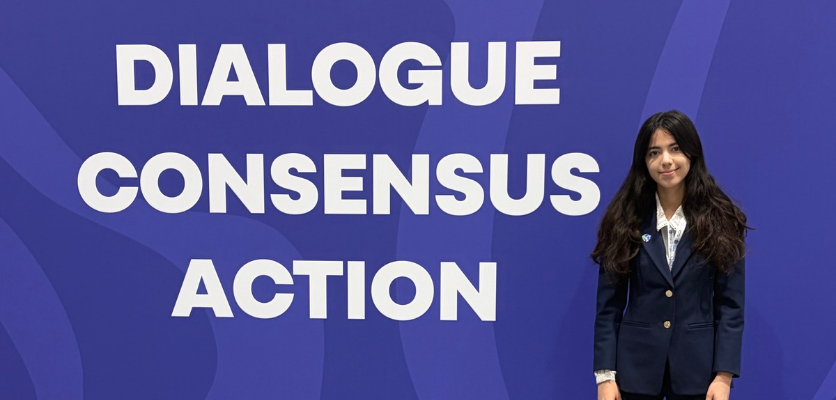
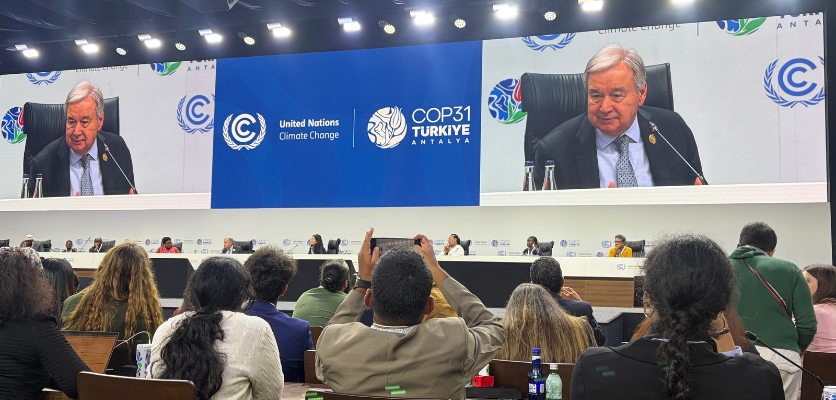
Today, I got the opportunity to attend the UN Secretary-General’s high-level round-table with the civil society. “Every fraction of a degree matters; we cannot give up,” he said. Being in that room, feeling the energy of every single civil society member, youth, Indigenous person, woman, and disabled person who was there trying to make their contribution to keeping the planet a little cooler, all of us cheering for the contributions of the Secretary-General through his ten years in office, I felt the impact of the work of every single one of us, including our Northwestern delegation.
I also had the opportunity to attend, through the Research and Independent Non-Governmental Organizations (RINGO) constituency, the Presidency Stakeholder Roundtable for Strengthening the UNFCCC Process. I enjoyed listening to the reflections of the nine constituencies to UNFCCC, as well as other groups, on what practical steps should be taken to improve the process for observing parties. One suggestion across the constituencies was to establish a baseline for observer participation, for example by distributing opportunities in ways that maximise impact while taking into account inclusivity and diversity. The comment of the UN Human Rights Commission struck me the most: “The right of participation is a human right.”
My research at COP focuses on the intersection between conflict and national environmental policies. In the past few days, I’ve spent so many hours talking to national delegates and negotiators about their country’s nationally determined contributions (NDCs), the exacerbating challenges that ongoing conflict presents, and the role that local communities and youth play in restoring division. No conversation was more touching to me the ones with the youth delegates of Iraq to COP, who shared with me their stories of how they were personally affected by the conflict as children, and how this has impacted their climate advocacy now as adults. Anmar Ammar Ayoob was twelve years old when ISIS occupied his town Mosul, and survived the 6 month siege of the city. He told me: “The longer a siege takes, the more work is needed to restore the city back; and some parts of the nature are not restorable; they’re lost for good."
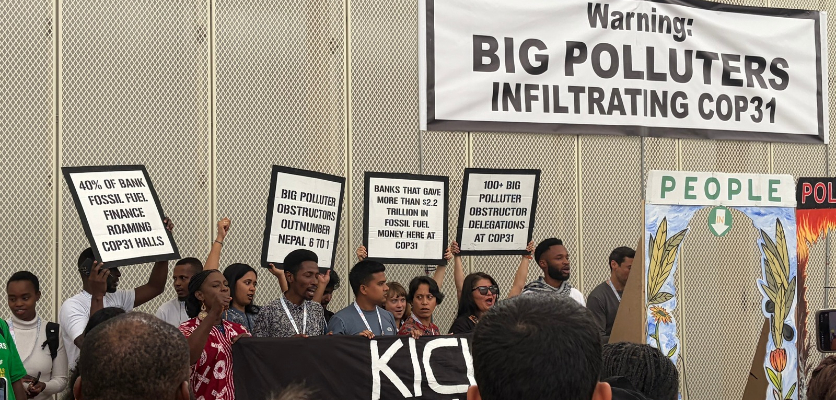
Across all the events I attended today, the accountability and responsibility of fossil fuel companies was present. At the roundtable with the Secretary-General (SG), the SG himself placed the responsibility of fossil fuel companies on climate change. At the presidency stakeholder roundtable, many constituency representatives recited at the beginning of their interventions a common statement of no conflicts of interest or association with the fossil fuel industry. Protests across the Blue Zone directly named the presence of fossil fuel companies and lobbies, both directly through delegates and indirectly through sponsoring of pavilions and events, at the conference.
Sometime between coffee chats, high-level meetings, panel sessions, and pavilion rounds, all of us lived through the universal COP experience: sitting on the floor to stare blankly at the ceiling, to dissociate, type notes vigorously on the laptop (as I am now doing!), or to figure out where to go next. I am once again reminded of the morning commute, when, in a tiny tram we crowded as a random cluster of delegates all heading for the same destination. Whether senior negotiators or students on our first COP, with only half a foot separating our thoughts from those of our neighbors, we each spent that quiet moment immersed in the beauty and the responsibility of making a small but heartfelt contribution to this piece of history.