
Reflections from Northwestern University's COP31 Delegation: Day 11
 For a sixth year, a delegation of Northwestern University students and faculty supported by the Roberta Buffett Institute is among more than 92,000 researchers, policymakers, industry leaders, and activists at the world’s largest annual international treaty negotiations and climate summit, the 31st Conference of Parties (COP31) to the United Nations Framework Convention on Climate Change (UNFCCC), held this year in Antalya, Turkey. Each day, a different Northwestern delegate is blogging about their experiences and reflections. Day 11 features Eliana Aemro Selassie, a fourth-year undergraduate majoring in political science, legal studies, and international studies.
Greetings from the second-to-last day of COP!
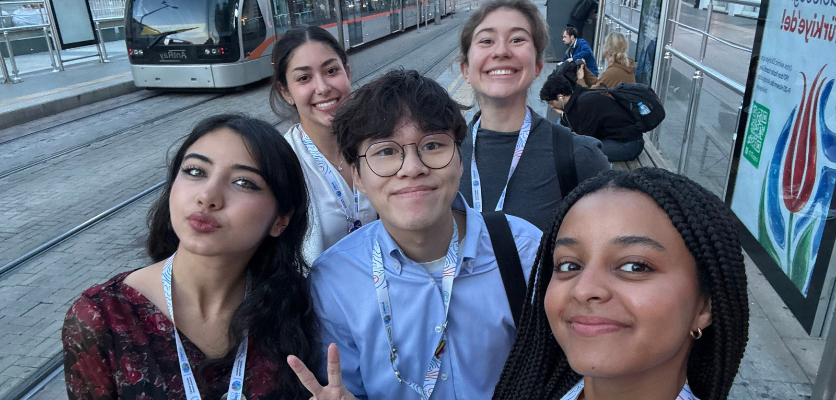
Heading to the COP venue with friends
After taking the tram to the COP venue, I started my day with coffee at the Indonesian Pavilion. I hurried over to the Research and Independent Non-Governmental Organizations (RINGO) constituency coordination meeting, where researchers provided helpful updates on the escalating tensions in the negotiations.
I continued my morning by attending the Presidency Consultation on Strengthening the UNFCCC Process. At the consultation, parties debated the importance of reforming the UNFCCC process, a contentious issue. The Russian Federation, Iran, Saudi Arabia on behalf of the Arab Group, and India on behalf of the Like-Minded Developing Countries (LMDCs) agreed that the consultations were inefficient and should come to an end. These parties called for a return to the UNFCCC agenda items and a departure from parallel processes altogether.
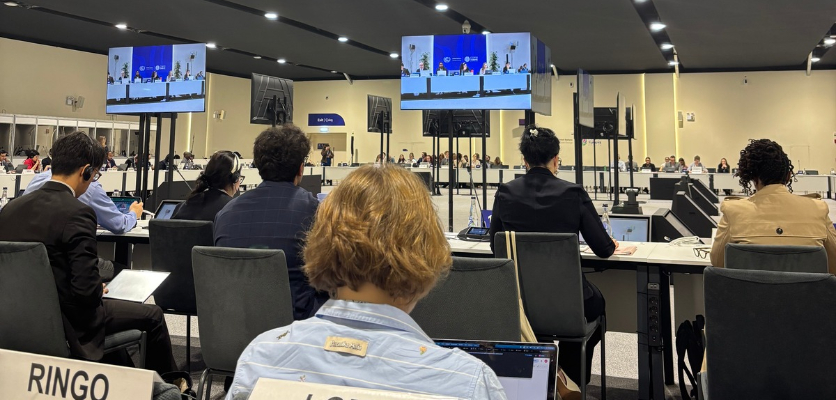
The Presidency Consultation
I then visited several country pavilions, where I spoke to delegates and party members from fossil fuel exporting countries. My research focuses on how these countries present themselves and their approaches to climate action, despite the importance of fossil fuels to their domestic economies. Visiting the pavilions of these fossil fuel exporting states, I noticed a strong emphasis from each representative I spoke to on their commitments to phasing out fossil fuels and building up their renewable energy capacity. Nonetheless, many of these parties are among the strongest advocates for preventing a complete phase-out of fossil fuels in the formal negotiations.
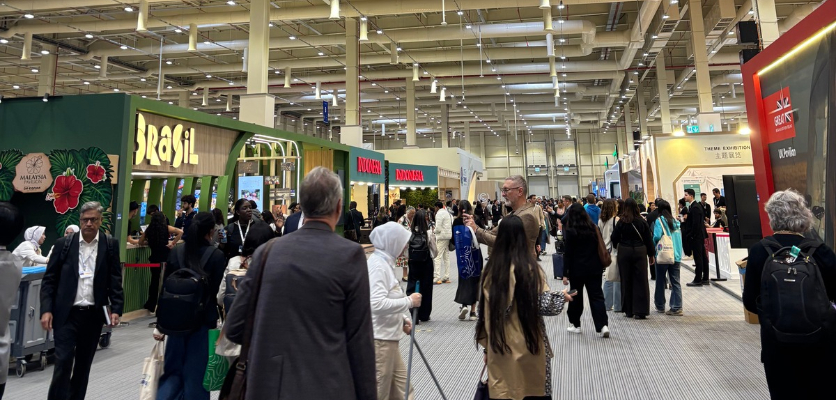
The country pavilions
Representatives from developing countries in particular emphasized their desire to decarbonize and avoid depending on fossil fuels but noted that they need climate finance to do so. They highlighted the importance of a just transition, calling for an equitable phase-out of fossil fuels that considers their domestic economic needs.
I stopped for lunch with fellow Northwestern attendees before I returned to the country pavilions to continue speaking to representatives. In the late afternoon, I attended the People’s Plenary, a session hosted by activists and civil society leaders. At the plenary, activists used singing, dancing, and chanting to call for unity and condemn the shortcomings of global leaders in addressing climate change and delivering on environmental justice.
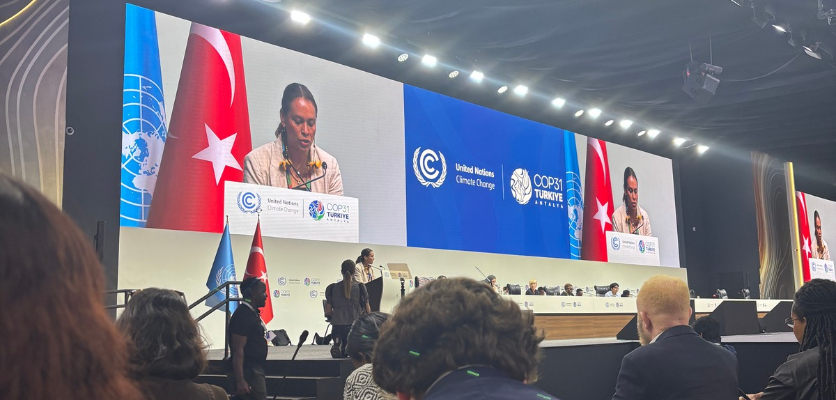
Speakers at the People’s Plenary
As negotiations continue and tensions remain high, I’m curious to see what the final decisions will look like tomorrow.

Some cats on my walk to dinner!