
Reflections from Northwestern University's COP31 Delegation: Day 10
 For a sixth year, a delegation of Northwestern University students and faculty supported by the Roberta Buffett Institute is among more than 92,000 researchers, policymakers, industry leaders, and activists at the world’s largest annual international treaty negotiations and climate summit, the 31st Conference of Parties (COP31) to the United Nations Framework Convention on Climate Change (UNFCCC), held this year in Antalya, Turkey. Each day, a different Northwestern delegate is blogging about their experiences and reflections. Day 10 features David Sun, a fourth-year undergraduate majoring in journalism, economics, and history.
At COP, during most hours of the day, I feel like a covert detective.
To put it plainly, I’m studying how capitalism impedes climate action. Now I recognize “capitalism” is a hot-topic buzzword that always elicits a full range of reactions. In my research, I define capitalism as a system of commodifying and extracting from the natural world in pursuit of limitless growth and private profit. It’s a dominant system that I believe underlies much of the COP process.
My day starts in the country pavilions hunting for pins for my conference lanyard. I’m intimately aware of how my desire to collect as many pins as possible is not unlike how corporations and governments extract resources from our land and oceans to pad their own pockets.
I pass by the never-ending line for Australia’s free coffee thinking about how capitalism courses through our veins, often subconsciously. I think back to the horde of people crowded around China’s pavilion yesterday, clamoring and pushing others aside for a tote bag and a charm that will probably be stuffed into the bottom of their bag and never thought about again.
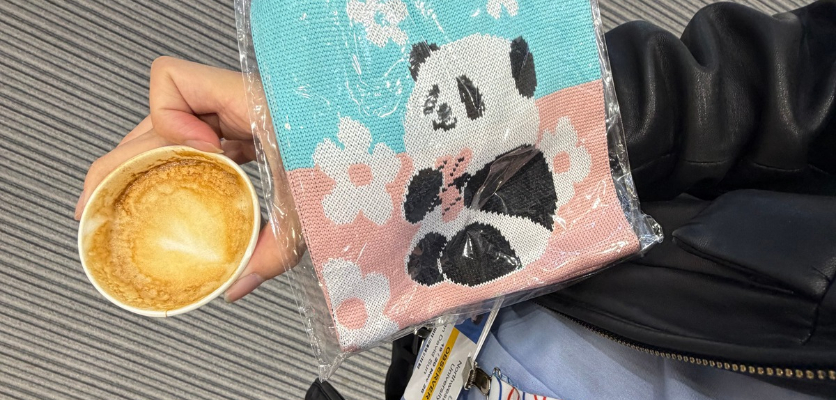
Some of my swag haul from today
I grab a latte from Great Britain’s pavilion before heading to the daily Research and Independent Non-Governmental Organizations (RINGO) meeting where we discussed Article 6 of the Paris Agreement on carbon markets. For only the second time since I’ve been in Blue Zone, I hear the word “capitalism,” and my ears perk up.
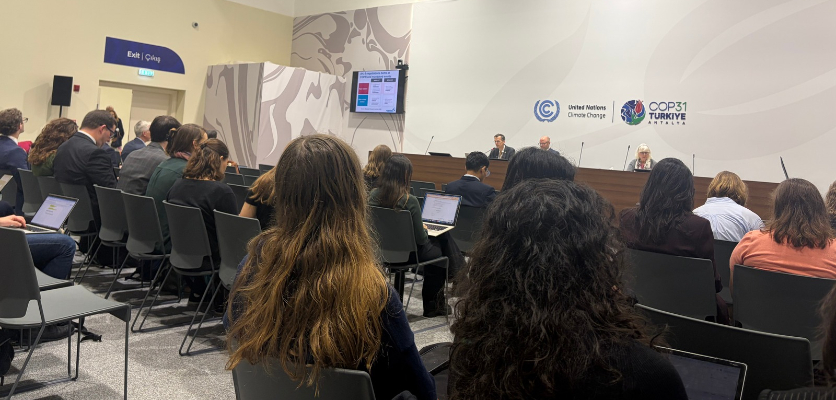
The RINGO conference is held daily at 9:00 a.m. for researchers and academics.
The “c-word” rarely comes up in the Blue Zone. But as I run from event to event on powering the green economy, investing in economic development, and protecting energy security, I’m constantly reminded of the very system that helped cause our climate crisis in the first place.
In between events, I talk to a Sri Lankan woman about the false solutions of the blue economy. We talk on the floor, beside a small booth, about how aquaculture is displacing small-scale, traditional fisheries and how eco-tourism is driving the destruction of mangrove forests, which serve as vital carbon sinks by absorbing and storing large amounts of carbon.
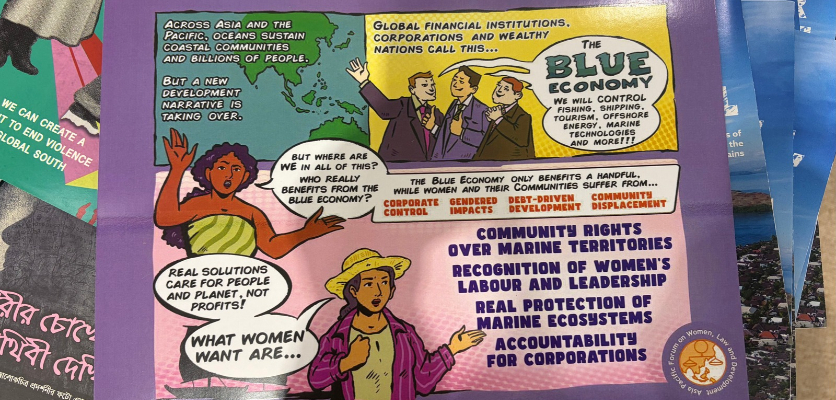
An infographic presented at the Asian Pacific Forum on Women, Law and Development
Immediately after, I walk into a side event advocating for Chinese eco-solutions that can be exported to local communities globally. After lunch, I stumble into an event by the Italian pavilion about the blue economy. I think about the many ways green capitalism is openly platformed and celebrated at the conference.
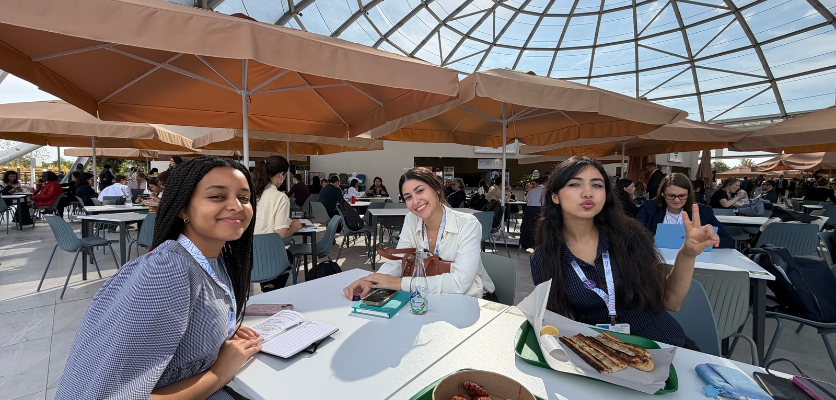
My friends and I at lunch in the Blue Zone
In the evening, I attended a press conference called “Beyond Extractivism” led by leaders and advocates in Latin America and the Caribbean. To a mostly empty audience, they slammed the false solutions of carbon credits, arguing these mechanisms only exacerbate economic systems that destroy the environment and local communities. I wish more delegates and negotiators were listening and internalizing this message, and I wish Indigenous voices were prioritized and taken seriously.
It’s hard not to feel disillusioned at COP. But some moments bring me joy and hope. In the afternoon, I went to a youth networking event at the All In American pavilion, where, for the first time since I arrived in the Blue Zone, the people I talked to didn’t shy away from the important role corporate greed and short-term profits play in our climate crisis. I felt empowered by our generation working to make a difference in the world.
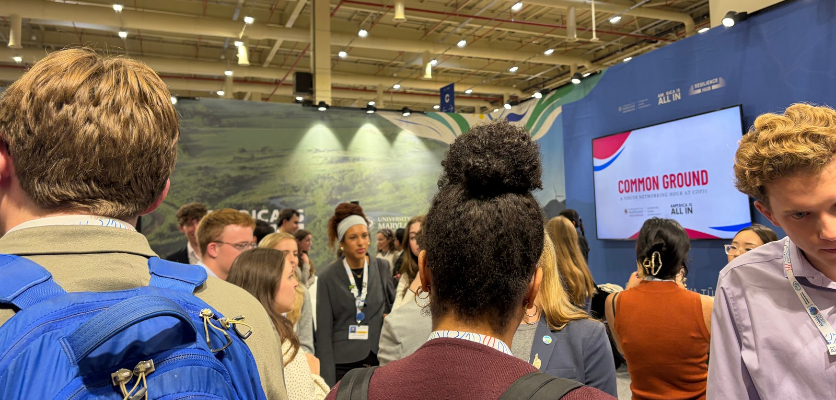
An hour spent networking with other college students at COP
Throughout the past couple of days, I’ve met many established leaders and researchers who told me that this was their first COP. I feel so lucky and privileged to be in this space so early in my professional career, and I hope it won’t be my last.
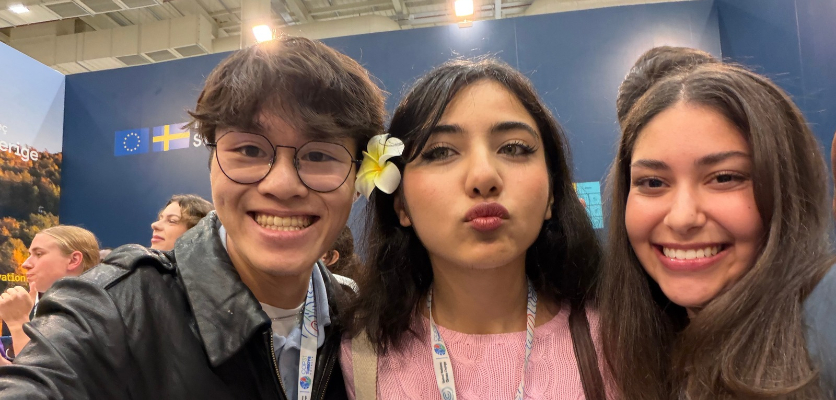
A photo of us before singing “Lush Life” at a karaoke event in the Sweden Pavilion