Reflections from Northwestern University's COP31 Delegation: Day 1
 For a sixth year, a delegation of Northwestern University students and faculty supported by the Roberta Buffett Institute is among more than 92,000 researchers, policymakers, industry leaders, and activists at the world’s largest annual international treaty negotiations and climate summit, the 31st Conference of Parties (COP31) to the United Nations Framework Convention on Climate Change (UNFCCC), held this year in Antalya, Turkey. Each day, a different Northwestern delegate is blogging about their experiences and reflections. Day 1 features Mika Kato, third-year undergraduate majoring in materials science and engineering and environmental policy and culture.
Greetings from the first day of COP31!
Antalya was bustling on the first day of COP31. The local trams were jam-packed with locals and delegates alike and conversations in Turkish and languages from around the world filled the security lines leading into the venue.
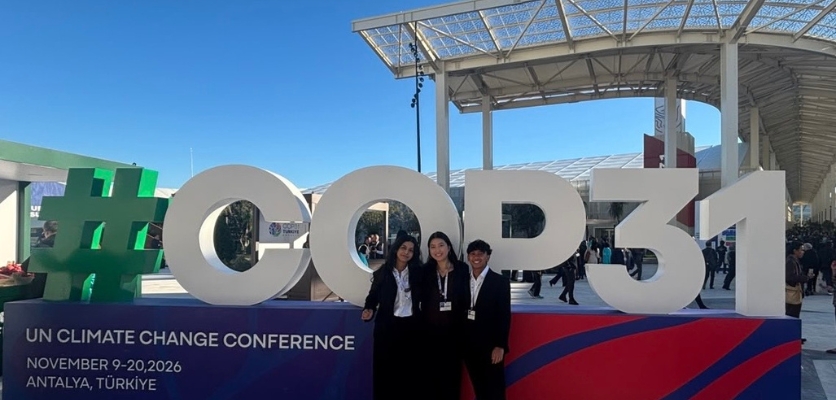
Group photo as soon as we made it into the Blue Zone
COP31 is divided into two main zones: the Green Zone, which is open to the general public, and the Blue Zone, which has limited access and hosts country pavilions, plenary sessions, and negotiations. Today I explored the Blue Zone and attended many of the smaller events hosted to introduce the key policies that will be discussed throughout the next two weeks. More specifically, I selected several events based on my research interests, which focus on how countries' natural energy resources and existing infrastructure influence the clean energy technologies and international partnerships they prioritize. Although the day's main theme was agriculture, I managed to find several discussions that connected to my research.
I started my COP31 experience by attending “Beyond Megawatts: The Social Value of Renewable Energy,” hosted by the Nordic Pavilion. The panel highlighted how community engagement and energy security are essential to building sustainable, reliable electricity grids, with panelists emphasizing the importance of building community trust to gain support for renewable energy projects. What particularly piqued my interest was the discussion about challenging the perception that fossil fuels are cheaper than renewable energy. This made me wonder how local attitudes toward renewable energy influence broader national priorities and decisions about energy development.
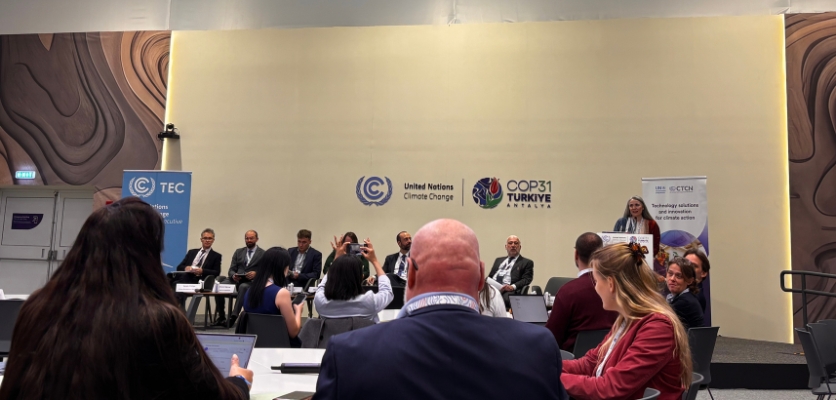
The panel discussion “Unlocking Partnerships to Scale Climate Technology”
I also attended “Unlocking Partnerships to Scale Climate Technology,” which explored international funding mechanisms and the role of the Climate Technology Centre & Network (CTCN) in promoting collaboration between technology innovators and those implementing energy projects. The discussion highlighted how access to funding and international partnerships can influence whether promising climate technologies are successfully implemented. Through this, I became particularly interested in how these partnerships form between countries with different technological capabilities, which is now something I hope to explore further throughout the conference.
I also attended the opening plenary for the 65th session of the Subsidiary Body for Scientific and Technological Advice (SBSTA 65) as well as an event pertaining to affordable electrification. Between sessions, I walked to the many different country pavilions and engaged in informal conversations, and also taste-tested the many different coffee booths.
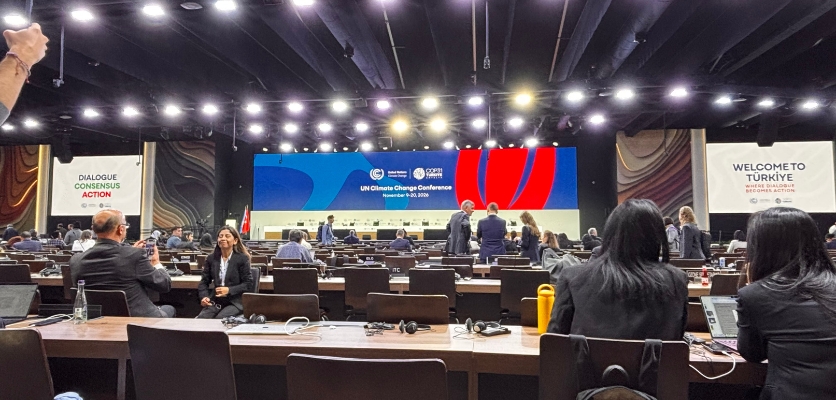
SBSTA opening 65 plenary session
As this COP31 has been referred to as the “COP of electrification,” I look forward to future events as I explore how countries with different energy resources and technological capabilities frame their renewable energy priorities. Day 2 focuses on energy and transport, so I look forward to an insightful and busy day ahead!