
Join us for the Roberta Buffett Institute's 2026 spring symposium Brave New Futures. We are all too familiar with the crises of our time: global warming, uncontrolled technological change, disrupted labor markets, eroding social norms, new geopolitical conflicts, for starters. But what comes next? And how might we innovate for a better future?
Our spring symposium convenes a visionary set of international thinkers to explore how human relationships, information ecosystems, labor, and the planet itself are being reshaped in this moment of uncertainty and possibility. From the power of art for action to the future of work and planetary survival, join us to consider bold new visions for building more just and sustainable global futures.
Watch
View the RecordingSchedule of Events
Thursday, April 9
Josephine Louis Theater, 20 Arts Circle Drive, Evanston, IL
7:30 – 8:30 PM | Opening Performance: Neo-Hakawati Nights
- Omar Offendum, spoken word poet, rapper, and storyteller
- Zafer Tawil, multi-instrumental musician
Friday, April 10
Roberta Buffett Institute for Global Affairs, 720 University Place, Second Floor (Buffett Reading Room), Evanston, IL
8:30 – 8:55 AM | Registration & Coffee
8:55 – 9:00 AM | Opening Remarks
- Deborah Cohen, Richard W. Leopold Professor of History and Director of Roberta Buffett Institute for Global Affairs
9:00 AM – 10:00 AM | Human Relationships
- Qing Wang, co-founder of The Weirdo Podcast
- Nataliya Kos’myna, research scientist at MIT Media Lab’s Fluid Interfaces group
- Moderator: Nour Kteily, Kellogg Chair in Enlightened Disagreement, Professor of Management & Organizations, and Founding Co-Director of the Litowitz Center for Enlightened Disagreement at Northwestern University's Kellogg School of Business
10:00 AM – 10:15 AM | Coffee Break
10:15 AM – 11:15 AM | New Media
- Allison Yang, founder and CEO of Reality Reload
- Shuwei Fang, Fellow at Harvard Kennedy School's Shorenstein Center on Media, Politic, & Public Policy
- Moderator: Jeremy Gilbert, Knight Professor in Digital Media Strategy at Northwestern University's Medill School of Journalism
11:15 AM – 11:30 AM | Coffee Break
11:30 AM – 12:30 PM | Arts of Social Change
- Bing Liu, filmmaker and director of the Emmy- and Oscar-nominated feature documentary Minding the Gap and the newly released feature film Preparation for the Next Life
- Omar Offendum, spoken word poet, rapper, and storyteller
- Moderator: Ellen Harvey, conceptual artist whose recent work includes Utopia Machine
12:30 PM – 2:00 PM | Lunch Break
2:00 PM – 3:00 PM | Planetary Futures
- Vanessa Nakate, climate activist, founder of the Rise Up climate movement, and author of A Bigger Picture
- David Wallace-Wells, writer for New York Times Opinion, columnist for New York Times Magazine, and author of The Uninhabitable Earth: Life After Warming
- Moderator: Iza Ding, Associate Professor of Political Science at Northwestern University's Weinberg College of Arts & Sciences
3:00 PM – 3:15 PM | Coffee Break
3:15 PM – 4:15 PM | Future of Work
- Suhani Jalota, founder of Myna Mahila and founder and leader of the Future of Work for Women Initiative at Stanford University's Hoover Institution
- Olubayo Adekanmbi, CEO of Data Science Nigeria and co-founder of EqualyzAI
- Moderator: Dean Karlan, Frederic Esser Nemmers Distinguished Professor of Economics and Finance at Northwestern University's Kellogg School of Business, founder and former president of Innovations for Poverty Action, and former Chief Economist for USAID
4:15 – 4:30 PM | Conclusion
4:30 PM – 6:00 PM | Reception
Speakers & Moderators
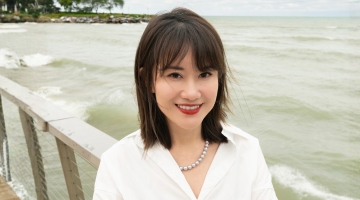
Iza Ding
Iza Ding is an Associate Professor of Political Science at Northwestern University's Weinberg College of Arts & Sciences. Her research explores the paradoxes and pushbacks attending economic, political, and cultural modernization, such as creative resistance against institutional rigidities, lingering moral traditions against legal development, enduring historical memories against rapid socioeconomic transformations, and humans' simultaneous degradation of nature and attachment to nature. Ding is the author of The Performative State: Public Scrutiny and Environmental Governance in China (Cornell University Press, 2022) and is currently working on a monograph on global historical waves of environmentalism.
Shuwei Fang
Shuwei Fang is a fellow at Harvard Kennedy School’s Shorenstein Center on Media, Politics and Public Policy, where her work examines how artificial intelligence is reshaping information ecosystems—from attention to intention, from static artifacts to fluid content, and from human audiences to machines as primary consumers. Previously, as Associate Director of Programs at Open Society Foundations, she led initiatives supporting the free flow of information across media, emerging technology, and the arts. Earlier in her career, Fang worked in startups, technology and media investment, and game design. She holds advanced degrees in economics from the London School of Economics and Political Science and Birkbeck, University of London, and is co-author of the Radically Informed Substack.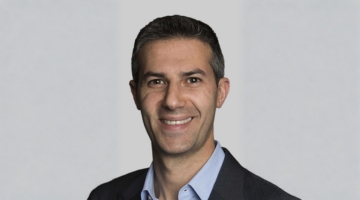
Jeremy Gilbert
Jeremy Gilbert is the Knight Professor in Digital Media Strategy at Northwestern University's Medill School of Journalism. Gilbert's work and research focus on the content and revenue strategies of existing and emerging media companies. He explores the intersection of technology and media, employing a human-centered design process to examine how new tools and techniques will affect the creation, consumption, and distribution of media. Gilbert also oversees Northwestern's Knight Lab and works with global startups and foundations to support existing and emerging media companies. He also builds experimental storytelling projects for media companies including The Washington Post.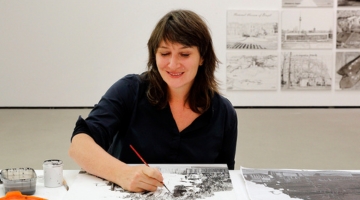
Ellen Harvey
Ellen Harvey is a British-born conceptual artist whose work includes projects like Utopia Machine, New York Beautification Project, and Disappointed Tourist. Her work is painting-based but utilizes a variety of media and participatory strategies to explore themes including social and ecological implications of the picturesque, revolutionary potential of nostalgia, conflict between advertising and ornament in public space, relationships between art and tourism, and the role of art and the artist in our society. Harvey’s work frequently centers the viewer, allowing members of the public to actively participate by submitting their ideas. Harvey has exhibited extensively in the US and beyond. Solo museum exhibitions (other than her recent traveling survey show) have included the Barnes Foundation (Philadelphia), the Groeninge Museum (Belgium), the Corcoran Gallery of Art (Washington, DC), The Bass (Miami Beach), the Center for Contemporary Art (Warsaw, Poland), the Pennsylvania Academy (Philadelphia) and the Whitney Museum at Altria (New York).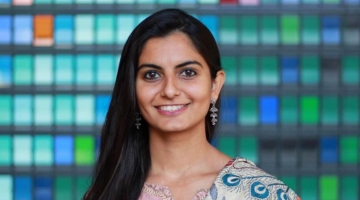
Suhani Jalota
Suhani Jalota, PhD, is an applied microeconomist and entrepreneur whose work focuses on labor markets, health access, and AI adoption in emerging economies. She is a Hoover Fellow at the Hoover Institution at Stanford University, where her field experiments examine barriers to workforce participation and health system access, testing AI-enabled interventions to improve productivity at scale. Jalota founded Stanford’s Future of Work for Women Initiative, a cross-sector initiative with the Hoover Institution to build evidence and partnerships toward accelerating workforce entry and firm productivity. She also established the Myna Mahila Foundation in 2015, a research-driven social enterprise that has reached more than 1.5 million women in India, as well as Myna Research, which runs field experiments in urban slums, and Rani Work, a platform supporting smartphone-based digital employment. Her leadership has been recognized through honors including Forbes Asia Under 30, the She Shapes AI Award, and the Queen’s Young Leader Award.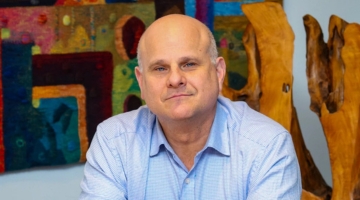
Dean Karlan
Dean Karlan is the Frederic Esser Nemmers Distinguished Professor of Economics and Finance at Northwestern University's Kellogg School of Business, founder and former president of Innovations for Poverty Action, a non-profit organization dedicated to discovering and promoting solutions to global poverty problems. Karlan is also the co-director of Northwestern’s Global Poverty Research Lab and Chief Economist at the United States Agency for International Development (USAID) from 2022–2025. His research focuses on microeconomic issues of poverty, typically employing experimental methodologies and behavioral economics insights to examine what works and what does not to address social problems. His work spans many geographies and topics, including sustainable income generation for individuals in abject poverty, credit and savings markets for low-income households, and agriculture for smallholder farmers.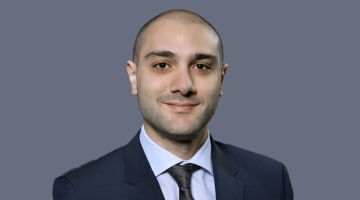
Nour Kteily
Nour Kteily is the is the Kellogg Chair in Enlightened Disagreement and a Professor of Management and Organizations at Northwestern University's Kellogg School of Business. He serves as co-director of the Dispute Resolution Research Center and the founding co-director of the Litowitz Center for Enlightened Disagreement at Kellogg. Professor Kteily specializes in negotiation, conflict resolution, and inter-group relations. His work spans conflict between racial and ethnic groups, conflict between political parties and ideological opponents, and international conflicts such as the conflict in the Middle East. His research uses the tools of social psychology to investigate how and why conflict emerges between groups in society, and how to productively resolve it. Throughout his work, he considers the role of power and status differences between groups, investigating how inequality and social hierarchy exacerbate conflict. Professor Kteily's work has been featured in popular press outlets, including The New York Times, The Washington Post, The Boston Globe, and Harvard Business Review.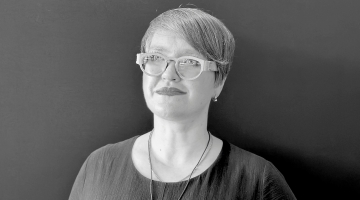
Nataliya Kosmyna
Nataliya Kosmyna, PhD, is a research scientist in the MIT Media Lab’s Fluid Interfaces group and a visiting faculty researcher at Google. With more than sixteen years of experience in brain-computer interface (BCI) design, her work bridges AI, neuroscience, and human-computer interaction to explore new forms of collaboration between human cognition and machine systems. Kosmyna’s research includes brain-to-image decoding, cognitive engagement measurement, and assistive technologies that support communication and independence for people with neurological conditions. Her projects have been deployed across educational, clinical, and aerospace environments, including initiatives focused on neurotechnology ethics and child-centered design. She has advised UNESCO on the ethics of neurotechnology and served on UNICEF’s Expert Advisory Group on Neurotechnology and Children. Kosmyna’s work has received international recognition, including the L’Oréal–UNESCO Women in Science award.

Bing Liu
Bing Liu is a China-born, Illinois-raised filmmaker best known for directing the feature documentary Minding the Gap, which was nominated for an Academy Award, an Independent Spirit Award, an Emmy, and received a Sundance Special Jury Award and a Peabody Award. He was a segment director on America to Me, which premiered on Starz and earned a Critics Choice Award nomination for Best Limited Documentary Series. Liu co-directed his second feature documentary, All These Sons, with Josh Altman; the film won Best Cinematography at the 2021 Tribeca Film Festival and the Maysles Award at the Denver International Film Festival. His short documentary What the Hands Do premiered at the 2023 Camden International Film Festival. His latest project, Preparation for the Next Life, is a narrative feature based on the acclaimed novel and produced by Plan B and Pastel for Orion Pictures. Liu was a member of the International Cinematographers Guild.
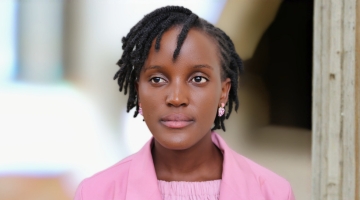
Vanessa Nakate
Vanessa Nakate is a Ugandan climate activist, environmentalist, and Project Dandelion strategist for Global South Narrative & Policy. She is the author of A Bigger Picture, a UNICEF Goodwill Ambassador, and a board member of the Malala Fund and Global Witness. Nakate began advocating for climate justice in 2019 with weekly protests in Kampala, Uganda, becoming a prominent voice in the global youth climate movement. She has since founded the Rise Up Movement to amplify African climate activists and led initiatives supporting renewable energy access in rural Ugandan schools. Nakate has addressed world leaders at international climate summits, appeared on the cover of Time in 2021, and continues to advocate for inclusive climate action centered on communities most affected by climate change.
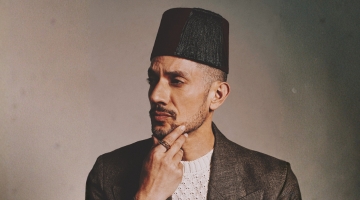
Omar Offendum
Omar Offendum is a Syrian-American rapper, spoken word poet, and theatrical storyteller known for his signature blend of hip-hop and Arabic poetry. Over a career spanning more than two decades, he has been named a Kennedy Center Citizen Artist Fellow and an Arab America Foundation “40 Under 40” honoree, touring internationally to promote his music while supporting humanitarian relief efforts. His recent work in theater includes the off-Broadway production Little Syria, which led to his selection for The Public Theater’s New York Voices commissioning program and sold-out performances at venues including the Brooklyn Academy of Music, Old Town School of Folk Music in Chicago, UCLA’s Center for the Art of Performance, HERE Arts Center in New York, and Joe’s Pub at the Public Theater.
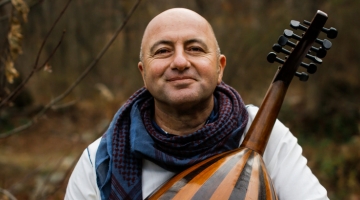
Zafer Tawil
Zafer Tawil is a Palestinian musician based in New York City and a virtuoso performer on oud, violin, and qanun, as well as a master of Arabic percussion. He has collaborated with artists ranging from pop musician Sting and avant-garde composer Elliott Sharp to leading figures in Arabic music, including Simon Shaheen, Cheb Mami, Bassam Saba, and George Ziadeh. Tawil has composed music for numerous film soundtracks, including Jonathan Demme’s My Favorite American (forthcoming), Rachel Getting Married, and the documentary Until When. He has led workshops on Arabic music at universities across the United States and contributed to recordings such as Shusmo’s Mumtastic, Gaida Hinawi’s Levantine Indulgence, and Amir ElSaffar’s Two Rivers projects, including Two Rivers Musicians and Enaana.
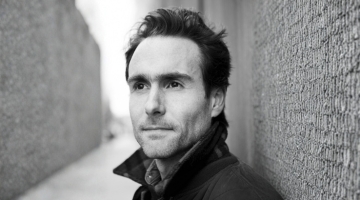
David Wallace-Wells
David Wallace-Wells is a writer for The New York Times Opinion, a columnist for The New York Times Magazine, and the author of the international bestseller The Uninhabitable Earth: Life After Warming, which The Guardian called “an epoch-defining book” and The Washington Post described as “the Silent Spring of our time.” A science writer and essayist, his work examines climate change, technology, and the future of the planet. Wallace-Wells previously served as deputy editor of New York magazine, where his reporting on climate and the environment gained international recognition. His writing has also appeared in The Guardian, and he was named a 2019 National Fellow at New America.
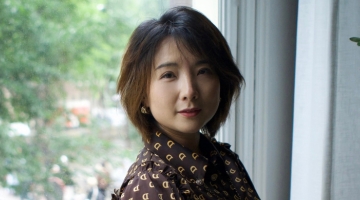
Qing Wang
Qing Wang is an award-winning independent journalist from China whose reporting spans global political and economic issues through a cross-border, human-centered lens. She is the co-founder and co-host of The Weirdo Podcast, one of China’s most-subscribed independent podcasts, which amplifies progressive and nonconformist voices. Wang previously served as chief international correspondent for Jiemian News, and her work has appeared on the BBC, Caixin Media, and Initium Media, among other outlets. Wang is currently a fellow at Asia Society, where she examines the cultural and emotional transformations shaping contemporary China in a global context.
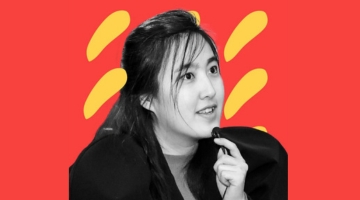
Allison Yang
Allison Yang is the founder of Reality Reload, a game studio and research lab that develops narrative-driven games examining power, technology, and social systems—from immigration regimes to disinformation economies. An award-winning game designer and veteran journalist, her work sits at the intersection of investigative reporting, interactive storytelling, and critical play. Before founding Reality Reload, Yang worked in international journalism, reporting across Asia, Europe, and the United States. Her projects have reached global media, academic, policy, and museum audiences. Yang is a Ford Global Fellow and a Maynard Fellow, and her current work explores how games can help societies imagine futures beyond inherited systems.