
Synthesis Report: Global Disinformation in a Post-Moderation World
As social media giants scale back content moderation and governments shutter counter-disinformation programs, the world is entering what experts warn is a “post-moderation era,” all while propaganda is growing ever more sophisticated and dangerous.
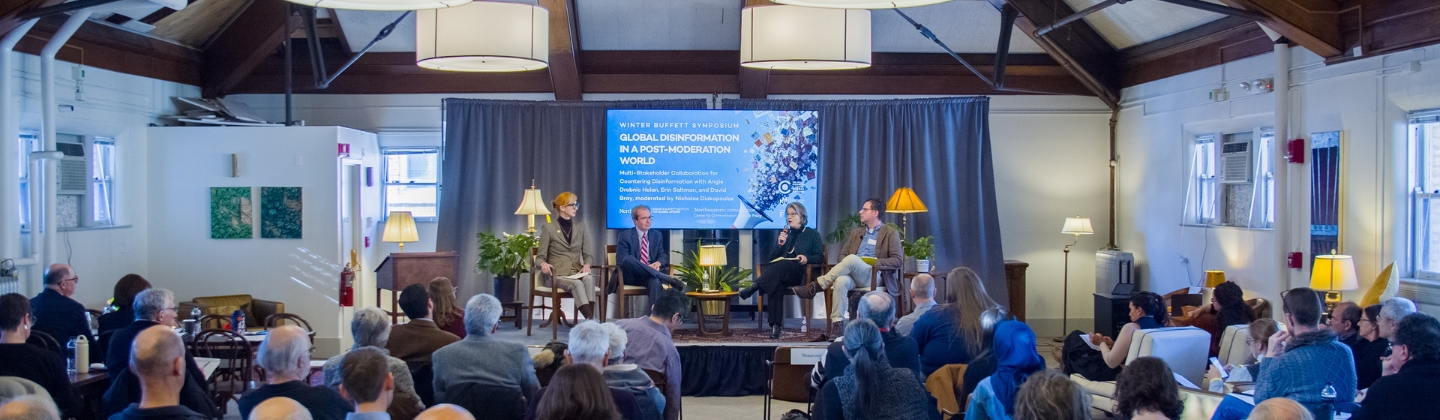
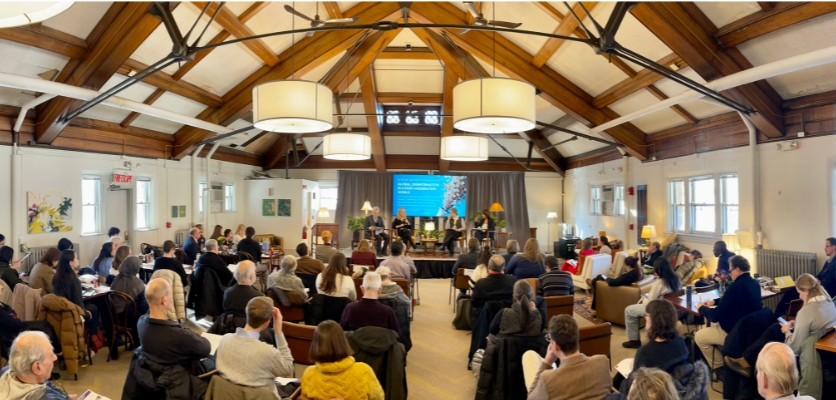
To address the mounting risks this shift poses for democratic societies worldwide, Northwestern University’s Roberta Buffett Institute for Global Affairs and Center for Communication & Public Policy (CCPP) hosted Global Disinformation in a Post-Moderation World, a two-day symposium organized in partnership with the Kyiv-Mohyla Foundation of America and the Chicago Council on Global Affairs. From January 22–23, global experts and practitioners from industry, public policy, academia, and civil society addressed four urgent priorities for this new era:
- Sustaining trust and credibility in information flows
- Forging multi-sector collaboration to build resilient information ecosystems worldwide
- Strengthening accountability for platforms, governments, and users alike
- Advancing innovative tools and strategies to counter disinformation
Opening Plenary: Global Disinformation in a Post-Moderation World
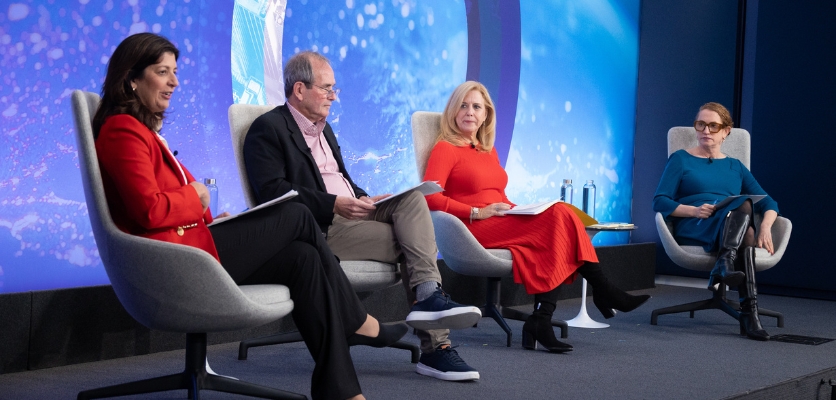
While disinformation is not new, the newfound danger of the modern age is not deliberate falsehoods, but the weakening institutional support for facts. Social media corporations once moderated their own content with fact-checking infrastructure, and governments funded counter-propaganda programs. They have since scaled back these efforts, forcing populations to recognize and respond to disinformation themselves with fewer safeguards.
The opening plenary hosted at the Chicago Council on Global Affairs explored the nature of the current disinformation crisis and set the stage for the symposium’s conversations on AI usage, the success of fact-checking programs, and potential solutions.
Participants
- Ellen E. McCarthy, Founder and CEO, Trust in Media Cooperative and former US Assistant Secretary of State for Intelligence & Research
- James Warren, Executive Editor, NewsGuard
- Suzanne Nossel, Lester Crown Nonresident Senior Fellow for US Foreign Policy & International Order, Chicago Council on Global Affairs
- Moderator: Leslie Vinjamuri, President and CEO, Chicago Council on Global Affairs
Takeaways
Panelists viewed traditional fact-checking and content moderation as ineffective.
All panelists agreed that the moderation model of the past decade was poorly suited to social media. Nossel highlighted three core problems:
- speed, because false content can go viral before fact-checkers respond;
- indeterminacy, because breaking news often evolves faster than moderators can confidently establish the facts; and
- ambiguity, because satire, selective editing, and misleading framing blur the boundary between harmful misinformation and protected expression.
Warren added that platforms had little incentive to undermine engagement-driven business models. Together, the panel questioned whether restoring the old moderation regime would meaningfully address today’s disinformation environment.
The deeper danger of disinformation is the erosion of trust in information itself.
McCarthy argued that the most serious consequence of pervasive disinformation may not be belief in any single falsehood, but a broader collapse of confidence in media, institutions, and even the possibility of determining the truth. Once citizens begin to distrust all information, democratic societies face a more fundamental problem: people may disengage, retreat into trusted political or social communities, or become unable to reach shared judgments about public events or issues. As McCarthy put it, the danger is reaching a point where “you don’t trust anything anymore.”
Algorithmic platforms amplify polarization by rewarding emotionally engaging and politically congenial content.
Nossel emphasized that today’s information environment differs from the era when people actively chose among newspapers or broadcasters: on social media, “your news chooses you.” Algorithms learn what interests, outrages, or reinforces users’ existing views and feed them more of it. In a polarized political climate, this can deepen distrust of credible sources associated with opposing viewpoints and encourage greater reliance on politically congenial media. The result is an information environment in which “us versus them” dynamics and engagement-driven algorithms can mutually reinforce distrust, polarization, and the spread of misleading content.
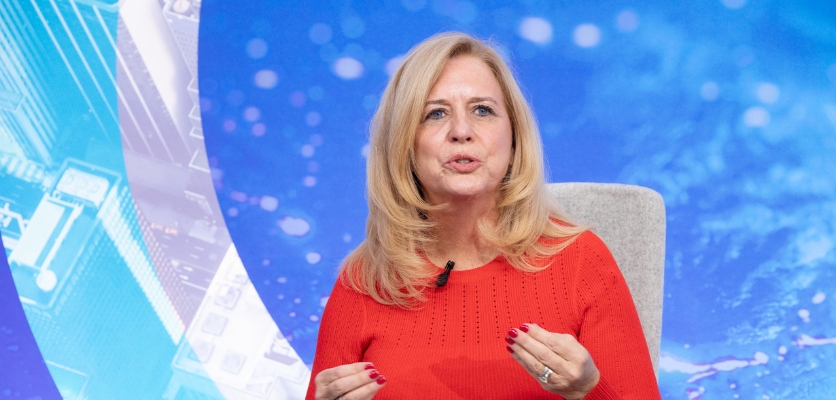
“People are pretty good at discerning a lie. But what really worries me is when you start getting into a place where you don't trust anything anymore.... How do you continue to advance if you don't believe anything?” — Ellen McCarthy
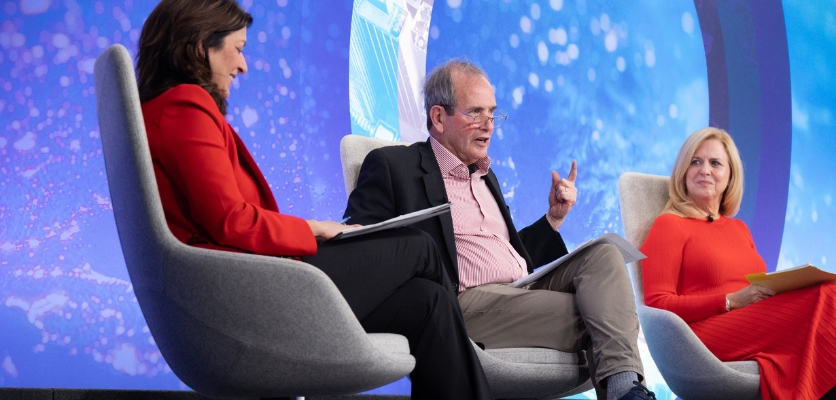
“Meta and Google were more than eager in the last year or two to close down their fact-checking efforts, but they were never effective anyway. The companies have never really wanted to undermine a revenue model based in some substantial measure on audiences devouring craziness.” — James Warren
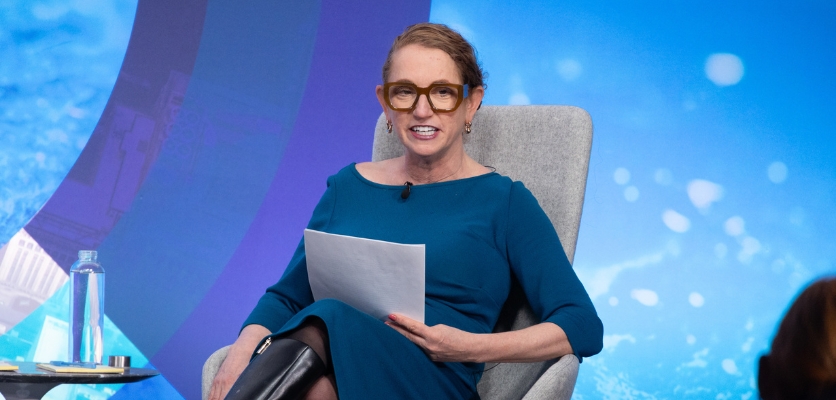
“In the old world where there were multiple newspapers published daily and funded by display advertisements, you could choose your news. Now your news chooses you. The algorithm...weaponizes human nature and plays up what you’re interested in, what outrages you, and what intrigues you. That’s how platforms earn their keep.” — Suzanne Nossel
Innovating Resilience to Disinformation
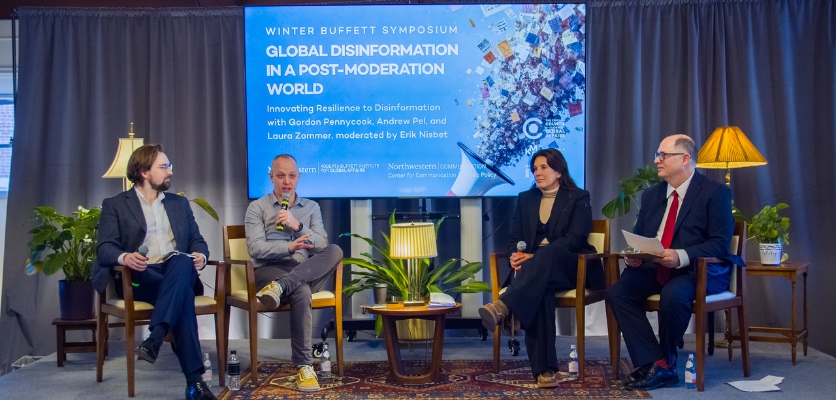
Social media now functions as the primary news source for many communities. However, platforms have taken little initiative to prevent misleading content, placing the responsibility squarely on the user. This session discussed strategies to help people become more critical of the content they consume.
Participants
- Gordon Pennycook, Associate Professor of Psychology and Dorothy & Ariz Mehta Faculty Leadership Fellow, Cornell University
- Andrew Pel, Head of Campaigns, Moonshot
- Laura Zommer, Co-Founder and CEO, Factchequeado; Founder, LatamChequea
- Moderator: Erik C. Nisbet, Owen L. Coon Professor of Policy Analysis & Communication, Director of the Center for Communication & Public Policy, School of Communication, Northwestern University
Takeaways
People care about truth, but attention is often the problem.
Pennycook argued that people often share misinformation not because they reject truth but because accuracy is not top of mind when they are scrolling and sharing. His research shows that simple accuracy prompts can reduce false sharing and that even strongly held conspiracy beliefs can shift when people receive relevant, evidence-based information. However, to maximize engagement, large platforms have resisted implementing these tools.
Trusted messengers and distribution networks are essential to reaching underserved communities.
Zommer highlighted the chronic underfunding of Spanish-language journalism in the United States and argued that producing accurate information is not enough if it fails to reach people through the channels and voices they already trust. Her approach combines local media, grassroots organizations, WhatsApp, and Latinx content creators to deliver timely, credible information where audiences actually encounter it, while emphasizing that these relationships must be built before elections or crises occur.
AI is both a tool for resilience and a force multiplier for disinformation.
Pennycook’s research shows that personalized AI conversations can reduce conspiracy beliefs, while Zommer described using AI through WhatsApp to quickly respond to users’ questions about questionable content. At the same time, AI is making manipulation more convincing and scalable. Zommer highlighted deepfake videos impersonating trusted Spanish-language journalists, while Pel warned of “next-generation astroturfing,” in which AI-driven accounts can learn the language and social cues of local communities, appear authentic, and gradually steer conversations toward particular agendas. The challenge is using AI to strengthen resilience without amplifying deception.

“Our goal is not to look backward to a moderation system that no longer exists or to place the burden only on individuals for this issue, but to have an honest conversation about responsibility, trust, and power in today's information environment and to think carefully about what a more resilient and accountable system could look like going forward.” — Erik C. Nisbet
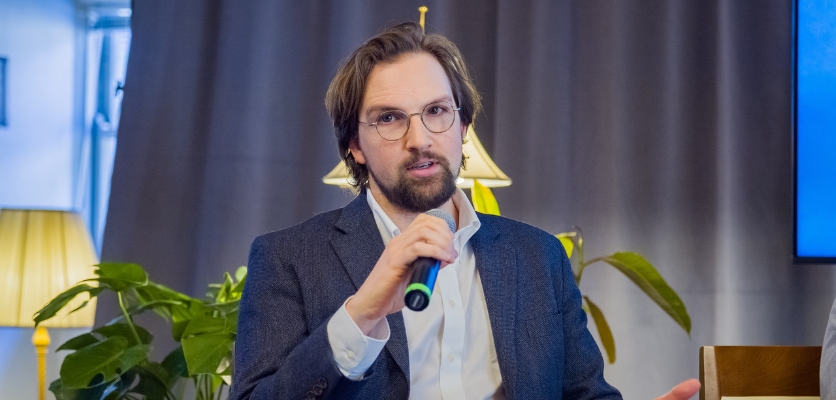
“We all tend to categorically overestimate our ability to detect manipulation, and when you awaken that in people, you see some pretty promising results from the field.” — Andrew Pel
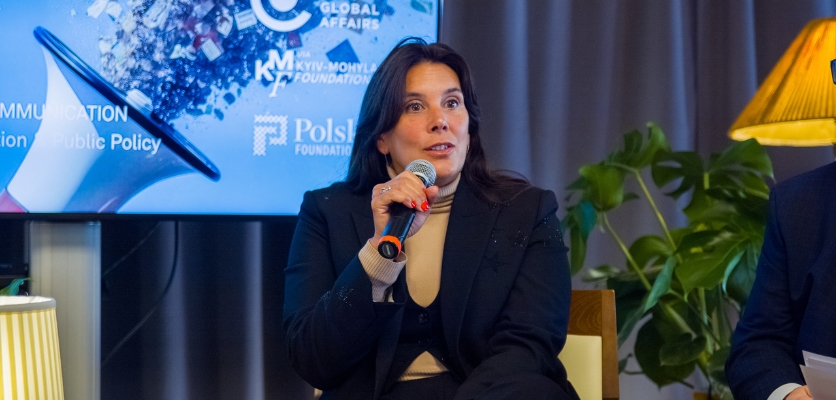
“If we don't fill the gaps, bad actors will and that’s what the platforms want.... If we don't invest in creating the networks, when the crises happen, we are lost.” — Laura Zommer
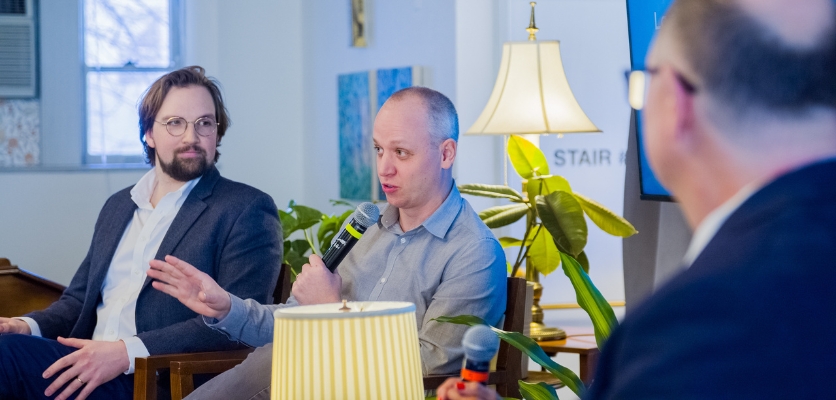
“When people are sharing misinformation online, they often aren’t even considering whether it’s true or false…. If you give people facts and evidence, it will have an impact. The difficulty is getting in front of them.” — Gordon Pennycook
Multi-Stakeholder Collaboration for Countering Disinformation
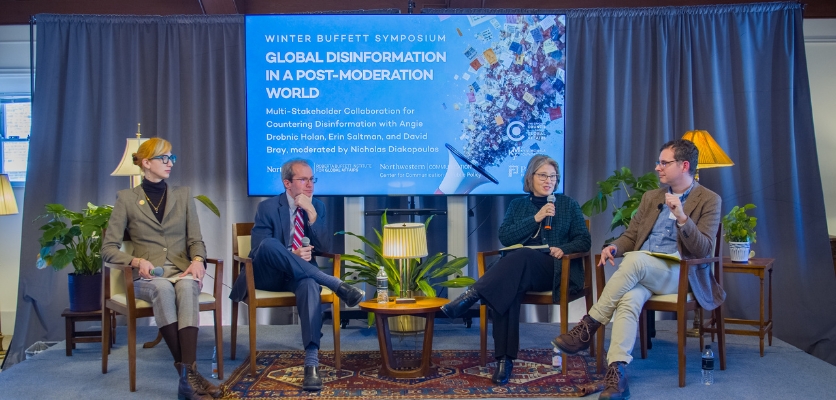
This session examined the accelerated spread of harmful content driven by misaligned interests among governments, social media platforms, and individual actors. As disinformation is monetized and fact-checking is rescinded, hate speech increases and social trust is diminished. To address this problem, governments, social media companies, fact-checkers, and advocates need to work together — cooperation that has thus far been sporadic.
Participants
- Angie Drobnic Holan, Director of the International Fact-Checking Network, Poynter Institute
- Erin Saltman, Senior Director, Global Internet Forum to Counter Terrorism (GIFCT)
- David A. Bray, Distinguished Chair of the Accelerator, Stimson Center; Principal/CEO, LDA Ventures, Inc.
- Moderator: Nicholas Diakopoulos, Professor and Director of the Computational Journalism Lab, School of Communication, Northwestern University
Takeaways
Fact-checking can be effective, but it conflicts with the incentives of some content platforms.
Holan directly challenged the opening plenary’s skepticism of fact-checking, citing research showing that fact-checks reduce sharing and can prompt users to remove false posts. She argued that Meta’s program was curtailed in the United States not because it failed, but because powerful political and commercial interests opposed it. More broadly, she warned that multi-stakeholder collaboration becomes impossible when some participants benefit from the problem: “These are not misaligned incentives or problems of coordination. This is active opposition.”
Local expertise is essential, but civil society needs resources to turn that expertise into impact.
Saltman emphasized that terrorism and violent extremism vary across countries and subcultures, often relying on locally specific slang, memes, symbols, and even emojis that automated systems or outsiders may miss. Civil society and local experts provide the “ground truth” needed to identify these signals, while technology companies contribute tools and scale, and governments provide funding, legal protections, and institutional support. But civil society organizations often lack the communication, technical, and staffing capacity to reach target audiences effectively. Sustained collaboration and investment in local capacity are therefore essential.
Facts are more persuasive when they are delivered through trusted, emotionally resonant narratives.
Bray argued that disinformation often gains traction because people facing uncertainty seek stories that provide identity, belonging, and a sense of control. Saltman similarly emphasized that simply telling people that they are wrong rarely works. Effective communication begins with common ground and delivers accurate information through trusted networks in ways that connect with people’s existing concerns. As Saltman put it, “Truth does resonate, but it has to be packaged to feel true…. If your fact goes against my cognitive dissonance, I will probably just scroll past.”

“We have the US presidency and select platforms, notably X, and to some extent, Meta, invested in the profitability of disinformation. These are not misaligned incentives or problems of coordination. This is active opposition. We can't collaborate when some stakeholders are benefiting from the problem persisting.” — Angie Drobnic Holan
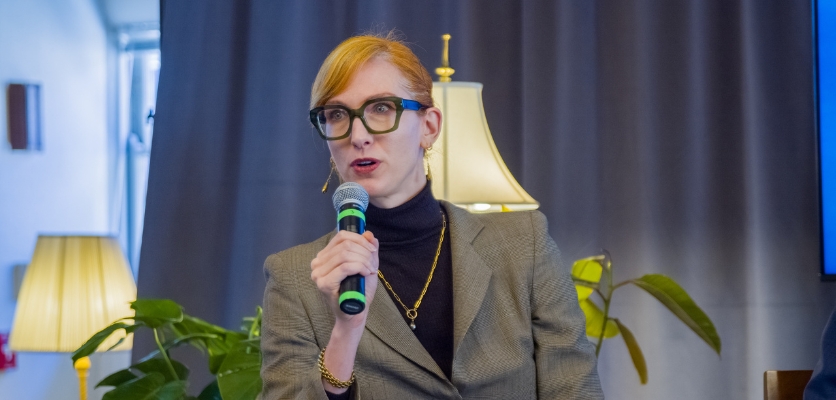
“The crisis right now is not that we don’t have tools or money. It’s that those things don’t come together at scale strategically…. There is a gap for civil society organizations that have very nuanced, deep understanding, and then trying to get them to create the type of content that would reach the audiences they want to reach online.” — Erin Saltman
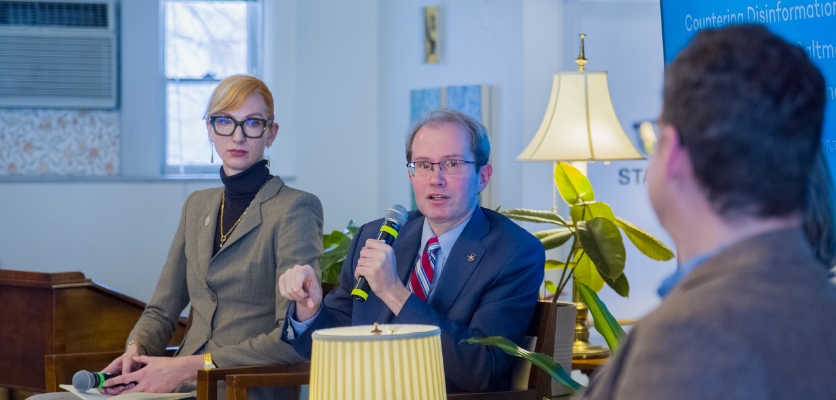
“What are we doing here, right now, to reach the people that we may disagree with about worldviews? What are we doing to help create places where they can have a sense of belonging, even if we disagree?” — David A. Bray
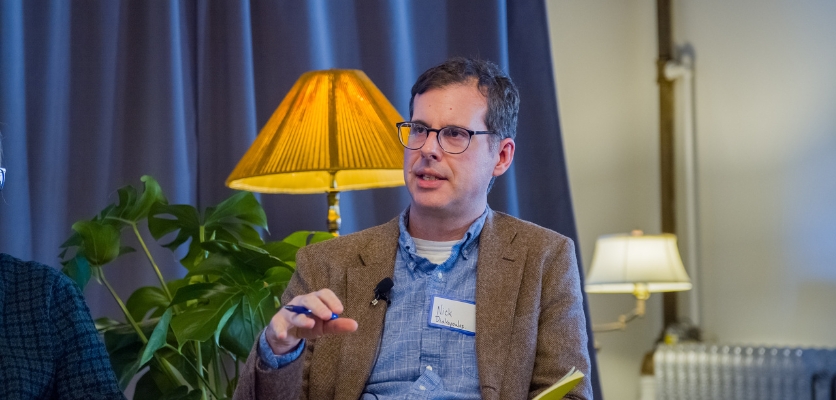
“If we’re going to make any progress on this disinformation issue, we’re going to have to figure out how to coordinate between different stakeholders with different capabilities, how we’re going to collaborate, how we’re going to find alignment on goals, how we’re going to work with allies, and also understand that there will be other stakeholders out there that aren’t allies, but adversaries.” — Nicholas Diakopoulos
Countering State-Sponsored Disinformation and Ensuring Trustworthy Information Spaces
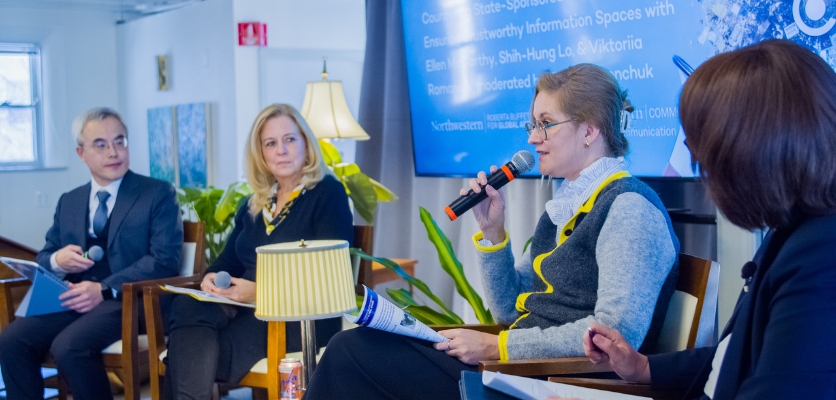
Social media has proven an effective way for governments to conduct disinformation campaigns against their enemies. This session included speakers from Taiwan and Ukraine, countries with extensive experience hardening their populations against adversaries operating on social media platforms. Taiwan has long been flooded with disinformation from China, while Ukraine is under a constant barrage of disinformation from Russian bots. Speakers compared how China and Russia deploy disinformation, including their strategies and tactics.
Participants
- Ellen E. McCarthy, Founder and CEO, Trust in Media Cooperative; former US Assistant Secretary of State for Intelligence & Research
- Shih-Hung Lo, Professor, National Chung Cheng University; Chairperson, Taiwan FactCheck Center
- Viktoriia Romaniuk, Deputy Chief Editor, StopFake; Director, Mohyla School of Journalism at the National University of Kyiv-Mohyla Academy
- Moderator: Olga Kamenchuk, Associate Professor of Instruction and Faculty Affiliate, Center for Communication & Public Policy, School of Communication, Northwestern University
Takeaways
The biggest challenge is no longer fake news—it’s the steady erosion of trust.
Lo described a clear shift in Chinese information operations during Taiwan’s 2024 presidential election. Campaigns were no longer primarily about supporting one candidate over another, but about convincing citizens that democracy itself is broken, elections cannot be trusted, and government institutions cannot protect them. Manipulated videos, edited clips, and deepfakes were used less to persuade than to polarize. As Lo put it, “The point was not persuasion. The point was polarization. Because when trust collapses, democracy cannot function.” State-sponsored disinformation is a deliberate, adaptive strategy designed to create confusion and weaken social cohesion. Romaniuk described how Russian influence operations evolved from recognizable state-controlled media toward decentralized networks of proxy websites, social media campaigns, Telegram, TikTok, AI, and other actors after sanctions and platform restrictions reduced the reach of outlets such as Sputnik. Rather than advancing a single narrative, these campaigns deploy multiple, evolving messages as part of a broader strategic effort. McCarthy emphasized the ultimate effect: adversaries can pollute the information environment so societies struggle to “think, coordinate, or act coherently,” producing confusion, distrust, paralysis, and miscalculation.
Disinformation should be seen as an infrastructure and governance problem.
McCarthy argued that societies need to treat the information ecosystem as critical infrastructure rather than relying primarily on fact-checking or content moderation. She proposed common standards and capabilities built around provenance—that is, knowing where critical information comes from—as well as quality signals, procedures for escalating potentially manipulated information, auditability, and clear responsibility for information risk in decision-making. The aim is not for governments to determine the truth but to strengthen the capacity of citizens, businesses, and institutions to assess information and make confident decisions across sectors and countries.
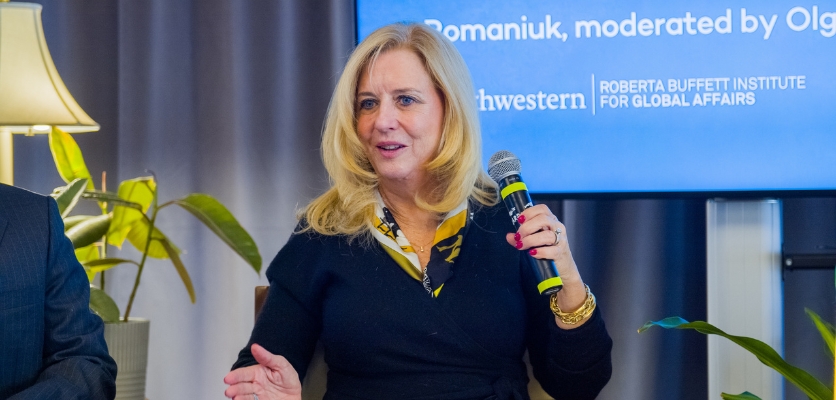
“Disinformation is not just an issue of public opinion or elections—it’s the ability of complex societies to function, coordinate, and decide. Our response should not just be more content moderation but rather building this infrastructure that's based on provenance: knowing what our critical information is and where it comes from.” — Ellen E. McCarthy

“Success does not mean eliminating lies or fake news. That’s impossible. Success means resilience. It means that disinformation no longer decides our political outcomes, no longer paralyzes our societies, and no longer destroys trust.” — Shih-Hung Lo
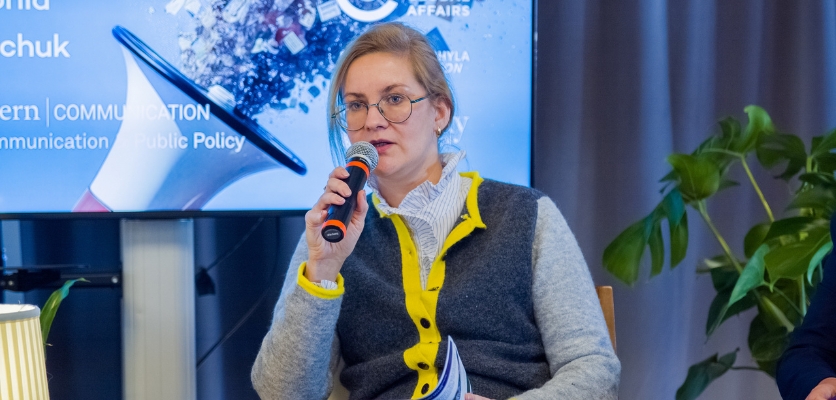
“Disinformation constantly transforms. We must move ahead and search for new ways to analyze disinformation. It would be great to collaborate in researching and creating new methodological approaches for analyzing behavioral or psychological transformations.” — Viktoriia Romaniuk

“I like this term 'frontline democracies.' They're not just democracies. They're being targeted right now, facing not only international informational war but also quite literal war. What kind of tangible consequences are the audiences in Taiwan and Ukraine facing right now? How is trust in institutions affected? How are global alliances that they're conscious of participating in affected?” — Olga Kamenchuk
Ensuring Accountability for Disinformation
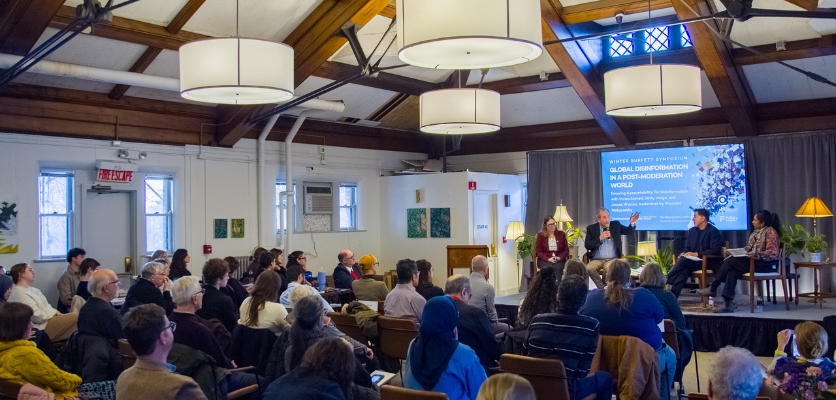
How should social media companies be held accountable? How can people protect themselves against lies and fake news online? Speakers in this final session called for more regulation and increased accountability. They also agreed on the importance of social media audiences both in guarding against the spread of disinformation and in calling attention to its effects to advocate for new liability laws.
Participants
- Imran Ahmed, CEO, Center for Countering Digital Hate
- Emily Vraga, Don & Carole Larson Professor in Health Communication, Hubbard School of Journalism and Mass Communication at the University of Minnesota
- James Warren, Executive Editor, NewsGuard
- Moderator: Priyanka Motaparthy, Clinical Professor of Law, Director of the Center for International Human Rights, Pritzker School of Law, Northwestern University
Takeaways
Legal immunity has allowed platforms to escape accountability for the harms their systems amplify.
Unlike most businesses, social media companies are broadly protected from legal liability when user-generated content causes harm. In the United States, Section 230 of the Communications Decency Act passed in 1996—before social media existed—provides especially strong immunity. Ahmed argued that platforms have used this protection to claim they do not control users’ speech even while controlling “which speech is amplified, is monetized, and is made visible to millions or billions of people.” He called for greater legal accountability for platform design, recommendation systems, and failures to mitigate foreseeable harms so that social media companies face pressures comparable to other industries when their products cause damage.
Accountability requires multiple forms of pressure: legal, economic, reputational, and civic.
The panel emphasized that regulation is only one way to hold information platforms accountable. Warren showed how transparency ratings, public scrutiny, and advertiser pressure can change organizational behavior, from disclosing ownership to distinguishing news from opinion and avoiding unreliable sites. Vraga emphasized that citizens also retain accountability tools through corrections, philanthropy, supporting credible information sources, and contacting elected officials. Lasting change will therefore require multiple mechanisms working together rather than relying on government regulation or individual users alone.
Users can contribute to accountability, but individual users alone cannot solve systemic problems.
Vraga emphasized that ordinary users can improve the information environment by correcting misinformation, supporting credible organizations, engaging elected officials, and contributing through philanthropy and other civic actions. However, she cautioned against treating individual correction as an obligation or shifting responsibility for systemic failures to users. The broader goal is to build institutions and systems that make accurate information and effective correction easier. Public participation matters, but accountability ultimately has to be shared among citizens, platforms, governments, researchers, and civil society.
Several civil society organizations provide public resources for countering disinformation.
- Warren’s NewsGuard organization offers NewsGuard AI, the first chatbot designed to provide trustworthy responses by accessing only reliable sources. NewsGuard’s constantly updated data stream, as well as its free newsletter Reality Check, unearths and debunks the most popular disinformation stories of the day.
- Led by Angie Drobnic Holan, the Poynter Institute’s International Fact-Checking Network offers training and resources to help users learn how to effectively corroborate stories.
- Factchequeado, founded and led by Laura Zommer, produces and amplifies Spanish-language journalism designed to combat disinformation and recently released Fact-DesafIA, a new interactive course on WhatsApp directed to Spanish speakers.
- StopFake, for which Viktoriia Romaniuk serves as Deputy Director, identifies false information about Ukraine, and the Taiwan FactCheck Center co-founded and led by Shih-Hung Lo identifies false information about Taiwan.
- The Trust in Media Cooperative led by Ellen E. McCarthy is establishing standards and measures for quality information that the public can access through their InQ Dashboard or learn about through their upcoming and previous events.
- Moonshot, for which Andrew Pel serves as Head of Campaigns, has produced several reports sharing lessons learned from their work to build technology to identify and disrupt online organized crime, child sexual exploitation, and trafficking, among other forms of abuse and violence.
- The Global Internet Forum to Counter Terrorism (GIFCT), for which Erin Saltman serves as Senior Director of Membership and Programs, offers an online guide to support tech companies, civil society groups, governments, and academic researchers interested in learning about GIFCT member company efforts to prevent terrorists and violent extremists from exploiting digital platforms.
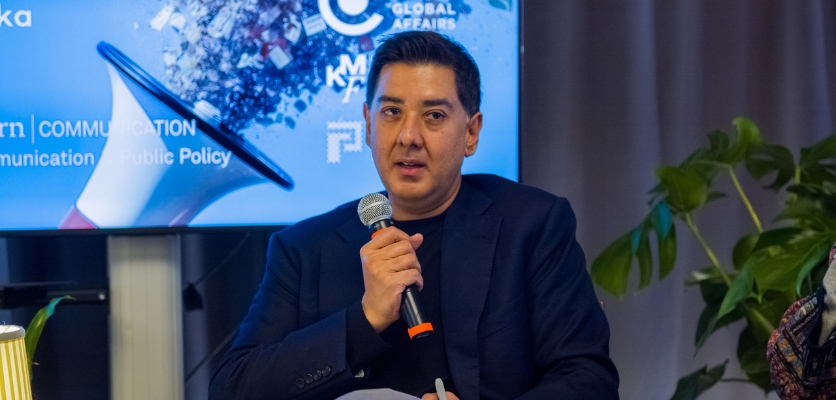
“Disinformation accountability today is diffused by design. Platforms claim neutrality, while engineering systems that reward outrage, falsehood, and extremism…. The greatest harms don’t come from a single post. They come from systems, recommendation engines, monetization incentives, and enforcement failures that operate at mass scale.” — Imran Ahmed
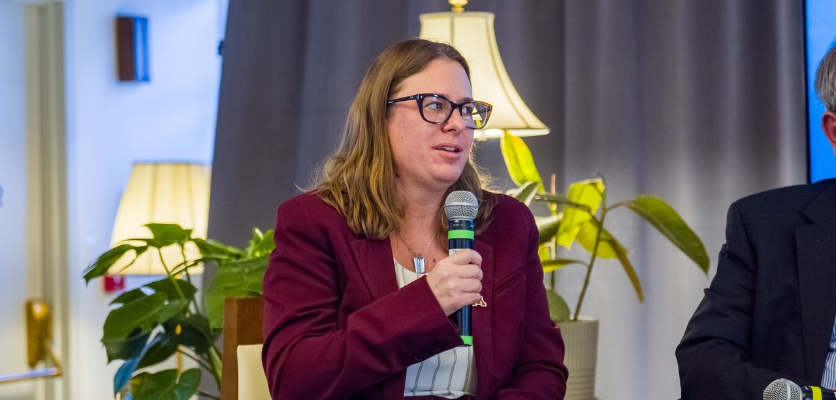
“Users are the ones who are going to have to hold us accountable right now…. But in the long term, the accountability mechanisms have to be rebuilt—changing the way social media companies operate, demanding that they are more transparent, and not rewarding companies built on outrage…. Public pressure has to be part of it.” — Emily Vraga
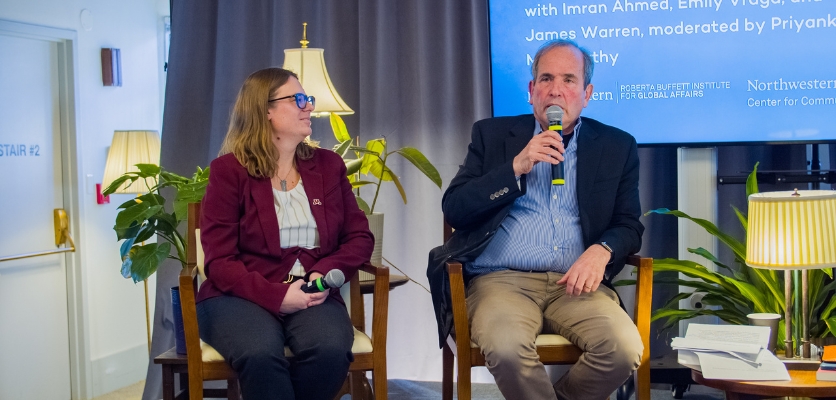
“Trust in the media worldwide was plummeting, and we didn't think algorithms were the answer to much of anything. We thought it would be best if actual journalists got on the phone or email or text with people to find out who actually funds news outlets, who owns them, why they didn't differentiate between news and opinion.” — James Warren
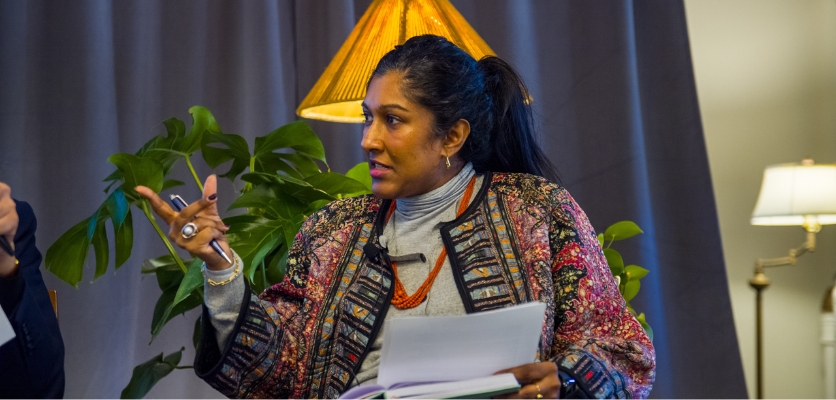
“I don't think a democracy is only about our responsibility to vote and then delegate all our powers. I see civic responsibility as something far broader, including insisting on our right to the truth and holding our government accountable when it fails to do what we need it to do.” — Priyanka Motaparthy
Symposium Synopsis
Across five panels, Global Disinformation in a Post-Moderation World examined what happens as many of the institutions that shaped responses to disinformation over the past decade are weakened, withdrawn, or increasingly contested. “Post-moderation” does not mean that content moderation has disappeared. Rather, it describes an information environment in which centralized platform moderation, professional fact-checking partnerships, government counter-disinformation programs, support for independent media, and researcher access have all been reduced or challenged. The question running through the symposium was what should replace or supplement these institutions, and where responsibility should lie.
The panels did not always agree, particularly about fact-checking and content moderation. The opening plenary offered a sharp critique of the traditional model, pointing to the difficulty of keeping pace with viral content, uncertainty during breaking news, ambiguity about what constitutes misinformation, and platform business models built around engagement. Later panels pushed back. Angie Drobnic Holan cited evidence that fact-checking reduces the sharing of false content, while practitioners from Ukraine and Taiwan described professional verification as an important part of democratic resilience. Research on prebunking, accuracy prompts, and personalized AI interventions also showed measurable effects. The broader lesson was that no single intervention is sufficient on its own.
The discussions also moved beyond viewing disinformation simply as a problem of false claims. Participants repeatedly returned to questions of trust, governance, and the ability of societies to make decisions. State-sponsored campaigns may seek to create confusion, distrust, and paralysis rather than convince citizens of any one narrative. Algorithms determine which information receives attention and financial rewards. AI makes both useful interventions and deceptive influence operations more personalized and scalable. At the same time, the communities with the strongest local knowledge are often among those with the fewest resources to respond.
The symposium therefore pointed toward a broader approach to resilience. Reliable journalism and fact-checking remain important, but so do trusted community networks, media literacy, psychological interventions, local expertise, strategic communication, information-quality standards, provenance, platform transparency, legal accountability, and sustained investment in civil society.
Seven Overarching Takeaways
1. A post-moderation world cannot become a post-accountability world.
The symposium did not call for simply rebuilding the platform moderation system of the past decade. That system had real limitations, and participants disagreed about its historical effectiveness. But when platforms and governments retreat, the responsibilities do not disappear. They are pushed toward journalists, civil society organizations, researchers, communities, and individual users who often lack comparable resources or authority. The challenge is to build new forms of accountability across the information system, including for the platforms and algorithms that determine what is amplified, recommended, and monetized.
2. The larger threat is the erosion of trust and society’s ability to make decisions.
Across the panels, disinformation emerged as more than a problem of people believing falsehoods. State-sponsored campaigns can be designed to create confusion, distrust, polarization, and paralysis. The danger is that citizens lose confidence not only in particular sources, but in elections, institutions, journalism, and even the possibility of determining truth. Resilience therefore means more than correcting false beliefs — it means maintaining enough trust and shared understanding for governments, institutions, communities, and citizens to continue making decisions and acting together.
3. There is no single solution to disinformation.
One of the clearest lessons from the symposium was that no intervention works well enough on its own. Fact-checking can reduce false beliefs, but it faces problems of speed, scale, and distribution. Prebunking and accuracy prompts can improve people’s ability to recognize manipulation, but their effects may fade. Media literacy takes time, and community-based approaches depend on trusted relationships. The strongest response is therefore likely to combine professional verification, prebunking, media literacy, trusted messengers, strategic communication, platform interventions, and other approaches based on the audience and context.
4. Producing accurate information is not enough. It has to reach people through channels and messengers they trust.
Several panels identified distribution and attention as central problems. People may care about accuracy but fail to think about it while scrolling, sharing, or reacting to emotionally engaging content. Reliable journalism also has limited impact if it does not reach the communities that need it. Trusted local media, community organizations, content creators, and interpersonal networks can help bridge that gap. Effective interventions therefore need to focus not only on whether information is accurate, but on who delivers it, where people encounter it, when they receive it, and whether they trust the source.
5. Civil society and local expertise are essential, but they need sustained investment before crises begin.
Local organizations often understand emerging narratives, cultural references, language, slang, trusted messengers, symbols, and community dynamics that platforms, governments, and automated systems may miss. Yet these organizations are often among the least-resourced actors in the information system. Their value cannot be treated as something to draw upon only during elections, wars, or other crises. Building resilience requires long-term investment in staffing, research, technology, communications, and distribution so that local organizations already have the relationships and capacity they need when a crisis occurs.
6. AI increases both the scale of the threat and the range of possible responses.
AI can help deliver personalized corrections, answer questions quickly, analyze emerging narratives, and extend the reach of organizations with limited staff. At the same time, it makes deepfakes, synthetic personas, scams, automated influence operations, and highly tailored manipulation cheaper and easier to produce at scale. As synthetic content becomes more convincing, technological solutions alone will not be enough. Provenance, trusted institutions, transparency, local knowledge, and human judgment will become even more important for helping people understand where information comes from and whether it deserves their trust.
7. Accountability must come from several directions at once.
No single institution can govern today’s information environment, however:
- Legal liability and regulation can create incentives for safer platform design.
- Transparency and independent research can expose failures.
- Advertisers and other market actors can impose financial pressure.
- Journalism and civil society can provide scrutiny and reputational accountability.
- Citizens can support trustworthy information, challenge misinformation, and press elected officials for change.
The symposium pointed toward shared accountability, but not equal responsibility. The largest platforms and institutions have far greater power over the information environment and should bear responsibilities that reflect that power.
From the Symposium: Organizations and Resources
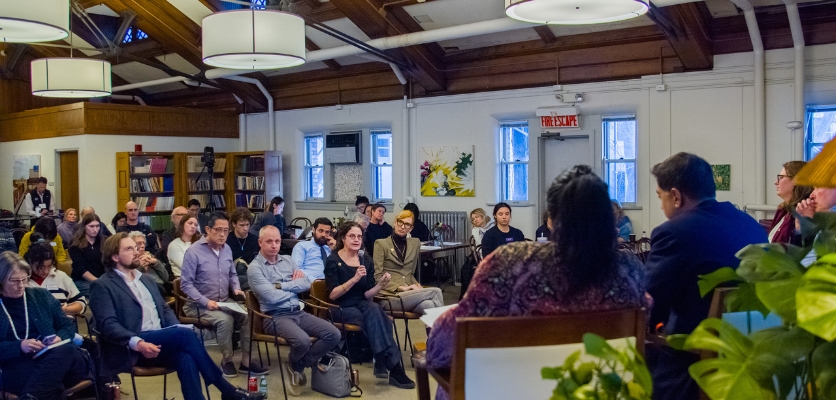
One strength of the symposium was that participants were not solely analyzing the problem. They are also testing interventions, building networks, developing standards, and producing resources that journalists, researchers, educators, policymakers, civil society organizations, funders, technology companies, and the public can use.
- The Center for Communication & Public Policy at Northwestern University, directed by Erik C. Nisbet, brings together scholars, practitioners, policymakers, and public leaders to advance research and public dialogue on major challenges at the intersection of communication, technology, public policy, and democracy. Its work includes research, public events, and convenings on political communication, disinformation, emerging technologies, public opinion, and the changing information environment.
- The Center for Countering Digital Hate, founded and led by Imran Ahmed, conducts research and advocacy on the ways social media and AI systems can contribute to real-world harms. Its work examines platform design, algorithms, enforcement failures, and monetization incentives while advocating for greater transparency, safety standards, and legal accountability.
- Factchequeado, co-founded and led by Laura Zommer, produces and distributes Spanish-language fact-checking and journalism for communities in the United States. Its network connects local media and grassroots organizations with credible information in text, audio, video, and WhatsApp formats. It also developed Fact-DesafIA, an interactive WhatsApp course designed to help Spanish speakers understand artificial intelligence and misinformation.
- The Global Internet Forum to Counter Terrorism, represented by Erin Saltman, brings technology companies and other stakeholders together to prevent terrorists and violent extremists from exploiting digital platforms. GIFCT provides research, tools, cross-platform coordination, and an online resource guide for technology companies, civil society groups, governments, and researchers.
- The International Fact-Checking Network at the Poynter Institute, led by Angie Drobnic Holan, connects roughly 170 fact-checking organizations worldwide. IFCN maintains professional standards through its Code of Principles and provides training, grants, resources, and opportunities for collaboration among organizations working to provide verified information.
- Moonshot, represented by Andrew Pel, develops and tests interventions addressing disinformation, violent extremism, and other forms of online harm. Its work includes large-scale prebunking and psychological inoculation campaigns, audience research, technology-assisted interventions, and reports sharing lessons from programs conducted in different countries.
- NewsGuard, represented by James Warren, evaluates the credibility and transparency of news and information sources and maintains continuously updated data on misinformation and disinformation narratives. Its resources include NewsGuard AI, which makes its source and misinformation data available to AI systems, and the Reality Check newsletter, which tracks prominent false narratives and emerging misinformation trends.
- StopFake, represented by Viktoriia Romaniuk, monitors and verifies false information about Ukraine and has developed an extensive archive documenting Russian disinformation. Its work combines fact-checking, research, media literacy, monitoring of Russian narratives, and international collaboration.
- Taiwan FactCheck Center, co-founded and led by Shih-Hung Lo, independently verifies disputed claims and monitors both foreign and domestically generated misinformation affecting Taiwan. Its work includes fact-checking, analysis of disinformation campaigns, and public education.
- Trust in Media Cooperative, founded and led by Ellen E. McCarthy, is developing standards and measures for assessing information quality. Its work focuses on provenance, transparency, and shared approaches to information risk. Public resources include the InQ Dashboard and its Trust Dialogues and public events.