
From the Observer Bench: How Disagreement Sustains Cooperation at SCF40
Bambang Trihadmojo, a PhD student in the Department of Sociology at Northwestern University, attended SCF40, the 40th meeting of the Standing Committee on Finance of the United Nations Framework Convention on Climate Change (UNFCCC) subsidiary bodies, in June 2026. Prior to attending SCF40 and SB64 (the 64th sessions of the UNFCCC) in Bonn, Germany, Trihadmojo traveled to the world’s largest annual international treaty negotiations and climate summit, the 30th Conference of Parties (COP30) to the UNFCCC in Belém, Brazil as a member of Northwestern University's delegation supported by the Roberta Buffett Institute. Trihadmojo's decision to attend SCF40 and SB64 stemmed from his desire to further deepen his engagement with international climate governance. Read his COP30 reflection and learn more about the Roberta Buffett Institute's student research opportunity at COP.
Following SB64, I attended the fortieth meeting of the Standing Committee on Finance (SCF40) in Bonn, Germany, on June 19 and 20. After spending SB64 on Indonesia's Party Overflow badge, I came to SCF40 as an Observer representing Northwestern University through the Research and Independent NGOs (RINGO) constituency. Before I continue, I would like to thank the Industrial Policy Lab Indonesia for sponsoring my trip.
The Standing Committee on Finance (SCF) is the UN climate process’s main body on climate finance. It tracks how climate finance flows around the world, advises the annual climate summit (COP), and tackles the difficult question of what should count as climate finance. SCF40 was the committee’s fortieth meeting since it was established.
The two meetings could not have felt more different. SB64 was a negotiation. Hundreds of delegates filled large halls, coalitions met behind closed doors, and every word of the draft texts was contested, because those texts could ultimately bind governments. In contrast, SCF40 was a committee at work. It was smaller, quieter, and more technical. The meeting focused on how climate finance is measured, tracked, and counted rather than negotiating treaty language. While SB64 debated what countries should commit to, SCF40 examined how those commitments are assessed. One sets the rules whereas the other keeps the score. I came to realize that both are really about the same question: what counts as climate finance? They just answer it in very different ways.
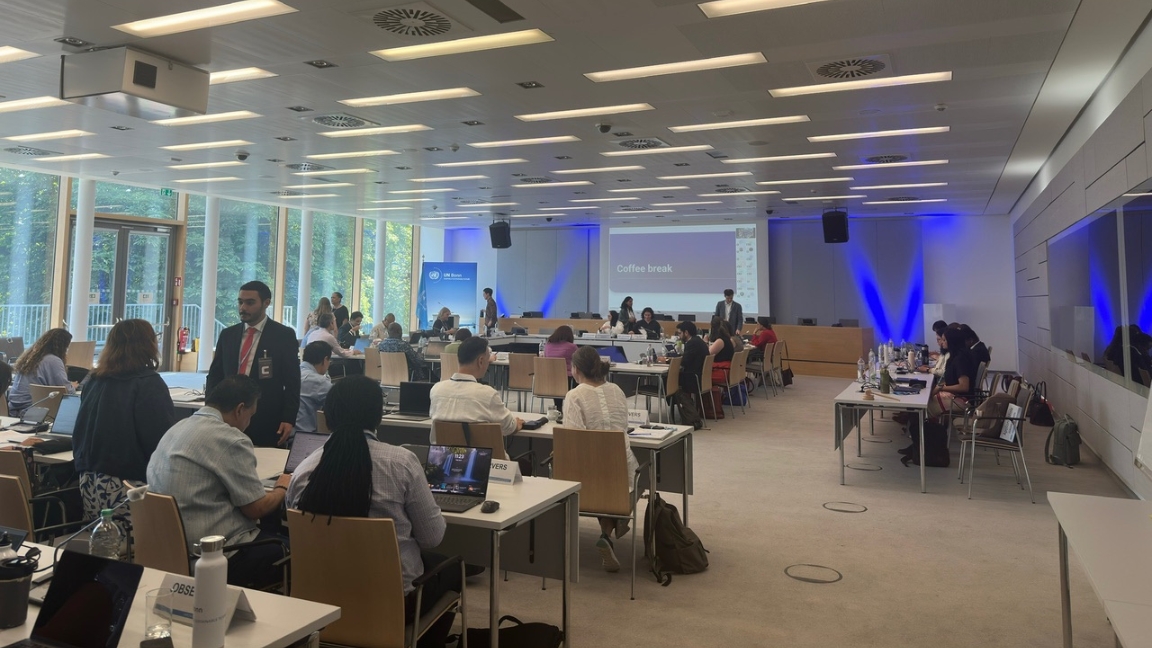
The setup reflected that difference. SCF40 was a hybrid meeting, with some members participating online and others in person. The seating also made the distinction clear. At the center sat the two co-chairs, from Belgium and Honduras, surrounded by the committee’s twenty members. The membership is evenly divided between Annex I and non-Annex I Parties. Under the UNFCCC, Annex I refers to the industrialized countries, including the wealthier economies and former Soviet bloc states that accepted the greatest responsibilities under the 1992 Convention to reduce emissions and provide climate finance. All other Parties are classified as non-Annex I. The equal split is intentional to ensure that developed and developing countries have the same representation in the body responsible for tracking and assessing climate finance.
I sat in the second layer, the outer ring reserved for observers. Representatives from other governments sat alongside non-party observers like me, following the proceedings without taking part in the decisions. My neighbor was Türkiye’s climate finance negotiator, a quiet reminder that Türkiye will host COP31 in Antalya this November. Observers may speak, but only after committee members have finished, and only if time permits.
I was there for two reasons. The first was to report back to RINGO on the committee's discussions and decisions. The second was to gather material for my dissertation, which examines what I call antagonistic cooperation, or how states with diverging interests keep cooperating within the same institution despite deep inequalities in power. A finance committee where developed and developing countries sit in equal numbers, debating money that neither side fully controls, is almost a laboratory for that question.
Two days of committee work sound dry. Members spent hours reviewing the committee’s flagship reports, which track global climate finance flows and assess progress toward past commitments. However, beneath the technical language lay a fundamental debate over definitions. Should a market-rate loan count the same as a grant? Should finance mobilized under the broader goal of aligning all financial flows be measured alongside finance that countries are formally expected to provide? These may sound like technical details, but they are not. How climate finance is defined and counted determines whether countries appear to have fulfilled their commitments or fallen short.
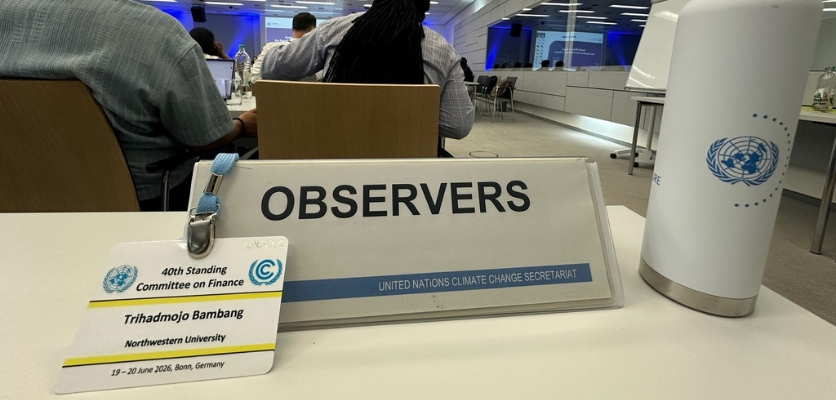
Photo courtesy of Bambang Trihadmojo.
The clearest outcomes concerned the future. The committee agreed that its 2026 forum, together with its next meeting, would be held in Sydney, Australia. They would be co-hosted by the Philippines in partnership with Pacific Island states. The theme will be financing climate action for water systems and the ocean. However, if those arrangements fall through, the meeting will default back to Bonn. The mood was noticeably lighter after the decision. One of the co-chairs even joked that they might have to bribe members to reach agreement before the next coffee break.
What struck me most was how cooperation endured even when interests diverged. Developed and developing country members disagreed, sometimes sharply, over what to measure and how to measure it. Even so, no one walked away. They continued revising draft text and searching for language that everyone could accept because the alternative, a committee that produces nothing, serves no one. That is the essence of what I mean by antagonistic cooperation. Cooperation is not sustained by agreement. It is sustained by institutions that keep negotiation alive even when agreement remains elusive.
The same pattern of cooperation that I had watched strain in the SB64 negotiation halls just days earlier played out here on a smaller scale, over decimal points and definitions rather than treaty clauses. From the observer bench, next to a negotiator whose country will soon host the climate summit, I could see the pattern up close. The people in that room do not agree on who owes what, and they may never. Still, they continue building the scoreboard together because a world without one would leave everyone worse off. That fragile and stubborn form of cooperation is what I came to study. SCF40 made it visible.
Northwestern's delegation to COP30, supported by the Roberta Buffett Institute, conducted original research through the a fall-quarter research seminar designed and taught by Iza Ding, Associate Professor of Political Science. Read more students' reflections from COP30, and learn more about this opportunity supported by the Roberta Buffett Institute >>