
From Bonn to Antalya: Ten Days Inside the SB64 Climate Finance Talks
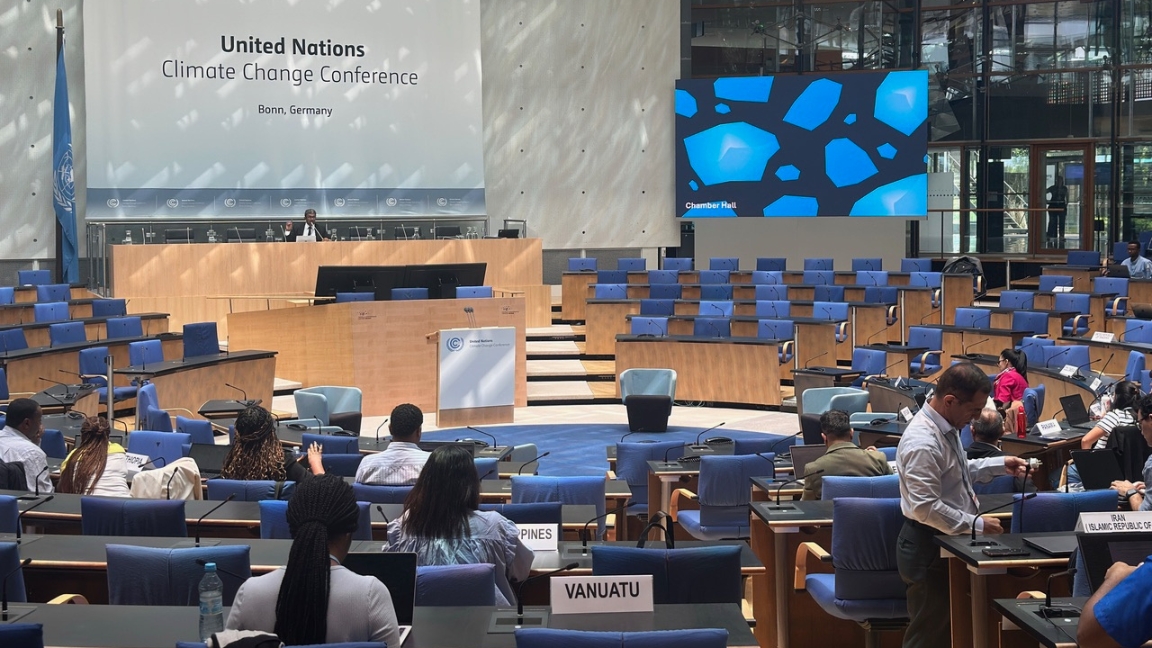
Bambang Trihadmojo, a PhD student in the Department of Sociology at Northwestern University, attended SB64, the 64th sessions of the United Nations Framework Convention on Climate Change (UNFCCC) subsidiary bodies, in June 2026. Prior to attending SB64 in Bonn, Germany, Trihadmojo traveled to the world’s largest annual international treaty negotiations and climate summit, the 30th Conference of Parties (COP30) to the UNFCCC in Belém, Brazil, as a member of Northwestern University's delegation supported by the Roberta Buffett Institute. Trihadmojo attended SB64 to further deepen his engagement with international climate governance after his initial experience at COP30. Read his COP30 reflection and learn more about the Roberta Buffett Institute's student research opportunity at COP.
From June 8 to June 18, 2026, I sat in the negotiating rooms of Bonn as part of the Delegation of the Republic of Indonesia. Before I continue, I would like to express my gratitude to the Industrial Policy Lab Indonesia for funding the trip. For those ten days, I supported Indonesia's negotiator on climate finance and gathered fieldnotes for my dissertation on antagonistic cooperation.
SB64 is shorthand for the 64th session of the UNFCCC subsidiary bodies. The UNFCCC is the United Nations treaty under which almost every country negotiates on climate change. These sessions are held twice a year, between the large annual conferences known as COPs. In Bonn, governments do the slower and more technical work of climate diplomacy. The headlines tend to belong to the COPs, but the substance is often built here first. SB64 was the bridge between COP30 in Belém last year and COP31, which will be held in Antalya, Türkiye, this November.
I followed three tracks: the Adaptation Fund negotiations, the Veredas Dialogue, and the Climate Finance Work Programme. Each one tells a different part of the same story about who pays for climate action and on what terms.
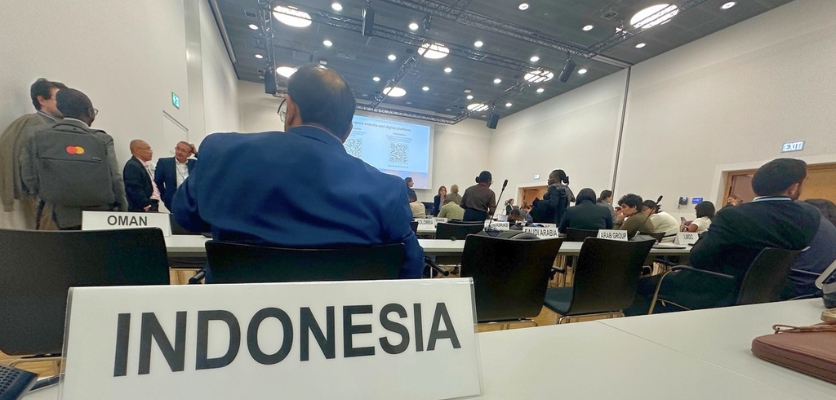
Photo courtesy of Bambang Trihadmojo.
The Adaptation Fund helps the most vulnerable countries cope with climate impacts that are already being felt. It is now moving to serve the Paris Agreement exclusively, and that transition raised three questions: who should sit on its board, how the handover should work, and how to begin its fifth review. In plain terms, that means deciding who gets seats on the board now that the fund answers to the Paris Agreement rather than the older Kyoto Protocol it was born under, what legal and institutional steps the handover requires, and when to start the next scheduled check on how well the fund is performing. The nation states at the table, known as Parties, came close but could not agree on a clean text. Money was part of the strain. The fund has been operating well below its target with contributions from wealthy countries falling short. Rather than walk away empty-handed, delegates agreed on procedural conclusions that protect the progress already made and carry the unfinished business to COP31 in Antalya, Türkiye. I would not call it a breakthrough. It was a refusal to let the work collapse.
The Climate Finance Work Programme is a newer and tenser fight. It is meant to give weight to Article 9.1 of the Paris Agreement, the provision that obligates developed countries to provide finance to developing ones. The room was raw. Developing country blocs read out a string of recent cuts: a major fund replenishment at its lowest level in sixteen years, pledged contributions roughly halved, and billions in promises withdrawn. They want this work programme to become a tracking and ratcheting mechanism, an “Antalya to COP33 action plan” that holds rich countries to their commitments and reverses the decline. Developed countries prefer a broader and looser reading, one that folds Article 9.1 into the wider conversation about all financial flows. The distance between those two positions is, in many ways, the central argument in climate finance today.
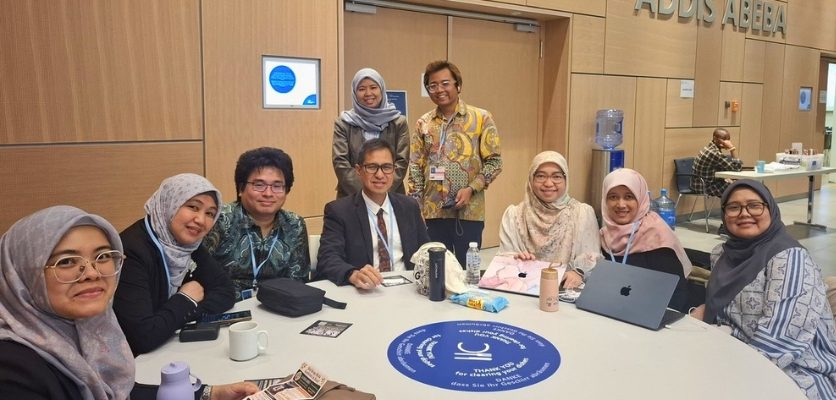
Bambang Trihadmojo (standing in the center to the right) with the Indonesian Head of Delegation and other delegation members. Photo courtesy of Bambang Trihadmojo.
The Veredas Dialogue, held for the first time this session, asks the larger and more abstract question. Article 2.1c calls for all financial flows, public and private, to become consistent with low-emission and climate-resilient development. Opening the dialogue, UN Climate Change Executive Secretary Simon Stiell warned of a “two-speed transition,” where some regions race ahead while others fall behind, weighed down by high debt and little fiscal room. The recurring caution from developing countries was clear and firm. Article 2.1c must complement Article 9, not replace it. Aligning every flow is a worthy goal, but it cannot become an excuse for wealthy countries to stop writing checks.
It would be dishonest to describe Bonn as only tense. There were lighter moments too. On June 10, delegates dressed in pink and posed together to raise awareness of gender-responsive climate action. After days of careful language about complementarity and safeguards, it was a reminder that the people in these rooms are people first, and that who bears the cost of climate change is never a neutral question.
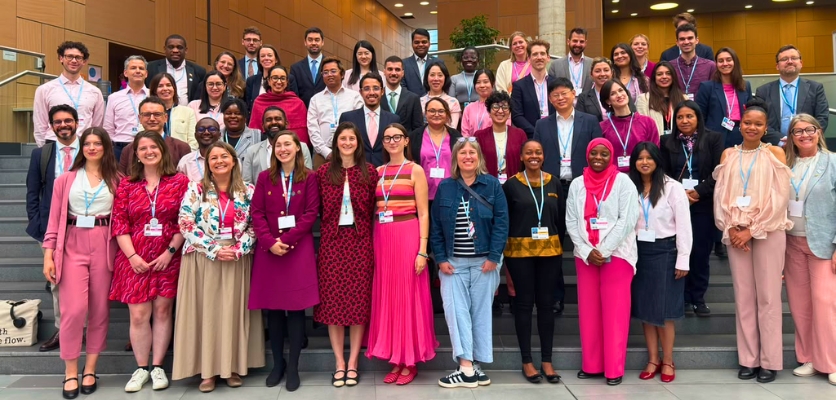
Delegates dressed in pink to raise awareness of gender-responsive climate action. Photo courtesy of Bambang Trihadmojo.
The second moment came on June 17, at the end of the Adaptation Fund informal consultations. Once the room finally landed on something everyone could accept, I stepped outside into the evening light and posed for a photo with colleagues from Honduras, China, South Africa, Kenya, Zambia, the Philippines, and Saudi Arabia. All of us belong to the G77 and China, which is the negotiating bloc of developing countries. On paper that makes us allies. In practice it is a coalition of more than 130 governments whose interests rarely line up neatly: a major oil exporter, the world's largest manufacturer, climate-vulnerable economies across Africa, an archipelagic state on the front line of rising seas. Holding a common line takes work. In Bonn that work paid off. Our coordination helped carry the procedural conclusion that protected the week's progress and sent the unresolved questions forward to COP31 in Antalya, Türkiye. In the photo (below) everyone is smiling, because we had agreed on something at last. What the picture really shows is not rivals making peace. It is how much effort it takes for a group this varied to speak with one voice, and how good it feels when the effort holds.
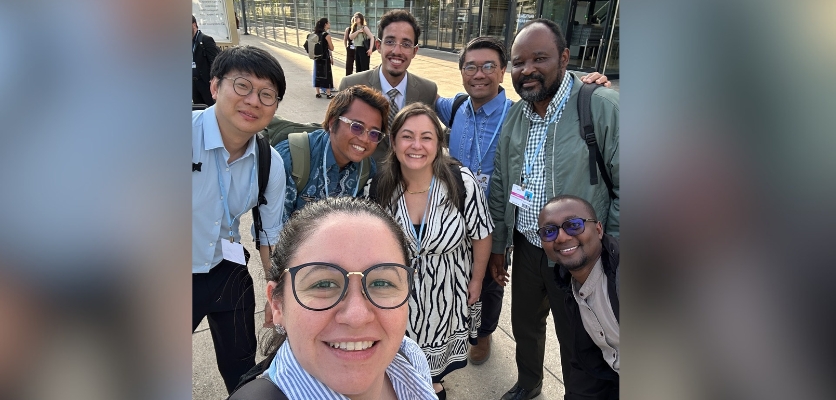
Trihadmojo with colleagues from G77 and China member states. Photo courtesy of Bambang Trihadmojo.
That is the lesson I carried home from Bonn. Progress here is rarely a single victory. It is the steady refusal to let cooperation break, even when the money is short and the trust is thin. The work continues in Antalya. See you at COP31!
Northwestern's delegation to COP30, supported by the Roberta Buffett Institute, conducted original research through the a fall-quarter research seminar designed and taught by Iza Ding, Associate Professor of Political Science. Read more students' reflections from COP30, and learn more about this opportunity supported by the Roberta Buffett Institute >>